
Owls have amazing eyesight, especially when it’s dark out. So, yeah, if you’re nearby—even at night—an owl can probably see you. Their eyes are huge and super sensitive to light, which helps them spot movement from pretty far away.
Unlike us, owls can’t move their eyes around. Instead, they twist their heads up to 270 degrees to check out everything around them. That’s pretty wild, right?
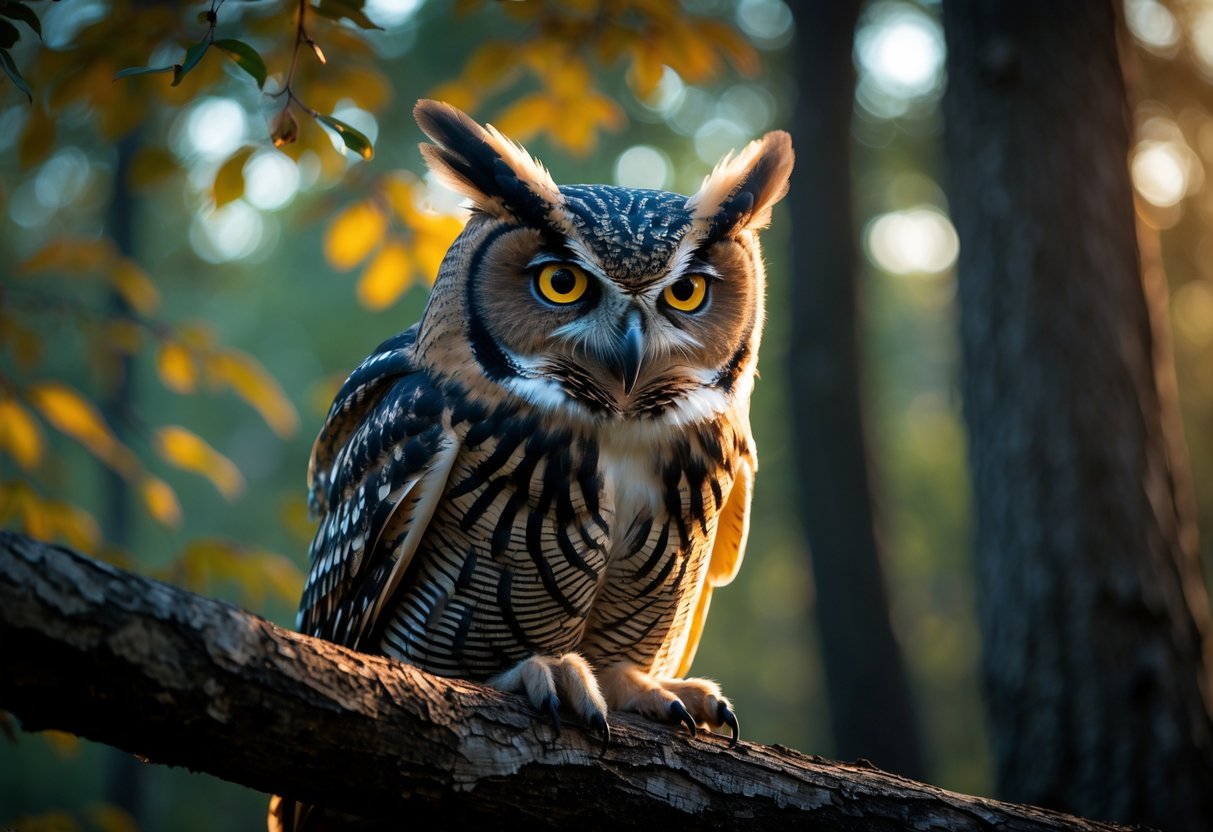
Because owls hunt at night, they need to see well in the dark. Their eyes have way more light-sensitive cells than ours, so they can catch prey when it’s almost pitch black.
If you’re out walking quietly in the woods at night and wonder if an owl notices you, the answer is probably yes. They don’t miss much.
Owls don’t just use their eyes, though. Their hearing is incredible and picks up sounds you’d never notice. That makes them amazing hunters and super aware of everything, day or night.
Curious about how owl eyes work or just how good their vision really is? Let’s dig into it.
How Do Owls See Humans?
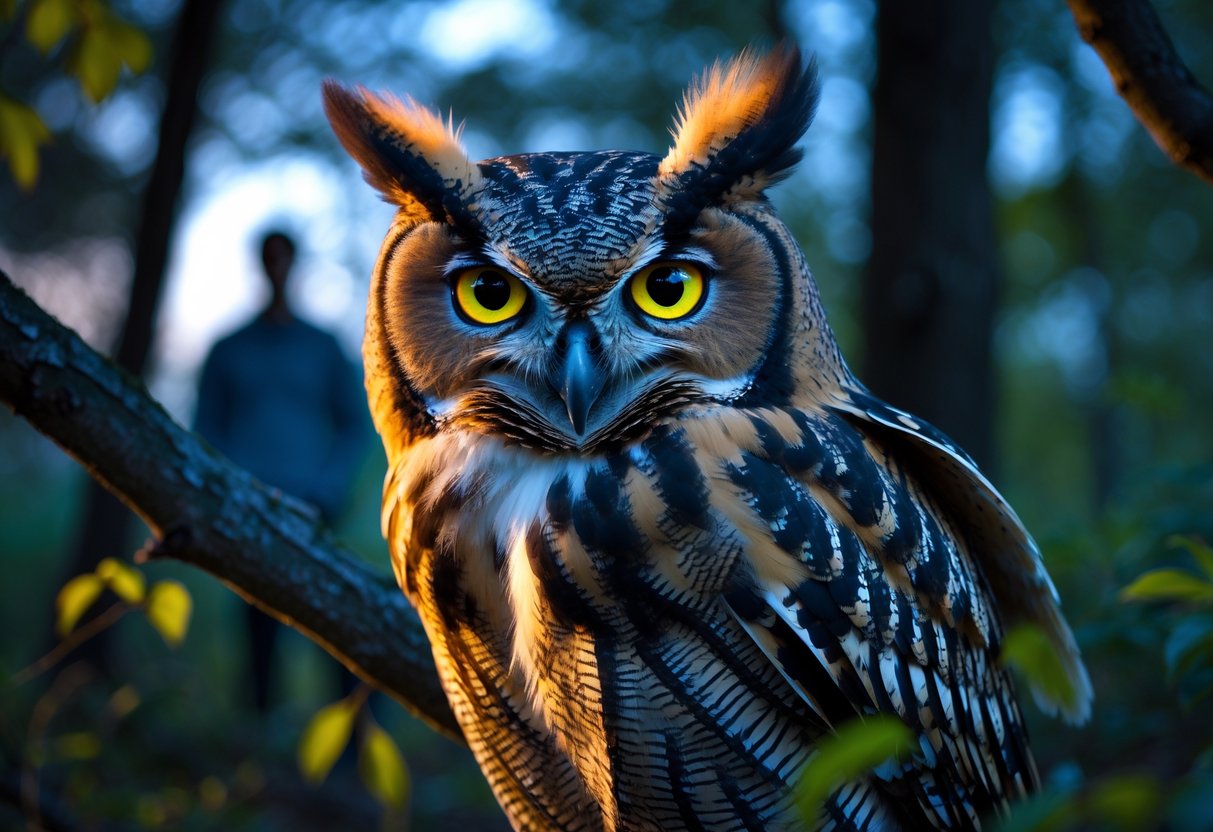
Owls rely on their sharp eyesight to spot things, even when it’s dim. Their eyes work together to figure out how far away something is, and they’re experts at catching movement.
They can’t see if it’s pitch dark, but their eyes give them a big edge when others can’t see much at all.
Binocular Vision and Depth Perception
Owls have big, forward-facing eyes, which gives them binocular vision. Both eyes focus on the same thing, so they see in 3-D and judge distances really well.
That’s a huge reason why owls are such good hunters. Since their eyes barely move in their skulls, they just turn their heads to look around.
This lets them keep their eyes locked on you (or their dinner) without losing focus. It’s kind of intense if you think about it.
Owls’ Ability to See in Low Light
Owls’ eyes look massive compared to their heads, so they pull in a ton of light. That’s super useful when it’s getting dark.
Their pupils open up wide to grab every bit of available light, making it easier for them to spot you at dusk or dawn.
Inside those eyes, owls have way more rod cells than we do. Rods help with seeing in the dark, though they don’t really pick up color.
Because of that, owls mostly see in shades of gray at night. But they notice even the tiniest movements.
How Owls Detect Movement
Owls’ eyes and brains are wired to catch even tiny movements. All those rod cells help them pick up little shifts in shadows or subtle motions you’d probably miss.
Their eyes are built for night hunting, so they’re great at tracking anything that moves. If you stand totally still, you might avoid their attention, but even the smallest motion can give you away.
Can Owls See in Complete Darkness?
Owls can’t see in total darkness. Their eyes still need a little bit of light to work.
Behind their retinas, they’ve got this special layer called the tapetum lucidum. It reflects any light that gets in, which boosts their night vision a lot.
When it’s pitch black, some owls rely more on their amazing hearing than their eyes. They use those keen ears to hunt in places where you’d think nothing could see or hear.
So, their night vision is fantastic, but it’s not perfect when there’s zero light.
If you want to go deeper, check out American Bird Conservancy’s facts about owl eyes or World Of Owls on their vision.
Owl Senses, Behaviors, and Species

Owls use a mix of sharp senses and cool body features to find prey. Their eyes, ears, wings, and talons all work together, letting them move quietly and pick up even faint movements or sounds.
Different kinds of owls have unique features that help them survive in their own habitats.
Facial Structure and Vision Adaptations
Owls have big, tube-shaped eyes right at the front of their faces. This gives them binocular vision, so they can judge depth and distance really well.
Since their eyes don’t move like ours, they twist their heads up to 270 degrees to look around without moving their bodies.
Snowy owls blend into snowy places with their white feathers. Barn owls have pale faces that help reflect sound.
Ear tufts on great horned owls aren’t actually ears—they’re for camouflage and maybe a bit of communication.
Their night vision is strong because of those big pupils and special cells that gather more light than we can. If you spot one staring at you in the dark, it’s probably checking you out right back.
Silent Flight and Observation Skills
Owls fly almost silently, thanks to their wings. The feathers have soft edges and tiny fringes, which cut down on noise.
This lets them sneak up on prey without being heard. Their wings are broad and rounded, so they can glide slowly and quietly.
When a barred owl or an eastern screech-owl hunts, you probably won’t hear a thing.
Their soft, padded feet and sharp talons help them grab prey quickly and hold on tight. They use hearing and sight together, often hunting at night while staying really still and focused.
Signs an Owl Has Noticed You
When an owl spots you, it might give off some subtle hints. You could catch it blinking slowly or just staring at you with those big, unblinking eyes. That’s its way of sizing you up, honestly.
Sometimes, the owl tilts its head or swivels it to get a better look. If it feels comfortable enough, it might even blink quickly—almost like it’s curious or just relaxed.
Owls don’t usually make much noise if you’re around, unless you’ve really annoyed them. Instead, watch for little changes, like shifting posture or moving their wings. If it raises those ear tufts or fluffs up its feathers, yeah, it probably knows you’re there.
Noticing these signs can really help you figure out what’s going on, especially if you stumble across an owl’s nest or spot a common species like the long-eared owl.


