
Spotting an owl at night actually happens more often than you might expect. Since owls are nocturnal, you’re just seeing them out and about, doing their usual nighttime thing.
They might be hunting, exploring, or just hanging out in their natural space.
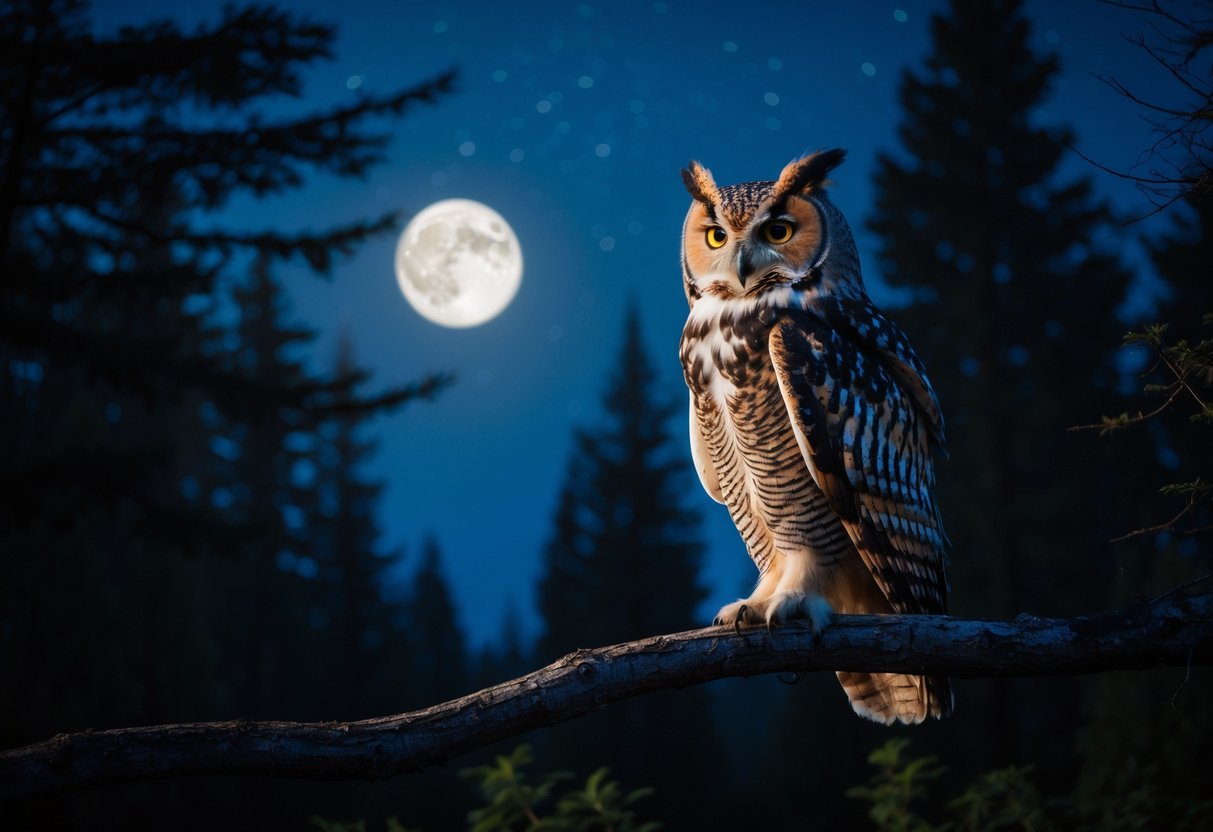
Owls have picked up all sorts of meanings across different cultures. Some folks think of them as wise or mysterious, or even as a sign to trust your gut.
Other people feel like an owl’s visit means it’s time to pause and reflect, maybe slow down a bit.
Whether you find owls fascinating or just plain cool, learning about what they symbolize can add something special to your nighttime encounters. Who knows, you might end up seeing the night in a new way.
What It Means to See Owls at Night

When you spot an owl after dark, you’re catching these birds in their element. Owls come alive at night because their hunting skills and silent wings give them an edge.
You might notice different owl behaviors depending on the species. Cultures all over the world have stories about owls, too, making these birds feel almost magical or symbolic.
Reasons Owls Are Active at Night
Owls hunt and roam mostly after sunset. Their big eyes and sharp hearing help them find prey in the dark.
You could see an owl swooping after rodents, insects, or even small birds. Great horned owls, for instance, use their strong talons to grab larger animals.
During the day, owls usually keep out of sight to stay safe.
Their silent flight lets them sneak up on prey. Sometimes, you’ll hear their hoots or calls echoing through the night as they talk to each other or claim their territory.
Common Nocturnal Owl Species You Might Spot
Depending on where you live, you might bump into a few different owl species at night.
- Great horned owl: Big, fierce, and sporting those iconic ear tufts. It hunts just about anything it can.
- Barn owl: That heart-shaped face is hard to miss, and it glides almost silently. You’ll often find it near barns or open fields.
- Snowy owl: Mostly out during the day but sometimes hunts at night, especially in snowy places.
- Burrowing owl: Small and quirky, it hangs out in open fields and sometimes uses underground burrows.
Each owl has its own habits and calls, so you might get good at telling them apart by their sounds or looks.
Cultural Beliefs and Symbolism Associated With Owls After Dark
Across the globe, people have attached all sorts of meanings to owls. Some Native American tribes saw owls as messengers, sometimes warning of death or the spirit world.
Other folks see owls as wise protectors. The ancient Greeks even tied owls to Athena, their goddess of wisdom.
You’ll spot owls on graduation cards, too—usually as a nod to knowledge and learning.
In some places, people think of owls as spiritual guides or messengers from ancestors. Whether you find them mysterious or wise, seeing an owl at night often feels like a sign.
Curious about the spiritual meaning of seeing an owl at night? There’s a lot to explore.
Nocturnal Owl Behavior and How to Observe Responsibly

Owls get busy at night, and if you pay attention, you’ll notice some pretty interesting behaviors. If you want to enjoy seeing owls like the great horned or barn owl, it’s important to respect their space.
Typical Nighttime Behaviors and Signs to Watch For
At night, owls hunt for small creatures—think mice or beetles. Maybe you’ll catch a glimpse of a great horned owl gliding between trees or hear its deep hoot in the distance.
Their big eyes help them see in the dark, and their sharp ears pick up the tiniest sounds.
If an owl starts shifting around, stares right at you, or moves suddenly, it’s probably feeling uneasy. That’s your cue to give it some room.
Staying quiet and still helps the owl relax and keeps the moment special.
Best Practices for Respectful Owl Watching
If you want to watch owls without bothering them, a few simple tips go a long way:
- Keep your distance. If the owl acts nervous or moves, you’re too close.
- Move slowly and quietly. Sudden moves can scare them off.
- Don’t feed owls. It messes with their natural instincts and can actually hurt them.
- Stick to public trails and respect property lines.
- Avoid nests. Getting too close can attract predators or stress the birds.
By following these tips, you help protect owls and their homes—and you get a better experience, too.
How Crepuscular Activity Affects Owl Sightings
Some owls, like the barn owl, stick to a crepuscular schedule. That just means they get the most active during dawn and dusk.
You’ll stand a much better chance of spotting them in those in-between hours—right when the sky shifts from day to night, or the other way around.
The light’s low at these times, but it’s not pitch black. Owls lean on their sharp eyesight and incredible hearing to hunt in those conditions.
If you head out at dawn or dusk, you get a longer window in that dim light before true nighttime kicks in. That’s when most owls really get going.
Honestly, knowing when these crepuscular owls wake up just makes owl watching easier. You might even catch a glimpse of these quiet hunters if you time it right.


