
If you watch deer for a while, you’ll see them chasing after tender leaves, acorns, and any sweet fruit they can find. Deer really go for high-energy foods like acorns, clover, apples, and legumes. These give them the calories and nutrients they need to grow and make it through tough seasons. No wonder they keep showing up in orchards, fields, and, annoyingly, backyard gardens.
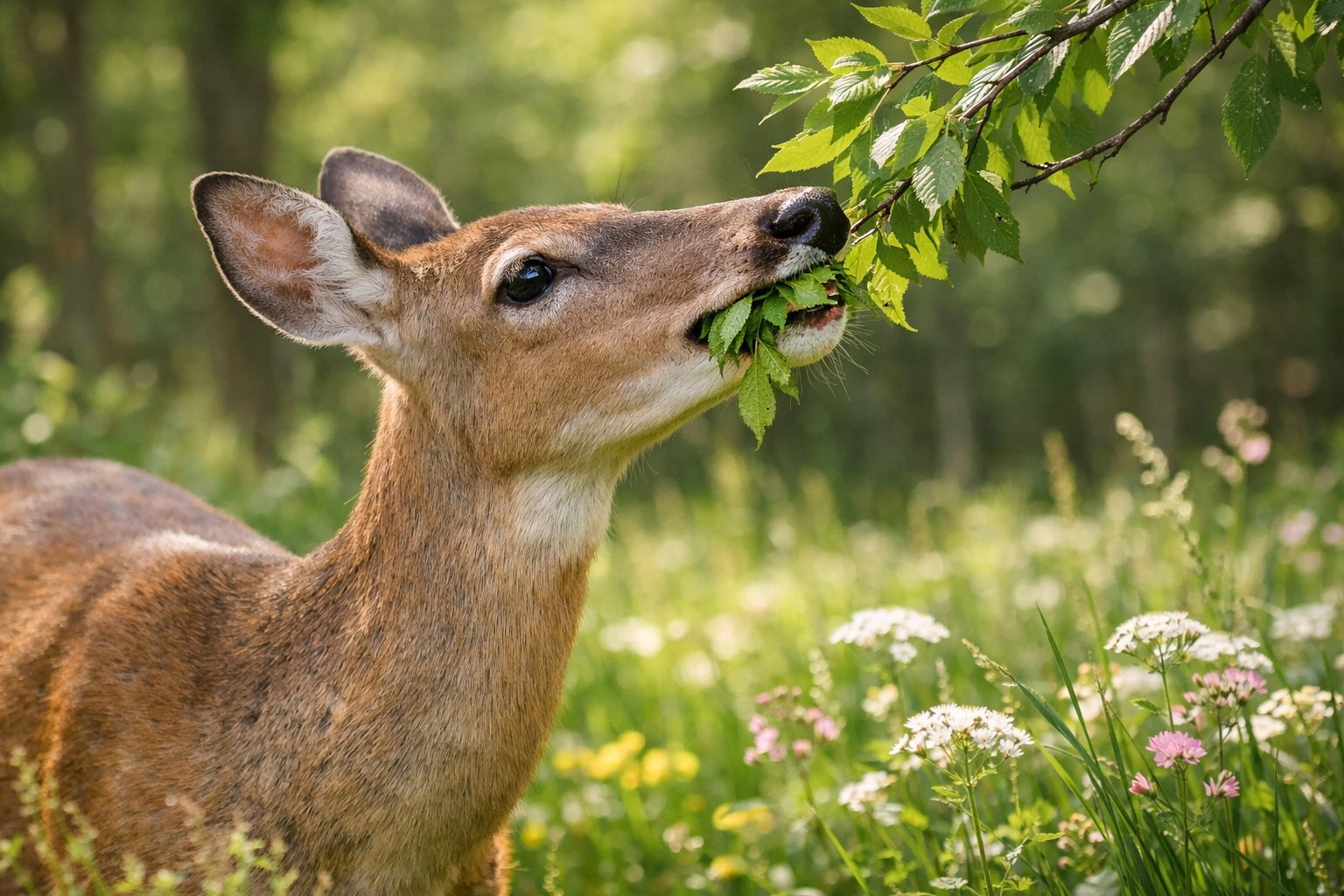
As you read on, you’ll see how the seasons nudge deer to change up their menu. Spring brings fresh shoots, but winter? That’s when they turn to twigs and whatever else they can find.
You’ll pick up some practical tips about what draws deer in and why certain plants matter for their health and behavior.
Deer’s Favorite Foods: What They Love Most

Deer choose foods that give them quick energy, help them build up fat for winter, or supply protein for fawns and does. You’ll notice they focus on high-calorie nuts in the fall, sweet fruits when they’re ripe, leafy legumes in the spring, and farm crops whenever they find them.
Acorns and Other Nuts
Acorns are huge for deer in the fall. You might spot them hanging around white oaks since those acorns taste less bitter than the red oak kind and go down easier.
When oak trees are dropping acorns everywhere, deer pack on fat to get ready for winter.
Deer also munch on chestnuts, beechnuts, and hickory nuts. Those nuts have tons of fats and calories, so deer keep coming back to the same trees every year.
If you’re managing land, keep an eye on where those nuts drop—deer will return to those spots again and again.
Apples, Pears, and Fruits
Deer can’t resist fallen or overripe fruit. You might catch them in orchards or along field edges, gobbling up apples, pears, persimmons, and softer fruits like grapes and berries.
That sugar and water in fruit? It gives them a quick boost, especially in late summer and early fall.
Berries like blackberries and raspberries disappear fast when they’re in season. Fruit close to the ground or hanging from low branches brings in more deer since they don’t have to risk exposing themselves.
Clover, Alfalfa, and Forbs
In spring and summer, deer want tender, leafy plants. You’ll often spot them grazing on clover—white clover is a favorite—in fields and even in lawns.
Clover and alfalfa are packed with protein and are super easy for deer to digest. That really helps does during pregnancy and fawns as they grow.
Forbs (those broadleaf herbaceous plants) fill in the gaps between other foods. Deer browse all sorts of forbs and even young bean or pea plants.
If you plant a mix of clover, alfalfa, and different forbs, you keep deer fed through the whole growing season.
Corn, Soybeans, and Agricultural Crops
When crops are around, deer take full advantage. Corn and soybeans give them a big calorie and protein boost, so fields can pull in deer from pretty far away.
Corn offers quick carbs, while soybeans and other legumes pack more protein.
After harvest, leftover grain and seeds still feed deer. If you want to guess where deer will show up, check the field edges and those spots where crops meet the woods.
For hunters or land managers, small food plots of soybeans or clover can draw in deer more reliably than wide-open fields.
Natural Deer Diet and Feeding Habits

Deer eat a surprisingly wide mix of plants. They’ll take tender leaves, woody twigs, grasses, wildflowers, and even garden veggies, depending on what’s easiest and most nutritious at the time.
Leaves, Twigs, and Woody Browse
Deer love tender leaves and young shoots on shrubs and saplings. You might see them stripping buds and chewing soft shoots from maple, ash, and dogwood when new growth pops up.
In winter, they switch to woody browse—twigs, bark, and buds from trees like willow and aspen—since green stuff is buried or gone.
Browse includes shrubs such as honeysuckle and young saplings, which offer high nutrients in spring and fall. When food is scarce, deer will nibble bark and even lichen.
Evergreen ornamentals like arborvitae, holly, and yew sometimes end up on the menu, though heavy browsing can kill these plants over time.
Grass and Herbaceous Plants
Deer graze on grasses and herbaceous plants when new, tender growth appears. You’ll find them in fields of fescue, ryegrass, and clover during spring and early summer.
Those young, green blades are easy to digest and give quick energy.
Wildflowers and forbs—like plantain and clover—provide protein and minerals. These plants matter a lot for fawns and nursing does.
Deer usually skip coarse, mature grass, but after a rain, they’ll return to grazed patches or lawns when the grass is soft again.
Browse Preferences by Season
In spring and summer, deer go after high-protein foods: tender leaves, shoots, clover, and legumes.
You’ll notice them hitting up alfalfa and young wildflowers during these seasons, which helps with antler growth and fawn development.
When autumn rolls in, they switch to calorie-rich foods like acorns, nuts, and ripe fruit.
As winter gets harsh, deer rely on woody browse—bark, buds, and twigs from shrubs and trees. Sometimes, when things get really tough, they’ll even eat lichen or stripped bark just to get by.
Garden Vegetables and Ornamental Plants
Deer just love munching on garden vegetables and ornamentals near homes. They go after lettuce, peas, beans, and carrots all the time.
Tender perennials like daylilies and hosta? Those are deer favorites, too. In spring, you’ll probably notice chewed tulips and roses when the new shoots pop up and look extra tasty.
Some ornamentals seem to attract deer more than others. Azalea, rhododendron, and holly often get browsed.
Sometimes, when food is scarce, deer will even nibble on English ivy and yew. If deer keep showing up in your yard, you might want to try barriers, scent repellents, or just plant things they don’t like as much.


