
Honestly, it sounds kind of ridiculous, but yep — deer will eat a hot dog if they stumble across one. Wild deer act curious and take advantage of easy snacks, so a salty, meaty thing like a hot dog might catch their attention, even though it’s definitely not healthy for them.
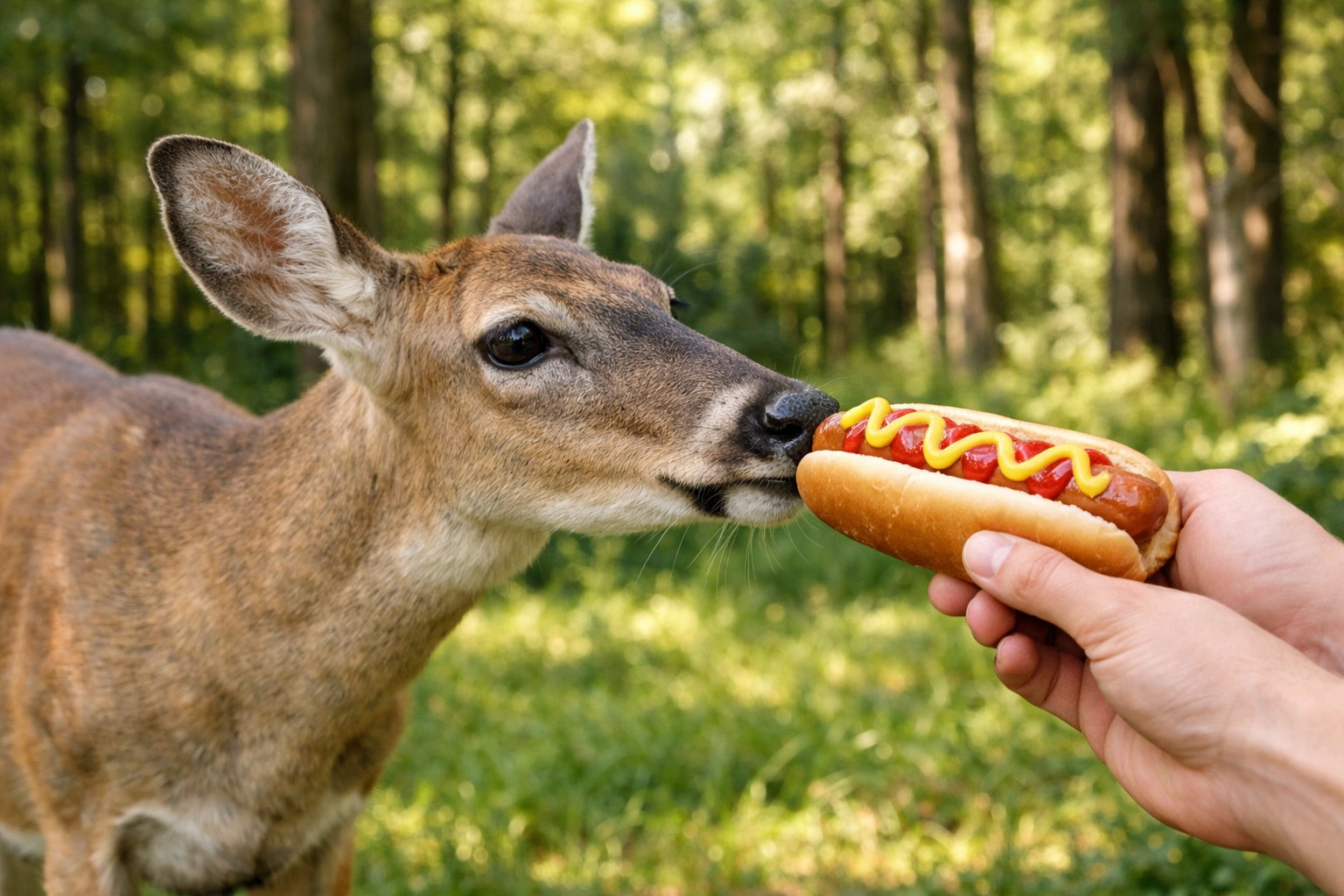
Ever wondered what happens when wild animals get into human food? This post digs into why deer sometimes munch on hot dogs, what risks come with feeding them processed meat, and how venison hot dogs are different if you’re after something safer and more wildlife-friendly.
Stick around for real-life examples, some easy-to-understand facts about what deer like to eat, and a few tips for dealing with those nosy, hungry visitors without causing them harm.
Will a Deer Eat a Hot Dog?

Deer don’t really turn their noses up at much. They’ll give all sorts of foods a try if they find them. A hot dog’s smell, saltiness, and fat content can tempt a deer, but it’s not something they’re built to eat and it comes with some real downsides.
Deer’s Natural Diet and Feeding Habits
Deer mostly stick to plants: leaves, twigs, grasses, forbs, fruits, and nuts like acorns. Their four-chambered stomachs work best with high-fiber, low-fat foods.
In the summer, you’ll spot them nibbling on fresh greens. When fall comes, they go for fruits and acorns. Winter pushes them to eat woody plants and whatever they can find.
Deer rely on gut microbes to break down cellulose. Animal-based foods or processed meats throw off their digestion. Hay, corn, alfalfa, or special deer feed come closer to what they need than a hot dog ever could.
Why Deer Might Be Attracted to Hot Dogs
Hot dogs put out a strong smell and pack in salt, fat, and protein. That’s basically an open invitation for a hungry deer.
Salt, especially, draws deer in if they can’t find natural mineral sources. Fat and protein give them quick energy, which can be handy when food’s scarce.
Human activity makes these encounters more likely. Grills, campsites, and trash cans leave hot dogs where deer can grab them. People have caught deer snatching hot dogs straight off grills, so it definitely happens. Still, if given a choice, deer usually prefer plants.
Risks and Concerns of Deer Eating Hot Dogs
Leaving hot dogs out or feeding them to deer can mess with their digestion and nutrition. Processed meats don’t have the fiber or key plant nutrients deer need, which can lead to bloating or diarrhea. Too much salt and fat puts extra stress on their bodies.
Feeding deer human food changes their behavior fast. They lose their natural fear of people, start showing up near houses, and might wreck gardens (like those tomatoes you’ve been growing). Crowds of deer can spread disease and increase car accidents.
If you want to help deer out, plant native browse or offer proper feeds like alfalfa or commercial deer feed, but always check your local rules first.
There’s plenty of evidence that deer will eat hot dogs, but it’s not good for them. For example, people in Montana have caught deer taking hot dogs right off grills (see video).
Venison Hot Dogs: Making and Enjoying Deer-Based Hot Dogs

Want to know how to turn ground venison into juicy hot dogs? Here’s what you need to know about the meat, basic equipment, and some simple steps for getting that classic flavor and snap.
Overview of Venison Hot Dogs
Venison hot dogs mix lean deer meat with extra fat so the links stay moist instead of dry and crumbly. Most folks use about 70% ground venison and 30% pork fat (pork fatback works really well) for the best texture.
Many recipes add Prague Powder #1 (that’s pink curing salt) when smoking, which keeps the color nice and stops bacteria. Always follow the directions on the package for safety.
Seasonings like kosher salt, black pepper, garlic powder, onion powder, smoked paprika, mustard powder, and maybe a little cayenne or coriander really liven things up. Natural hog or sheep casings give you that satisfying “snap.” If you want to avoid animal casings, you can use cellulose, but it changes the bite a bit.
Keep your meat and equipment super cold so you get a good emulsion and avoid greasy hot dogs.
Step-by-Step Guide to Making Venison Hot Dogs
Trim off any silver skin or sinew from your venison, then cut it into 1-inch cubes. Do the same with pork fatback, and chill both in the freezer for about 30–45 minutes so they’re firm.
Grind everything once through a coarse plate. Mix in your salt, curing salt, spices, and some ice water. Then grind it all again using a fine plate.
Use a sausage stuffer or your grinder’s stuffing attachment to fill the casings. Don’t overstuff them or they’ll burst. Twist the links every 5–6 inches, switching up the twist direction each time.
Poach the links in water at 165–170°F until the internal temperature hits 155°F. You can also smoke them low and slow—start at 130°F to dry them out, then finish around 160–165°F with smoke.
Chill the hot dogs right away in an ice bath to set the texture and stop the cooking. When you’re ready to eat, reheat them and give them a good char on the grill.
Essential Ingredients and Tools for Homemade Deer Hot Dogs
You’ll want to start with ground venison and pork fatback—about 30% by weight is a good rule. Grab some kosher salt, black pepper, garlic powder, onion powder, smoked paprika, mustard powder, and Prague Powder #1 if you’re planning to cure them for smoking.
If you’re feeling adventurous, toss in diced onions, jalapeños, or maybe some shredded cheese. Why not mix it up?
For tools, I always reach for my digital kitchen scale and a solid meat grinder. If you’re only making a little, a food processor works in a pinch. A sausage stuffer definitely makes life easier, and you’ll need some grinding plates and hog or sheep casings. I like to keep a meat thermometer handy, along with a couple of big mixing bowls and a container for an ice bath.
Want that smoky flavor? Fire up a smoker. If you’re short on time, a grill gets the job done for a quick char. Non-fat dry milk powder or a splash of ice water helps the meat bind together for that classic hot dog texture.
Keep everything as cold as you can, and use your thermometer to make sure you hit 155°F. That’s the sweet spot for safe, juicy deer hot dogs.


