
You’ll probably catch deer munching on leaves, shoots, grasses, berries, and sometimes even tree bark when food runs low.
Deer in the UK are herbivores. They switch between grazing grasses and browsing shrubs, trees, fruits, and nuts, and it really depends on the season and their species.
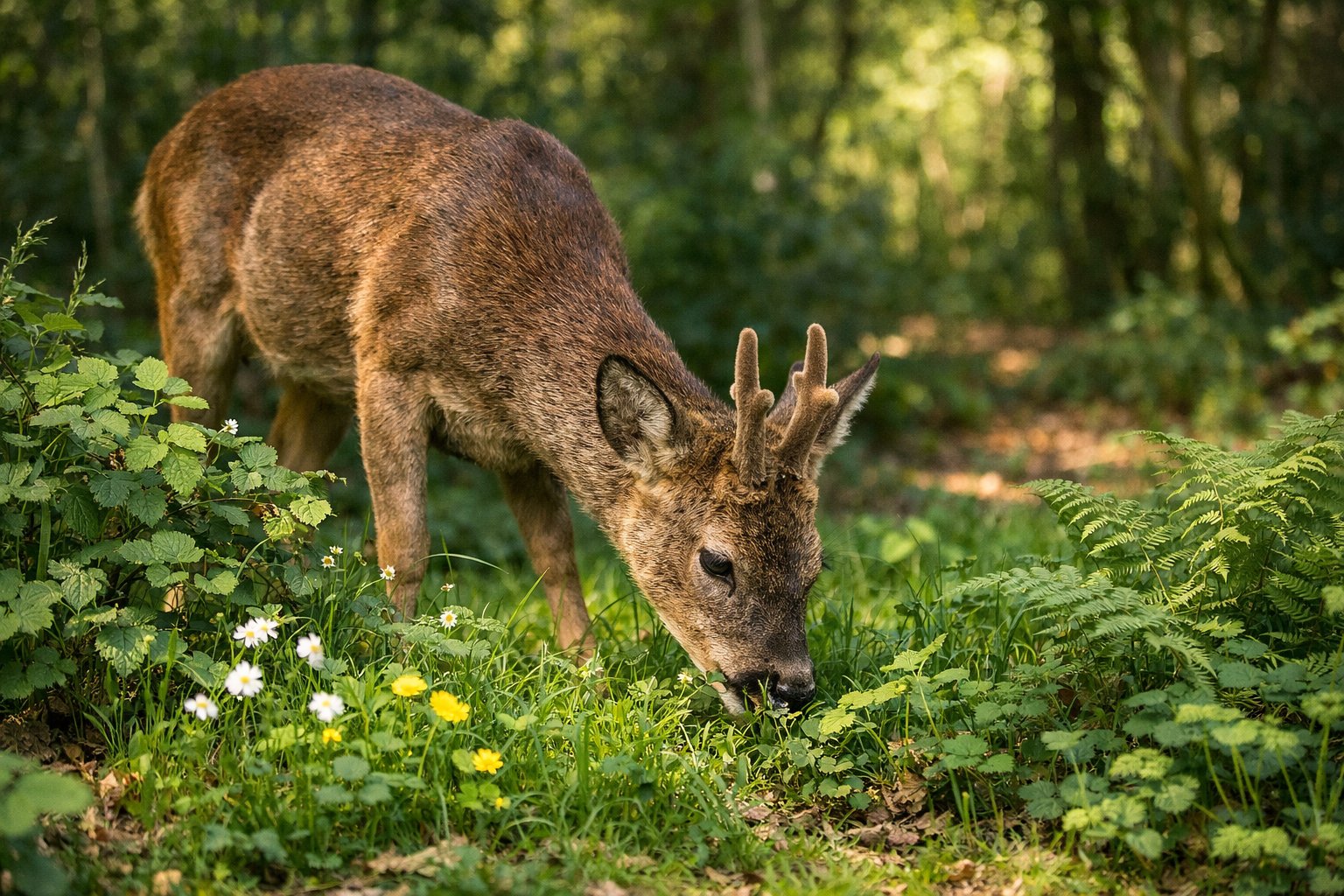
Ever wondered why deer seem to pick certain plants over others? This post dives into their core foods and explains how their diet shifts with the seasons.
You’ll also get a peek at how different UK species—like roe, red, fallow, muntjac, sika, and Chinese water deer—have their own quirks and favorite snacks.
Core Foods Eaten by Deer in the UK
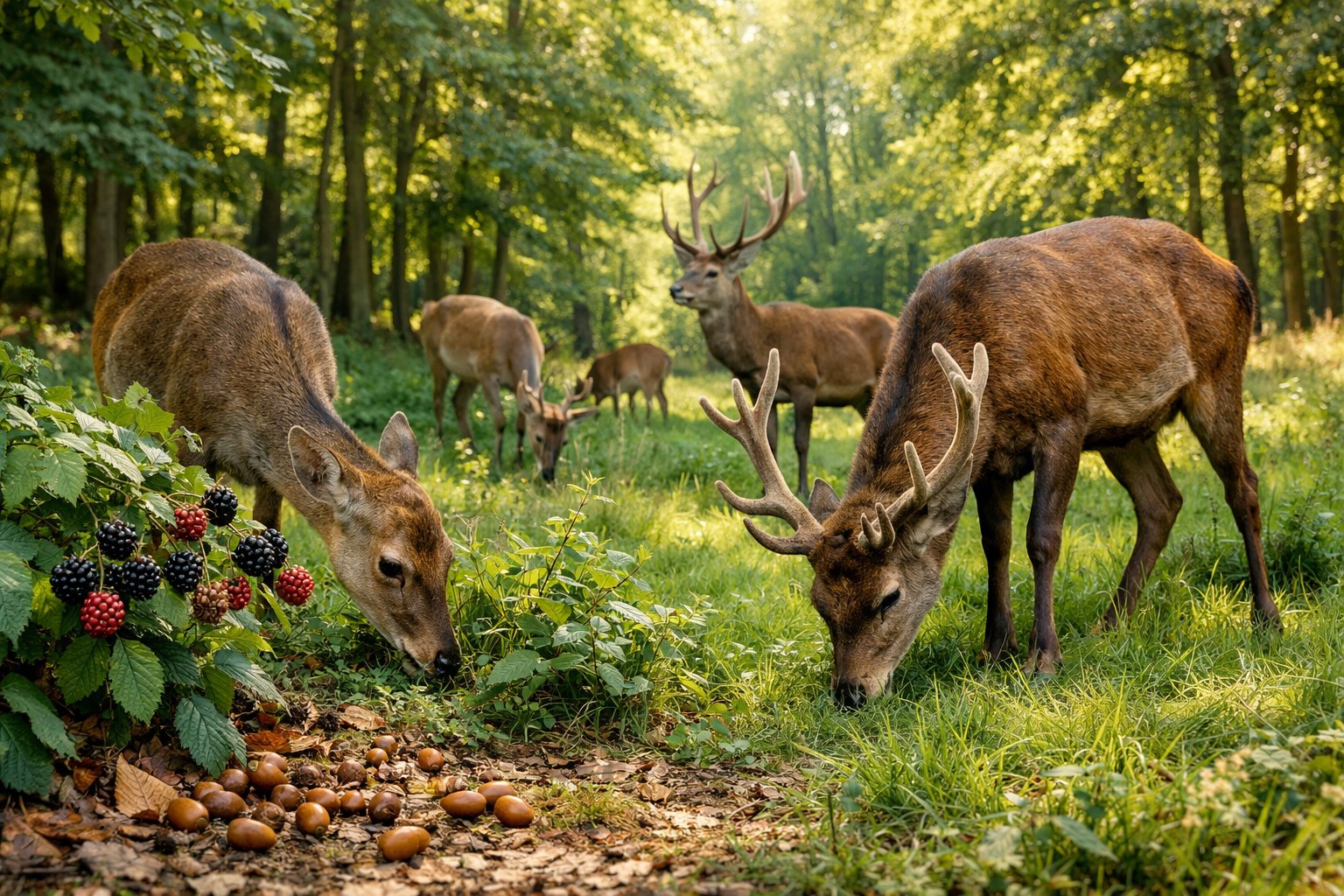
Deer in the UK eat all sorts of things: grasses, leaves, shoots, fruits, and crops.
Their diet changes with the seasons, the habitat, and honestly, whether there’s much food around or not.
Grasses and Herbaceous Plants
Grasses make up a big chunk of what deer eat, especially for fallow and roe deer.
You’ll often spot them grazing on ryegrass, clover, and meadow grasses in fields or along the roadside.
Forbs like dandelions, plantain, and buttercup offer extra nutrients and get eaten when they’re around.
When green plants run low, deer go for herbs like heather and young bramble shoots.
Clover and alfalfa are like candy for them—high-energy and super attractive, so deer flock to pastures with those.
Even your lawn or a strip of roadside grass might become a deer buffet if wild meadows are in short supply.
Woody Plants and Tree Shoots
Deer love browsing shrubs, twigs, and young trees, which isn’t great news for woodland regeneration.
You’ll see them nibbling willow, aspen, dogwood, and maple shoots, along with the leaves of young oaks and birch.
When winter hits and soft leaves disappear, they’ll strip bark or chew twigs.
This kind of browsing can really harm saplings and hedgerows, so land managers often put up guards or fencing to keep deer away from young trees.
Deer tend to pick the most nutritious young shoots and buds—they’re pretty picky eaters, actually.
Fruits, Nuts and Mast
Come autumn, deer go after high-calorie foods like acorns, beechnuts, and other mast.
You’ll also catch them eating apples, pears, and wild berries left in hedgerows or orchards.
These richer foods help deer build up fat for winter.
If they’re near farms or gardens, they might even grab persimmons or fallen fruit.
In years when trees drop a lot of nuts, deer survival and reproduction can really jump, so the local food supply matters.
Crops and Garden Plants
Deer don’t mind raiding crops like maize (corn), soybeans, and cereals if fields are close by.
You might notice damage to young corn or soybeans in spring and summer.
In gardens, deer seem to love easy snacks like hosta, roses, ivy, and other soft ornamental shoots.
They’ll also eat brassicas and root crops if they can get to them.
People try netting, fencing, or planting less tasty species to keep deer out of their gardens and away from crops.
Deer Species and Their Dietary Differences
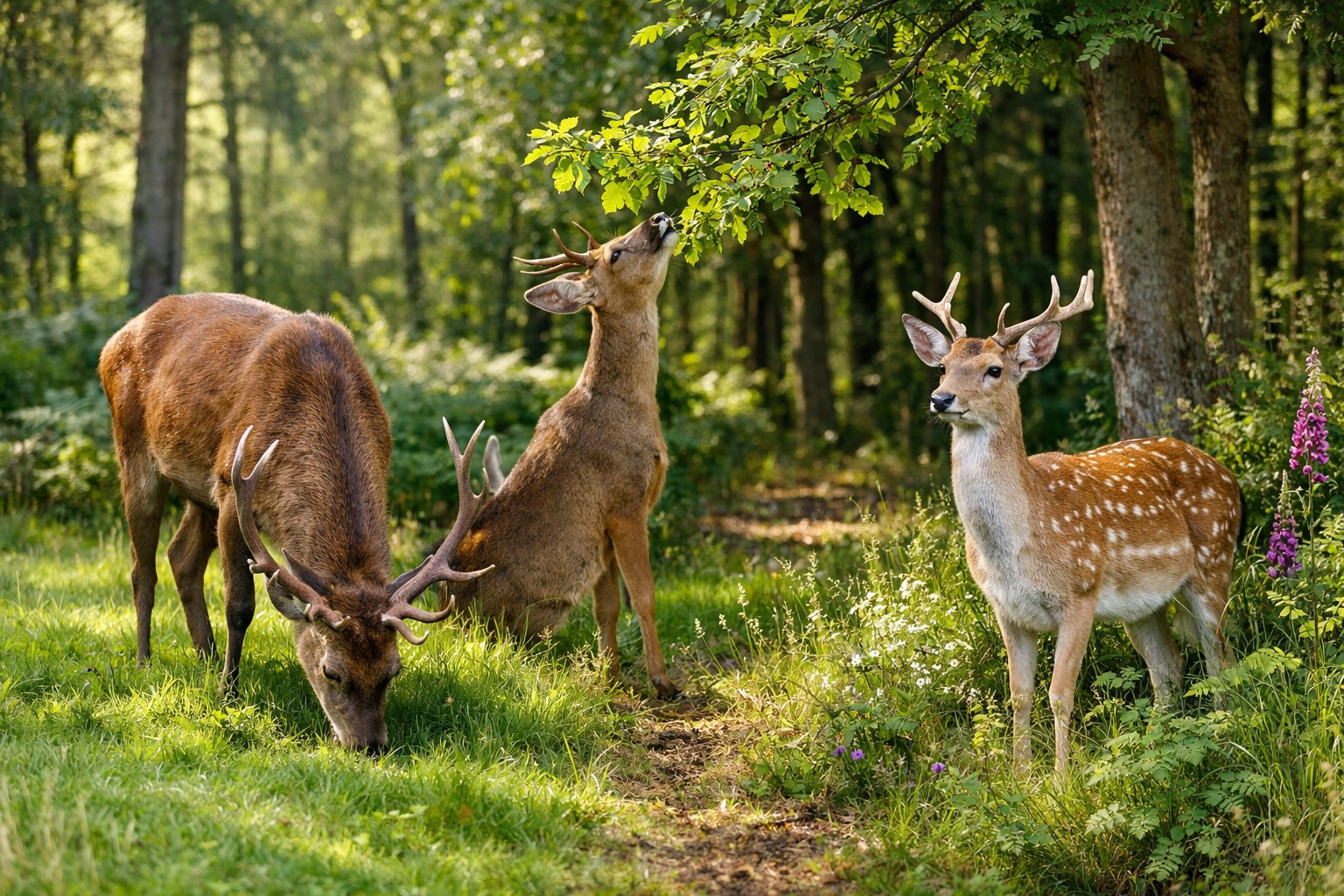
Not all deer in the UK eat the same mix of grasses, shoots, fruits, and woody browse.
Some stick to open grassland, while others prefer dense woods.
What they eat also shifts with age, season, and whether they’re breeding.
Red Deer Feeding Habits
Red deer (stags and hinds) eat lots of grasses and heather on moorland.
They’ll browse young tree shoots in the woods too.
In spring and summer, you’ll find them grazing short turf—fuel for fawn growth and antler development.
When autumn and winter roll in, they move to coarser stuff: heather, rushes, and woody browse from birch and willow.
Red deer are big ruminants, so they can handle tougher, fibrous plants compared to smaller deer.
A red deer herd can strip young tree regrowth if there are too many of them, which is something woodland managers worry about.
You’ll probably see stags feeding more in late summer as they bulk up before the rut.
Roe Deer Diet Preferences
Roe deer act as selective browsers.
You’ll catch them nibbling buds, leaves, and young shoots from shrubs like hawthorn and bramble, plus field herbs and garden plants.
They take small, nutrient-rich bites instead of just grazing in bulk.
Roe does and bucks go for high-protein forbs in spring and summer, which helps with fawn growth and antler velvet.
In winter, they rely more on woody browse and hedgerow fruits like hawthorn berries.
Since roe deer are so picky, they can really hurt young tree saplings and hedge regrowth in small woods.
Fallow, Muntjac, Sika and Chinese Water Deer
Fallow deer like pasture, clover, and acorns, but they’ll switch to shoots and grasses if that’s what’s around.
You’ll notice fallow bucks growing antlers in spring and summer, so hinds eat more to support their fawns.
Muntjac deer are small and pretty adaptable.
They browse low shrubs, garden plants, and seedlings close to cover.
Since muntjac fawns hide early, does need leafy, high-protein forage in spring.
Sika deer eat a mix of grass and browse—saplings and bracken in the woods, turf on parkland.
Chinese water deer prefer wet, marshy spots and eat reeds, shoots, and farm crops when they find them.
These smaller deer can put a lot of browsing pressure on hedgerows and gardens, especially if you live near a village.
How Age and Season Affect Deer Feeding
Young deer—fawns, specifically—crave high-protein milk at first. They quickly switch to nibbling tender forbs and new shoots.
As deer mature, bucks start pouring nutrients into growing their antlers. When they’re in velvet, you’ll notice they go after more protein-packed plants.
Hinds, on the other hand, ramp up their intake to support pregnancy and feed their fawns.
Seasons really shake up a deer’s menu. In spring and summer, green forbs, just-sprouted shoots, and soft leaves are the stars.
Come autumn, acorns and wild fruits take over, helping deer pack on fat for the cold months ahead.
Winter gets rough. Woody browse, heather, and tough grasses become their fallback, even if it’s not exactly gourmet.
During the rut, bucks often skip meals while chasing mates, which can leave them looking pretty worn out.
After a brutal winter, you might find deer in poor shape—thin, with little fat, and not much to eat.


