
If you want a quick answer: wolves, mountain lions, and coyotes take the most deer overall. Wolves and mountain lions do the most damage to adult deer, while coyotes hit fawns hardest.
Wolves and mountain lions kill the most adult deer, while coyotes and other smaller carnivores cause the highest fawn losses.
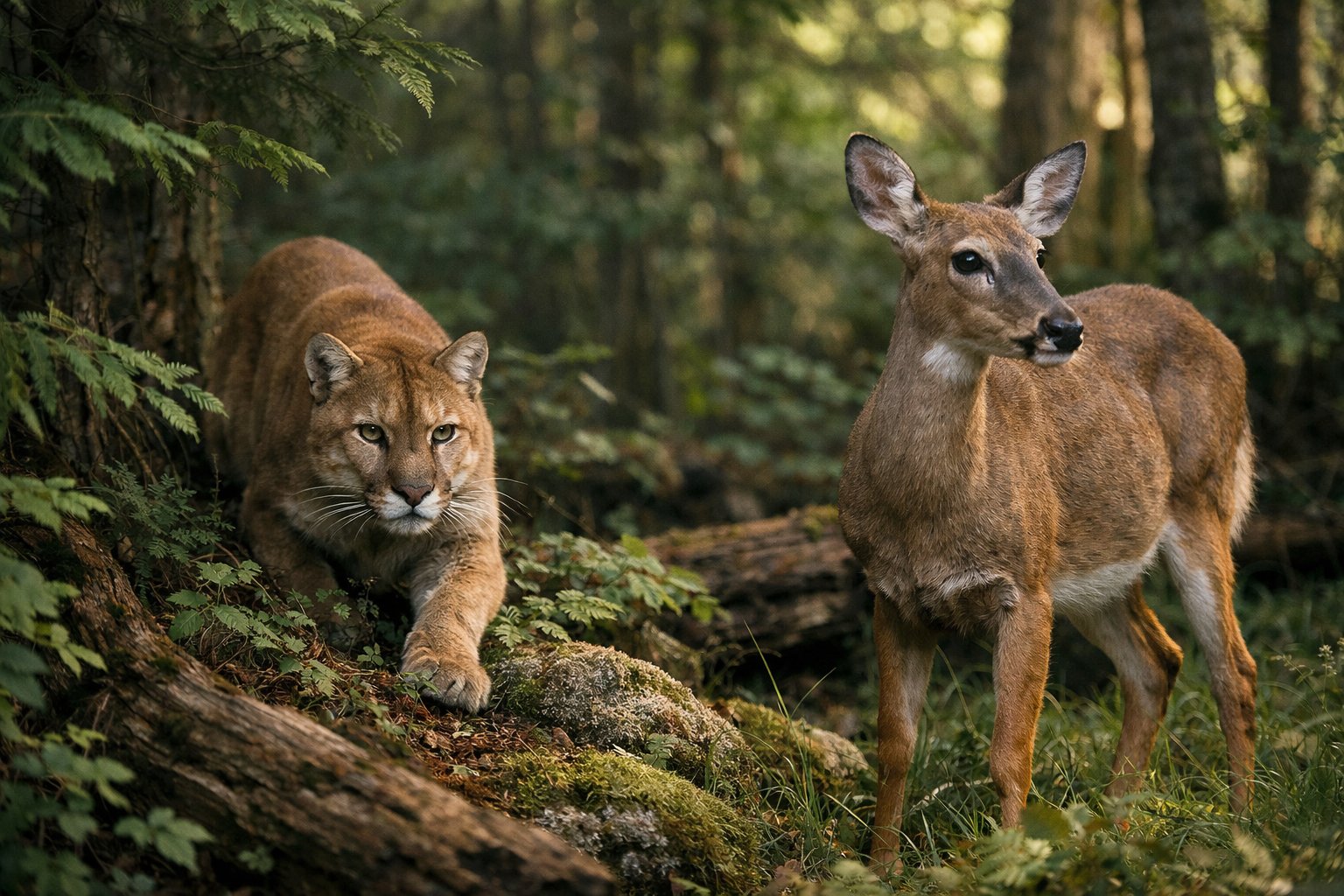
Different deer species and local populations shape which predators matter in your area. Let’s take a closer look at the big predators, and then the smaller animals and birds that still affect deer numbers and survival.
Main Predators That Eat Deer the Most
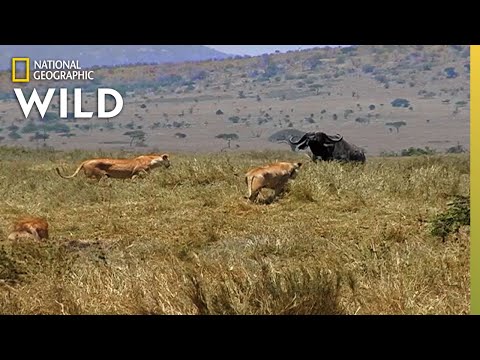
Deer face threats from people and several wild predators. These hunters remove the most adults and fawns every year.
You’ll read about hunting, pack hunters, opportunists, and big cats that shape deer numbers and behavior.
Human Hunters and Their Role
Humans cause more deer deaths in North America than anything else. In the U.S., hunters take millions of white-tailed and mule deer each year through regulated seasons, permits, and management programs.
Hunting lowers local deer density, helps control browsing damage to forests and crops, and funds wildlife management through license fees. Hunters tend to focus on bucks and yearlings, which affects the age and sex structure in herds.
Hunting dogs and retrieval teams assist with harvests. Legal takes differ by state and season, so your local regulations shape how many deer get removed each year.
Wolves: The Top Non-Human Deer Predator
Wolves kill many adult deer every year by hunting in packs. A single wolf pack can take multiple deer per month.
In regions with lots of wolves, deer survival drops—especially in winter when wolves target weakened animals. Wolves most often affect white-tailed deer, mule deer, elk, and moose where their ranges overlap.
Wolves prefer calves, yearlings, and injured adults. Their presence changes deer behavior—deer shift movement and feeding to avoid wolf territories.
Coyotes: Skilled Fawn Hunters
Coyotes hit newborn fawns pretty hard. Fawns stay hidden and motionless, but coyotes can find and kill big portions of a local birth cohort.
In some areas, coyotes account for most fawn deaths in spring and early summer. Coyotes hunt alone or in small groups, and they also scavenge carcasses.
Their impact rises where big predators are gone and where human-altered landscapes give cover. Wildlife managers sometimes control coyote numbers to help fawn survival, but results really depend on the region.
Bears: Opportunistic but Impactful
Bears—black bears, brown bears, grizzlies—eat fawns and scavenge adult deer carcasses. They rarely go after healthy adult deer, but they do kill newborns and weakened animals, especially in spring and early summer when bears need protein after denning.
Bear predation matters most where deer calving grounds overlap with bear habitat. Bears also eat gut piles left by hunters, so human hunting ends up feeding bears too.
In coastal or northern areas, big bears may prey on moose or elk calves as well.
Mountain Lions and Wild Cats
Mountain lions (cougars) are efficient deer hunters. A single cougar may kill about one deer per week to survive, which makes them important in regulating deer numbers in mountains and forests.
Smaller wild cats like bobcats and lynx mostly take fawns or weakened adults, not healthy big deer. Jaguars go after deer in parts of Central and South America where their ranges overlap, but not where larger ungulates like moose or reindeer are found.
Other Animals and Birds That Eat Deer

Deer can fall to a surprising range of hunters and scavengers. Some catch live deer at water edges or in deep snow.
Others mostly feed on deer carcasses and fawns.
Alligators and Crocodilians
Alligators ambush deer at pond and river edges. You might spot a deer drinking at dusk or crossing a channel when a big American alligator lunges from the water.
Big males (over 10 feet) can drag adult deer underwater, while smaller alligators usually take fawns. Crocodilians use stealth and powerful bites, then drown their prey.
These reptiles stay most active from spring through fall. The risk to deer rises in warm months.
If you live near wetlands in the southeastern U.S., watch where deer approach water, and maybe avoid narrow crossing points at night.
Birds of Prey: Eagles, Hawks, and Vultures
Large raptors rarely kill healthy adult deer, but they can take fawns and scavenge carcasses. Bald eagles and golden eagles sometimes snatch newborn fawns or strip meat from carcasses near rivers and open fields.
Hawks mostly target very small fawns or injured young. Vultures—turkey vultures and black vultures—play a big scavenging role.
You’ll see them circling over roadkill or predator kills, quickly eating soft tissue and leaving bones behind. Raptors and vultures help recycle nutrients in your local ecosystem and limit disease spread by removing carrion.
Wolverines, Wild Hogs, and Lesser-Known Predators
Wolverines are ridiculously powerful. They scavenge or sometimes just go for it and kill weakened deer in deep snow.
They crush bones and drag away big chunks to stash for later. Wild hogs, when there are enough of them around, scavenge deer carcasses too.
Sometimes, during chaotic moments, hogs injure fawns or weakened adults. It’s not pretty.
Other predators and scavengers jump in as well. Bears—black, brown (grizzly included), and even polar bears way up north—grab fawns and, if they get the chance, adults too.
Lynxes usually target fawns, especially when winter makes everything tougher. Crows and other corvids swoop in to pick at exposed meat, cleaning up carcasses in their own way.
All these species end up shaping the food web. They help recycle deer back into the ecosystem, keeping things moving and, honestly, a bit wild.


