
Spotting an owl at night is honestly a thrill, but you’ll need patience and a bit of strategy. You’ll have the best luck if you look and listen around dusk and dawn—focus on dense trees, spots near prey, and listen for those unmistakable calls.
Owls usually get active when the sun dips or just starts to rise. You’ll probably hear their hoots before you ever spot them.
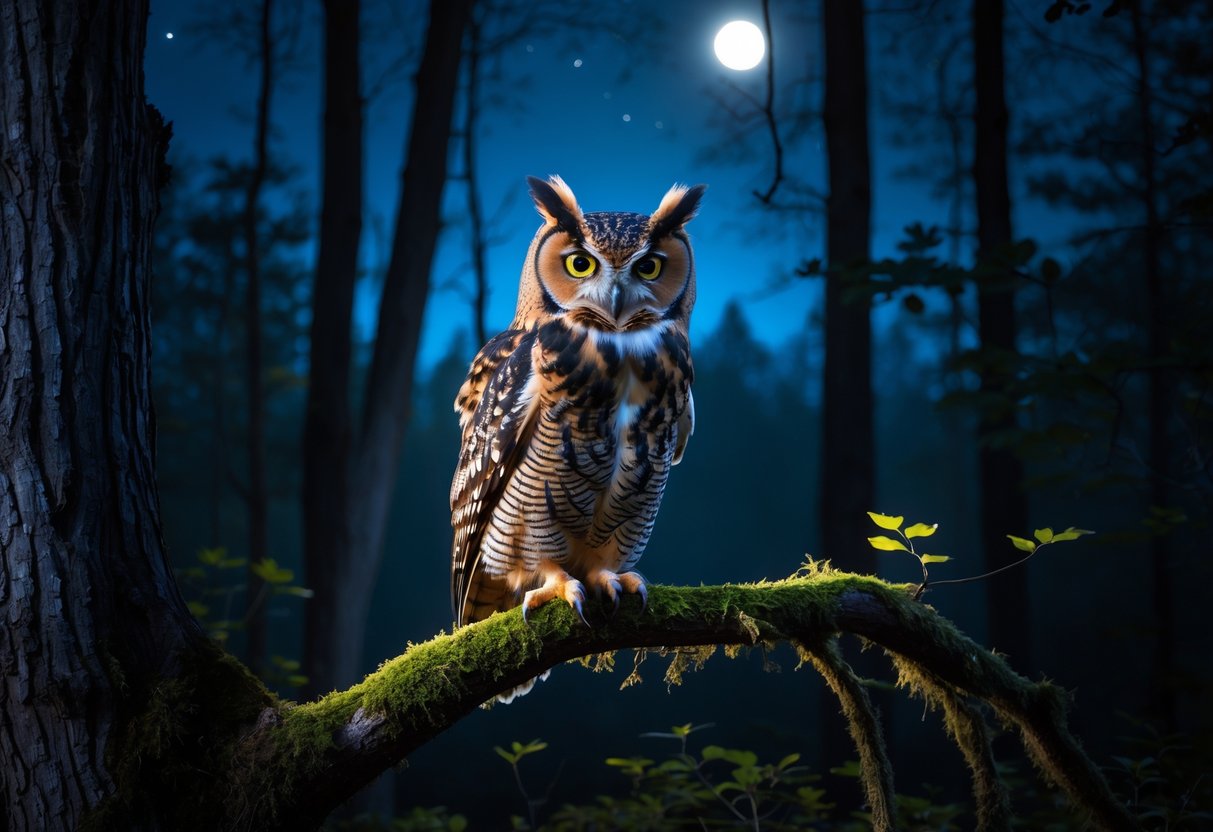
Grab some binoculars to help you find owls perched on branches or even on telephone poles. Watch for white droppings on tree trunks or those little owl pellets at the base—strange, but pretty helpful clues.
Listen for calls and pay attention to smaller birds; sometimes they’ll make a fuss if an owl’s nearby. It’s almost like they’re tattling.
Move quietly and skip the bright lights if you can. That way, you won’t scare off these incredible birds.
As you get the hang of it, you’ll start noticing how each owl species has its own quirks and favorite hangouts at night. If you want to dig deeper, check out more tips on how to spot an owl at night.
Essential Tips for Spotting Owls at Night
Finding owls at night takes patience and a bit of local knowledge. Focus on their habits, when they’re most active, the sounds they make, and little clues like pellets or favorite perches.
Understanding Owl Behavior After Dark
Owls really come alive at dusk and through the night. The great horned owl and barn owl usually kick off their hunting right after sunset.
You might hear the northern saw-whet owl and western screech owl get especially vocal, which definitely helps you track them down.
Most owls fly silently, so you’ll probably hear them before you see them. Some, like the burrowing owl, do their thing during the day but get even busier after dark.
They hunt small animals—think mice, shrews, or even insects. If you find a spot with lots of prey, chances are, you’ll find more owls.
Best Times and Places to Look for Owls
Your best bet is at dusk or just after night falls. Many owls start calling right around sunset, gearing up to hunt.
Dawn can work too, depending on what kind of owl you’re after. Check open fields, forests, and farmlands.
The short-eared owl likes open areas, while the barred owl and great gray owl hang out in thick woods.
Scan trees carefully. Barn owls sometimes nest in old barns or even palm trees, especially in places like Northern California.
Use binoculars to look for owls blending in on tree branches. Sometimes they’re so still, you’d never know unless you really look.
Recognizing Owl Calls and Sounds
Listening is probably your best tool for finding owls. Each species has its own unique call.
The great horned owl gives a deep, classic hoot. The screech owl has a high, wavering whistle. The elf owl goes for a quick series of soft whistles.
Watch for groups of smaller birds making a racket. They might be “mobbing” an owl, trying to drive it away.
If you hear a sudden burst of bird chatter or caws in one spot, check it out—an owl could be nearby.
Try learning a few owl calls ahead of time. There are apps and recordings online that can help you get familiar.
Spotting Signs: Owl Pellets and Perches
Look for owl pellets at the base of trees or near possible nests. Pellets are just the leftovers—bones, fur, and bug parts—that owls cough up.
If you spot whitewash (that’s owl droppings) on tree trunks, you’ve probably found a favorite perch.
Some owls stick to the same trees year after year. That old palm tree down the block might be home to a barn owl family.
Watch quietly and don’t get too close. You don’t want to interrupt an owl’s night.
These little hints should help you focus your search for North American owls after dark.
If you’re curious for more, here’s a detailed guide on how to find owls.
Identifying Common Nocturnal Owls

You can spot different owls by watching for their size, the sounds they make, and features like ear tufts or colors. Some owls go for loud hoots, others use trills or screeches.
Knowing what to listen and look for really helps when you’re out at night.
Great Horned Owl Characteristics
The Great Horned Owl stands out as one of the most common and recognizable owls in North America. It’s big, with a wingspan between 3.5 and 4.5 feet.
You’ll spot those distinctive ear tufts—they look like little horns on its head. Their hoot is deep and strong, kind of a “hoo-hoo-hoo hoo hoo” sound.
You’ll hear them mostly at night, but every now and then, they’ll call during the day. Their feathers are mottled gray-brown, which helps them blend right into tree bark.
These owls are tough hunters and have figured out how to live just about anywhere—cities, forests, deserts, you name it. If you hear an owl in a movie, it’s probably a Great Horned Owl.
Barred Owl vs. Barn Owl Differences
Barred Owls have a clear, loud call—almost like they’re saying, “Who cooks for you? Who cooks for you all?” It’s unmistakable if you hear it.
They have rounded heads without ear tufts. Their feathers show horizontal bars on the chest and vertical streaks on the belly.
Barn Owls look pretty different. They have a heart-shaped, white face and smooth heads—no tufts at all.
Their call isn’t a hoot, but a sharp, eerie screech. At night, you’ll often see Barn Owls flying low over open fields, hunting quietly.
Barred Owls like dense woods and show up most often in eastern North America. Barn Owls prefer open places—farms, grasslands, and they’re found almost everywhere except Antarctica.
Their different calls and favorite habitats make it easier to tell them apart.
Unique Traits of Screech and Long-Eared Owls
Screech Owls are pretty small and have those noticeable ear tufts. You’ll run into Eastern and Western Screech Owls—honestly, they look almost the same, but their calls set them apart.
The Eastern Screech Owl makes a gentle trill or a whinny that drops in pitch. On the other hand, the Western Screech Owl calls out with a sound that gets faster, kind of like a ball bouncing down a hallway.
Long-Eared Owls show off their long ear tufts too, but you probably won’t see them unless something startles the bird. When they call, you’ll hear sharp, repeating hoots, mostly at night deep in the woods.
These owls have a slimmer body, orange eyes, and a chest marked with streaks. They blend in well during the day, almost vanishing into the trees.
At night, their feathers catch the moonlight and seem to glow a bit. If you want to find them, listen for their calls and keep an eye out for those ear tufts. Spotting them can feel almost magical when you’re out exploring after dark.


