
Beekeeping is rewarding, practical, and a little humbling, especially in your first year. If you want to learn how to begin keeping bees, you need more than enthusiasm, you need a workable plan for space, gear, bee sourcing, and seasonal care. The best way to start beekeeping is to build your knowledge first, then set up one manageable hive and let your first season teach you what your routine really needs.

You can learn beekeeping through books, a local beekeeping community, hands-on practice, and observation. The benefits of beekeeping often show up slowly, through better pollination in your garden, local honey, and a deeper feel for backyard beekeeping rather than fast results. Keeping bees asks for steady attention, but a well-prepared beginner can learn beekeeping one step at a time and avoid many common mistakes.
Decide If Beekeeping Fits Your Situation

The first-year costs, the time you can commit, and your tolerance for risk all shape whether keeping bees is realistic. You also need to think about bee stings, neighborhood expectations, and whether your property and local rules support an apiary.
Time, Cost, And First-Year Expectations
A first colony usually needs regular checks during the active season, plus prep before spring and winter. Your budget should cover hives, protective gear, basic tools, and bees, and your first year may produce little or no honey while the colony builds strength.
A local beekeeping association or beekeeping club can help you compare notes on costs and realistic honey production. Many new keepers start for pollination services and the pleasure of local honey, then treat any surplus honey as a bonus.
Bee Stings, Bee Venom, And Allergy Considerations
You will get stung eventually, even with good gear. Most stings are a short-term nuisance, but if you have a history of strong reactions to bee venom, talk with a clinician before you start.
A small reaction does not always mean you need to quit, but you should know the warning signs of a serious allergy. If you are unsure, an allergy test is worth the peace of mind before you buy bees.
Beekeeping Regulations And Neighbor Concerns
Beekeeping regulations vary by state, county, and city, so check the rules before you place hives. You may need to think about hive placement, setbacks, water access, and how to reduce conflicts with pets and foot traffic.
Neighbors usually worry less when your hives are tidy, the flight path is controlled, and the bees have nearby nectar sources and pollen sources. A quick conversation goes a long way, especially if you are keeping bees in a shared neighborhood or small yard.
Set Up Your Apiary The Right Way
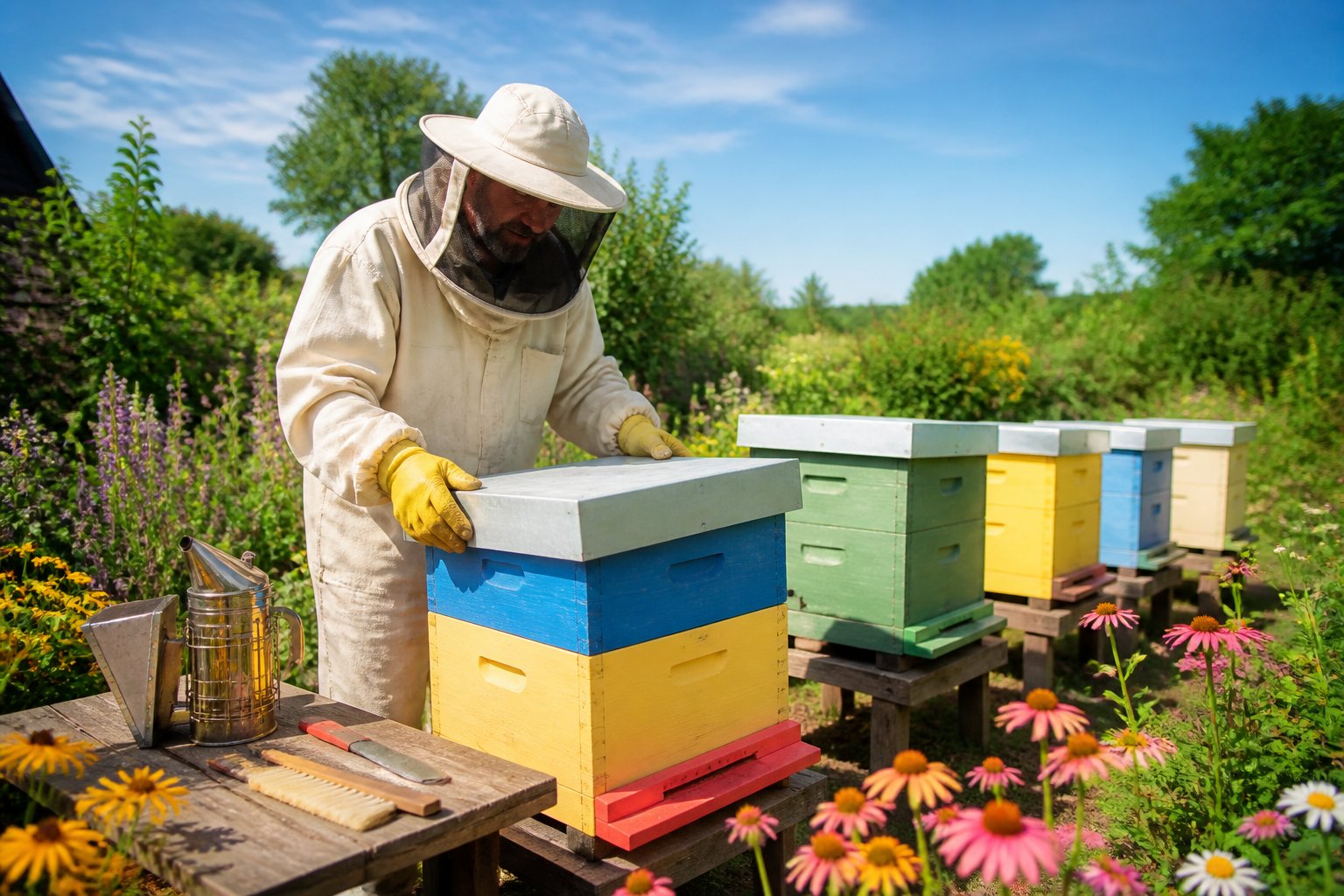
Your apiary should make daily bee traffic easy and human traffic less likely to interfere. Site choice, sunlight, water, and hive type all affect how smoothly your first season goes.
Choosing A Hive Site
Choose level ground with room to work behind and beside each beehive. You want space for bee hives that stay dry, are easy to inspect, and are not crammed against fences or walkways.
A small hive stand helps keep moisture down and makes maintenance easier on your back. If you can, place the site close to nectar sources and pollen sources, while still keeping it calm and sheltered.
Sun, Water, And Flight Path
Morning sun helps the colony start early, and a steady water source keeps bees from bothering nearby areas. Keep the flight path pointed away from doors, sidewalks, and play areas so bees rise up and out of the way.
A barrier of shrubs or a fence can guide the flight path upward. That small detail matters more than most beginners expect.
Picking Hive Types For A First Colony
For most beginners, a langstroth hive is the easiest starting point because parts and guidance are widely available. A top-bar hive, warre hive, or flow hive can work too, yet each changes how you inspect, expand, and harvest.
Choose hive types based on your goals, not novelty. If you want the most straightforward path for a first colony, keep the design simple and common.
Essential Beekeeping Equipment And Protective Gear
At minimum, you need beekeeping equipment that lets you inspect safely and work efficiently. Start with beekeeping supplies like a hive tool, smoker, bee brush, bee suit or beekeeper suit, and an entrance reducer for early control.
A honey super and extractor matter later, not on day one. It is usually smarter to buy solid basics first than to overspend on gear you will not use until the colony is established.
Get Bees And Understand What Is Happening In The Hive

Once your hive is ready, you need the right bees and a basic grasp of what the colony is doing. Knowing the difference between a nuc, a package, and a swarm helps you start with fewer surprises.
Buy Bees, Nucs, Packages, And Swarms
Most beginners either buy bees as a package, a nuc, or catch a swarm. A nuc, short for nucleus colony, gives you a small, already functioning bee colony with comb, brood, and a queen bee, which often makes the transition smoother.
A package is simpler in some ways, since you start with loose honey bees and install them into equipment yourself. Catching a swarm can be free, but it is less predictable and usually better suited to someone who already has some experience.
Bee Biology, Castes, And Bee Behavior
A healthy bee colony revolves around the queen bee, worker bees, and drones. The queen lays eggs, worker bees do most of the foraging, nursing, and hive work, and drones exist mainly for mating.
You will see pollen, nectar, and pollination become part of daily hive behavior almost immediately. Watching how honeybees move, fan, guard, and store resources teaches you more than any diagram.
Installing Your First Bee Colony
Install your first bee colony on a mild day with calm weather if possible. Keep the queen safe, orient the bees gently into the hive, and avoid overhandling frames during the first few minutes.
After installation, give them space and check later for steady activity at the entrance. If the queen is accepted and the bees are drawing comb, you are off to a good start.
Manage Hive Health And Harvest Responsibly

Healthy colonies need regular attention, not constant interference. Your hive inspection routine should focus on brood pattern, food stores, pests, and whether the colony is growing in a sensible way.
Hive Inspection Basics And Brood Pattern Checks
A good hive inspection is calm, deliberate, and short enough to keep the bees settled. Look for a solid brood pattern, enough food, and signs that the queen is laying consistently.
You do not need to inspect every frame every time. With hive management, the goal is to notice trends, not force the bees to perform on demand.
Varroa, Small Hive Beetle, Wax Moth, And Disease Risks
Varroa mite pressure is one of the biggest threats to honey bees, and many keepers monitor for varroa mites from the start. When needed, mite treatment may include options such as oxalic acid, depending on your management style and local guidance.
Small hive beetle, wax moth, and american foulbrood can also damage colonies. Good bee health depends on regular checks, clean equipment, and prompt action when a problem appears.
Honey Harvesting And Other Bee Products
Harvesting honey should wait until the colony has enough stores for itself. A careful honey harvesting routine protects the bees and avoids taking more than they can spare.
You can also collect beeswax, propolis, and, in specialized systems, royal jelly. Treat bee products as part of responsible hive care, not as a reason to push the colony too hard.


