
Boxers are known for their playful and lively nature, making them a popular choice for families. When it comes to vocalization, boxers can be quite vocal dogs, often expressing themselves through barking, growling, and even playful grunts. This barking behavior can range from alerting you to something unusual to simply showing excitement during playtime.

Their tendency to be vocal is also related to their strong need for companionship. Boxers thrive on interaction and can become quite chatty, especially when they want your attention or feel protective of their home.
Understanding their vocalizations can help strengthen the bond between you and your boxer, making for a happier pet-parent relationship.
Breed Characteristics and History

Boxers are known for their muscular build and loyal nature. Their history traces back to Germany, where they were developed from strong and sturdy ancestors. Let’s take a closer look at their origins and unique physical attributes.
Origins and Descendants
The Boxer breed originated in Germany during the late 19th century. They are descendants of extinct breeds like the Bullenbeisser and the Bulldog. These early dogs were used for hunting and protection.
As time passed, breeders worked to perfect the Boxer. This resulted in a dog that was not only strong but also agile. Boxers have become popular for their friendly and loyal nature. They are often used as family pets and serve in various roles, such as police and service dogs.
Physical Attributes
Boxers are medium to large breed dogs with a muscular and athletic frame. Their smooth coat comes in fawn or brindled colors, often with white markings. One distinct feature is their brachycephalic face, which gives them a short muzzle and droopy eyes.
These physical traits make them look unique and expressive. Their strong jaws are built for holding onto things tightly. With a lively and playful demeanor, Boxers make great companions for active families. They thrive on exercise and love being part of your daily activities.
Communication and Barking Tendencies

Boxers are known for their expressive nature and strong communication styles. Their vocalizations range from barks to howls, helping them connect with you and their surroundings. Understanding these behaviors can enhance your relationship with your Boxer.
Understanding Boxer Vocalization
Boxers use various vocalizations to communicate. Barking is one of the most common sounds, but Boxers can also grunt, growl, and even “talk” by mimicking words. Each sound can signify different emotions or needs.
For instance, a sharp bark might alert you to danger, while a softer sound could indicate playfulness or a desire for attention. Being aware of these vocal cues can help you respond appropriately to your dog’s feelings and needs.
Barking as a Form of Expression
Barking serves as an essential form of expression for Boxers. They often bark when excited, during play, or to get your attention. This vocal behavior reflects their lively personality and strong attachment to you.
In certain situations, barking can also signify distress or discomfort. If your Boxer barks excessively, it could be a sign of boredom or anxiety. Recognizing the context of their barking will allow you to address their emotional needs better, helping them feel secure and happy.
Addressing Excessive Barking
Excessive barking can be challenging and may indicate underlying issues like anxiety or boredom. To help manage this behavior, consider implementing a few strategies.
First, provide regular exercise. Boxers are energetic dogs that require physical activity to maintain their mental well-being.
Daily walks or playtime can significantly reduce excessive vocalization.
Next, engage in behavior modification techniques. Reward quiet behavior with treats or praise. This positive reinforcement encourages your Boxer to bark less. If the barking continues, consulting a professional trainer can provide additional support.
Health and Care Considerations

Taking care of a Boxer involves understanding their health needs and ensuring they get enough exercise. Here are important points about common health issues and their activity requirements.
Common Health Issues
Boxers are generally healthy dogs, but they can face certain health concerns. Some common issues include hip dysplasia, which affects their joints, and degenerative myelopathy, a progressive disease of the spinal cord.
You should also be aware of hypothyroidism, which can lead to weight gain and lethargy. Regular vet check-ups are essential to catch these problems early.
Another concern is the risk of cancer in Boxers, as they may be more prone to certain types. Keeping an eye on changes in their behavior and health can help manage these risks.
Exercise and Activity Needs
Boxers are high-energy dogs that require regular exercise to stay healthy and happy.
Aim for at least one daily walk, lasting about 30 to 60 minutes. This helps them burn off energy and reduces behavioral issues.
In addition to walks, consider activities like playing fetch or agility training. These not only keep them active but also mentally stimulated.
They are easy to groom, which makes it simpler to care for their coat and monitor for skin issues. Remember, a tired Boxer is a happy Boxer, so keep them engaged and active!
Training and Socialization
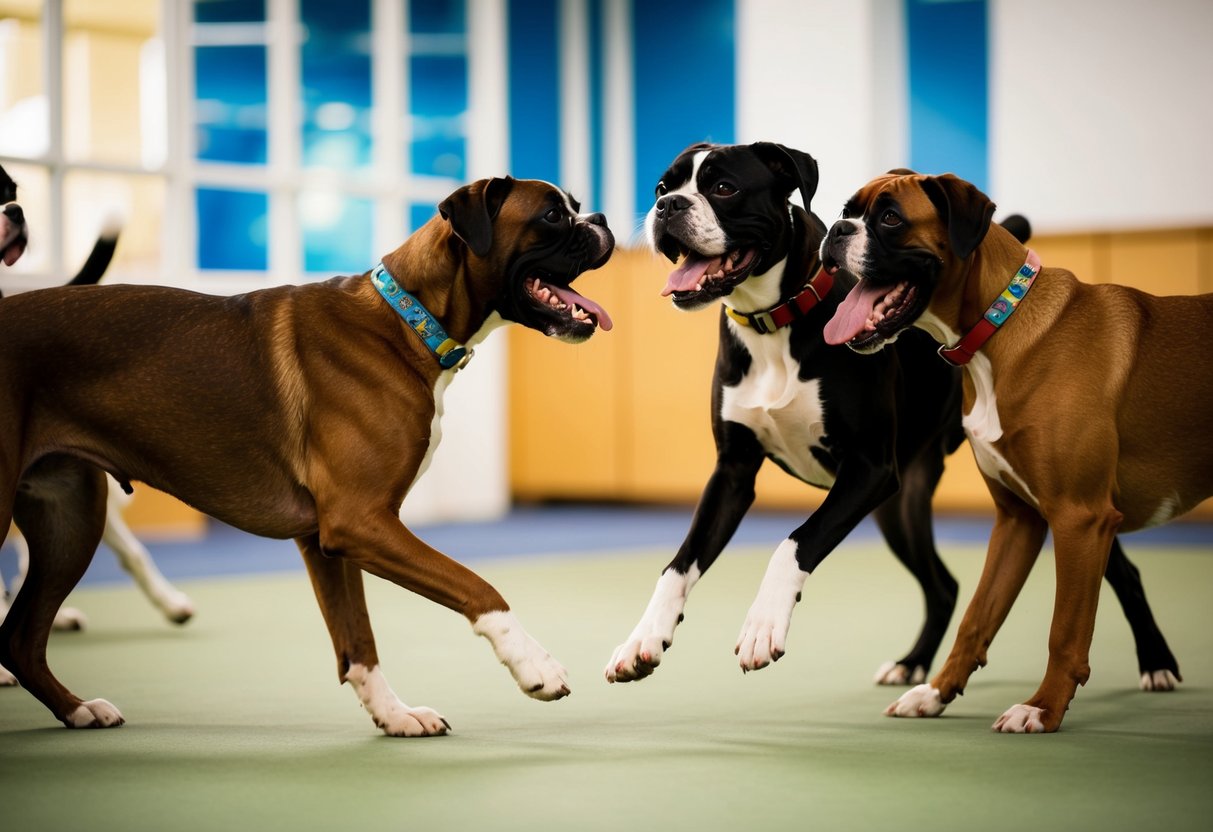
Training and socialization are crucial for Boxers to become well-adjusted family pets. These energetic dogs thrive on mental stimulation and need consistent guidance to harness their playful nature.
Effective Training Techniques
Boxers are intelligent and eager to learn, making them generally easy to train.
Positive reinforcement is the best approach; reward your dog with treats, praise, or play when they follow commands. This method builds a strong bond between you and your dog while promoting good behavior.
Consistency is key. Use the same commands and signals every time to avoid confusion.
Short training sessions, around 10 to 15 minutes, keep your Boxer engaged without overwhelming them. Incorporate fun activities that burn off energy, such as agility courses or fetch. This not only helps them learn but also provides the mental stimulation they need.
The Importance of Socialization
Socialization is essential for a Boxer’s development. Early exposure to different environments, people, and other animals can prevent anxiety and undesirable behaviors later.
To enhance their comfort in new situations, take your Boxer puppy to parks, playdates, or training classes.
Without proper socialization, Boxers can become overly protective or develop separation anxiety. Regular interaction helps them learn how to behave in different settings.
Well-socialized Boxers are more confident, alert, and friendly, making them excellent family pets and companions. Balancing training and socialization will set your Boxer up for a happy, well-rounded life.


