
If you are thinking about taking up a new sport, you might just find boxing to be the right fit for you. Boxing is an excellent choice for beginners because it builds confidence, improves physical fitness, and teaches valuable self-defense skills. Many people find the sport to be both challenging and rewarding, making it ideal for anyone looking to push their limits.

As a beginner, you will learn essential techniques that lay the foundation for your skills. Focus on mastering your stance, footwork, and basic punches, as these are the building blocks for more advanced moves.
With helpful boxing tips and proper guidance, you can quickly advance and enjoy the journey of becoming a competent boxer.
Jumping into boxing does not have to be intimidating. Whether you want to join a gym or practice at home, there are plenty of resources available that cater to beginner boxers. Embrace the challenge, and you might discover a new passion that keeps you engaged and motivated.
Understanding the Basics of Boxing

Getting started in boxing means mastering some key skills and techniques. This way, you can build a strong foundation for your training and improve your performance in the ring.
Focus on your stance, footwork, punches, and defensive moves to become a better boxer.
Boxing Stance and Footwork
A proper boxing stance is essential for balance and power. Stand with your feet shoulder-width apart. Your dominant foot should be slightly back, while your knees stay slightly bent. This helps you stay agile.
Footwork allows you to move quickly. Practice stepping forward, backward, and to the side. Pivots are also important for dodging and positioning yourself effectively.
You can use shadow boxing to work on your footwork without a partner. This lets you focus on movement while practicing punches at the same time.
Fundamental Punches and Combinations
Begin with the basic punches: the jab, cross, uppercut, and hook. The jab is quick and helps you measure distance. Meanwhile, the cross is a powerful punch launched from your back hand.
The uppercut can surprise your opponent, while hooks target the sides of the head.
Try different combinations to improve your timing and flow, like the jab-cross or jab-hook. This helps you create openings and keep your opponent guessing.
Make sure you focus on your punching technique. Keep your hands up, and rotate your hips for more power.
Defensive Techniques and Head Movement
Defense is just as important as offense in boxing. Learn to keep your hands up to protect your face.
You should also use head movement to slip punches by moving your head side to side or ducking under incoming shots.
Incorporate simple drills to practice these techniques. For example, work on the duck by bending your knees and lowering your head when an opponent punches. This way, you can dodge and counter effectively.
Remember, good defense allows you to stay in the fight longer.
Effective Boxing Training for Beginners
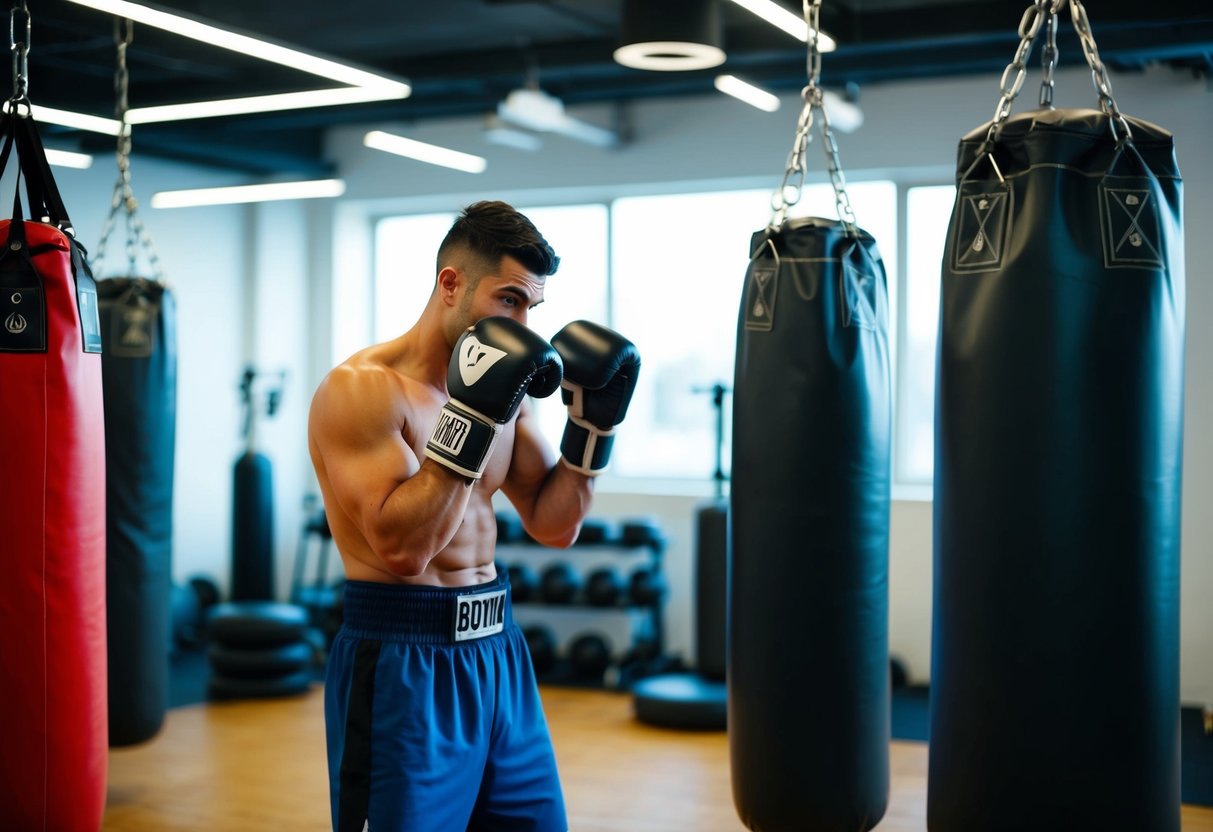
Training effectively is crucial for beginners in boxing. Focusing on various techniques helps build your skills while improving your fitness. Incorporating a mix of drills, conditioning, and partner work can enhance your overall experience.
Shadowboxing and Heavy Bag Work
Shadowboxing is a great way to practice your techniques without a partner. You can focus on footwork, speed, and accuracy.
Set aside 3-5 minute rounds and visualize an opponent as you move. This helps develop your rhythm and timing.
Heavy bag work is equally important. It allows you to practice punches while building strength and endurance.
Aim for different combinations, like jabs, crosses, and hooks. Striking the bag helps improve your power and conditioning.
Try to integrate 20-30 minutes of both shadowboxing and heavy bag work into your routine several times a week to see progress.
Partner Drills and Sparring
Working with a partner can greatly enhance your boxing skills. Start with basic drills like focus mitts, where your partner holds pads for you to hit. This helps improve your accuracy and reaction time.
Aim for short intervals, practicing various punches and combinations.
As you gain confidence, consider light sparring. This gives you a feel for real fights without excessive pressure.
Focus on maintaining your stance and defending effectively. Remember, communication with your partner is key to ensure a safe and productive experience.
Perform these activities a couple of times a week to build your skills without overwhelming yourself.
Strength and Conditioning
Strength and conditioning are essential for becoming a well-rounded boxer. Incorporate strength training into your routine at least twice a week.
Focus on exercises that engage multiple muscle groups, like squats, lunges, and push-ups. These movements build functional strength.
Also, emphasize both aerobic and anaerobic fitness. Activities like running or jumping rope help improve stamina and speed.
Aim for intervals of high intensity followed by rest periods to simulate the demands of a boxing match.
Combining these elements will prepare you for the physical challenges you face in the ring. A balanced approach to fitness will support your boxing journey effectively.
Boxing Gear and Safety

Having the right boxing gear is essential for your safety and performance. Proper equipment ensures you can train effectively while minimizing the risk of injury. Additionally, self-care practices play a vital role in your recovery and overall well-being.
Choosing the Right Equipment
When starting boxing, focus on essential gear to protect yourself.
Boxing gloves are a must. They shield your hands and help absorb impact. Look for gloves that fit well and suit your training needs. Heavy gloves are great for strength training, while lighter ones are better for speed drills.
Hand wraps provide extra support for your wrists and knuckles. Make sure to learn how to wrap your hands correctly.
Headgear is also important, especially during sparring sessions. It protects your head and face from accidental blows.
Don’t forget a mouthguard to keep your teeth safe. Proper gear helps you avoid injuries, so invest in quality equipment.
Importance of Recovery and Self-Care
After a boxing session, you need to focus on recovery. Stretching is a great way to ease muscle tension and improve flexibility. Make it a point to stretch after every workout to prevent soreness.
Remember to stay hydrated. Drink plenty of water before, during, and after training sessions.
Incorporating breathing techniques can also aid in recovery. Focus on deep, controlled breaths to help your body relax. Consider light exercises or yoga on your rest days to maintain mobility.
Regular recovery practices ensure you are ready for your next training session, allowing you to improve consistently.


