
Boxer dog owners often share a lively and affectionate nature that matches the spirited personality of their pets. Many people view them as passionate, active individuals who enjoy outdoor activities and social interactions. Owning a Boxer usually means being part of a close-knit community of dog lovers who appreciate loyalty and fun.

If you are a Boxer owner, you might find yourself embracing a playful lifestyle filled with love and companionship. Your Boxer likely thrives on attention and engagement, reflecting your own energetic and caring traits. This bond creates a unique stereotype of Boxer owners as dedicated and enthusiastic individuals who prioritize their dogs’ needs while enjoying life’s adventures together.
Understanding Boxer Dog Owners

Boxer dog owners often share unique traits and experiences. They are usually drawn to the breed for its loyalty and protective nature. Understanding these owners can reveal a lot about their preferences and how they interact with their pets.
Traits and Personality
As a Boxer dog owner, you likely appreciate a fun-loving, energetic personality. Boxers are known for their playful nature, making you feel like a kid again. You may find joy in their affectionate behavior, especially when they cuddle up with you.
Boxer owners often display patience and resilience. Training these dogs can be challenging, but using positive reinforcement helps strengthen your bond. You likely enjoy socializing with other dog owners, sharing stories, and learning new training tips.
Owning Experience and Expectations
Owning a Boxer can be an exciting adventure. You might expect your dog to excel in socialization, particularly with children. Boxers are known for their protective instincts. This means you may feel safer with them around.
However, you should also prepare for their need for attention and exercise. Boxers thrive on interaction and require regular physical activity. You may find that engaging them in games or walks is essential to keeping them happy and healthy.
Community and Social Perceptions
Being part of the Boxer owner community can be a rewarding experience. Other owners often view Boxers as loyal companions and great family pets. Your bonds with fellow owners may deepen through shared experiences in training and activities.
The breed also has a strong social media presence. You may engage with others online, sharing tips about interacting with children or managing their unique behaviors. This community can provide you with support and motivation on your Boxer journey.
Training and Socialization of Boxer Dogs
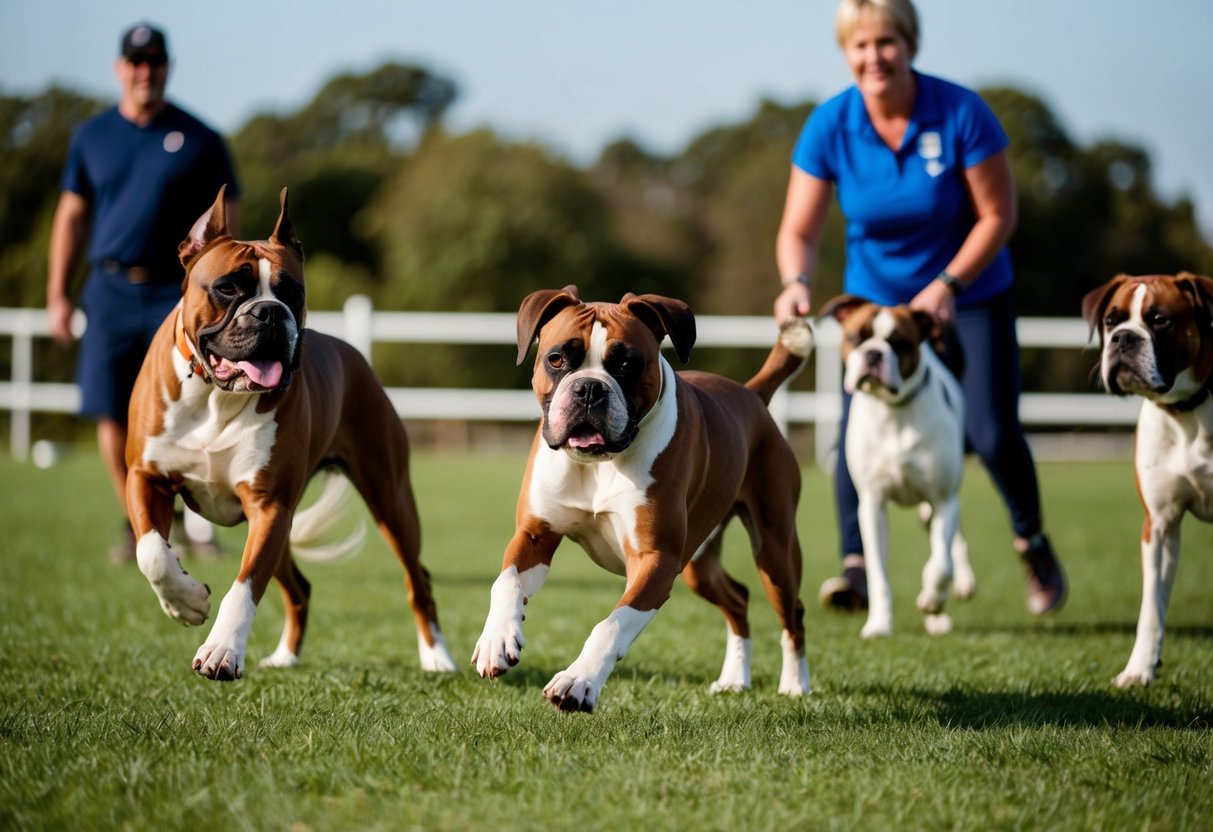
Training and socialization are essential for Boxers since they are energetic, intelligent dogs. Your approach to these areas can greatly influence their behavior and health. Here’s what you need to know.
Importance of Early Training
Starting training early is key for Boxer puppies. They are known for their high energy levels and can become difficult if not properly guided.
Early training helps instill good habits and structure in their lives. This leads to a well-behaved adult. Focus on using positive reinforcement. Reward your puppy with treats and praise to encourage desired behaviors. Consistency is crucial, as it helps your Boxer understand what is expected.
Incorporating mental stimulation during training also keeps them engaged. Activities or games that challenge their minds can make training sessions more effective and enjoyable for both of you.
Methods for Effective Training
Using various training methods can enhance your Boxer’s learning experience. Positive reinforcement is particularly effective. Whenever your Boxer follows a command, reward them immediately. This encourages them to repeat the desired behavior.
Keep training sessions short, around 5-10 minutes. Boxers can get bored if sessions are too long. Mix in playtime to make learning fun.
Basic commands like sit, stay, and come should be your focus. Teaching these foundational commands can improve safety during walks and prevent unwanted behaviors at home. Enrolling in puppy classes can also provide structure and expert guidance.
Socializing Your Boxer with Others
Socialization is vital for Boxers to develop into well-rounded dogs. Start early to expose your puppy to various people, dogs, and environments. This helps them become comfortable and confident in different situations.
Arrange playdates with other dogs and attend puppy classes. These interactions teach your Boxer essential social skills. Controlled environments, like training classes, are great opportunities for structured socializing with supervision from trainers.
Always monitor their behavior during socialization. If your Boxer shows signs of anxiety or aggression, give them space and approach slowly. Gradual exposure helps them adapt, ensuring a friendly demeanor as adults.
Characteristics of Boxers as Family Pets

Boxers are known for their playful and lively nature, making them excellent companions for families. Their loyalty and affectionate temperament can create a strong bond with all family members.
Interaction with Family Members
Boxers are spirited and enjoy being part of family activities. Whether it’s playing in the backyard or cuddling on the couch, they thrive on interaction. Their energetic dogs can be a source of joy, especially for children.
They are protective and often see themselves as guardians of your family. This loyalty means they can be very attuned to the emotions of family members, offering comfort when needed. Their playful antics often lead to laughter and fun-filled moments, making them wonderful family pets.
Pros and Cons as Family Dogs
While Boxers have many advantages, there are also some challenges.
Pros:
- Loyal Companions: Boxers are known for their loyalty and are often devoted to their families.
- Playful Nature: Their energetic and playful behavior can keep the whole family active.
Cons:
- High Energy: Their lively nature means they require regular exercise. Families who prefer a calm atmosphere may find this challenging.
- Training Needs: They may need consistent training and socialization to manage their enthusiasm.
Understanding these characteristics can help you decide if a Boxer is the right fit for your family.
Health and Behavior Considerations

Taking care of a Boxer involves understanding both their health and behavior. This breed has specific needs that can impact their well-being and your experience as an owner.
Common Health Issues in Boxers
Boxers are prone to several health issues. Some of these include hip dysplasia, which affects their joints, and cardiomyopathy, a heart condition that can be serious.
They may also face skin problems, including allergies and hot spots. Due to their physical characteristics, such as a short muzzle, Boxers are susceptible to breathing difficulties. Additionally, you may notice that they have a tendency for drooling, especially during hot weather or after exercise.
Regular vet check-ups are vital. Keeping an eye on their diet and exercise can help manage these health risks effectively.
Behavioral Traits and Management
Boxers have an energetic and playful nature. They enjoy being around people, which makes them great family pets. However, they can sometimes display destructive behavior if not properly exercised or stimulated.
Training is essential. Boxers can be stubborn at times, so you need to be consistent. Socialization from a young age helps manage any potential aggression issues. They can also be protective and may act as guard dogs, so proper training will help you harness that instinct positively.
Engaging in regular activities with your Boxer not only helps keep them healthy but also strengthens your bond. Regular practice of commands and tricks can channel their energy into positive behaviors.


