
If you’re considering bringing a new pet into your home, you might be wondering whether Boxers make good family dogs. Boxers are known for their playful and affectionate nature, making them excellent companions for families. Their loyal and protective instincts help them bond well with children, creating a warm and joyful atmosphere in your household.
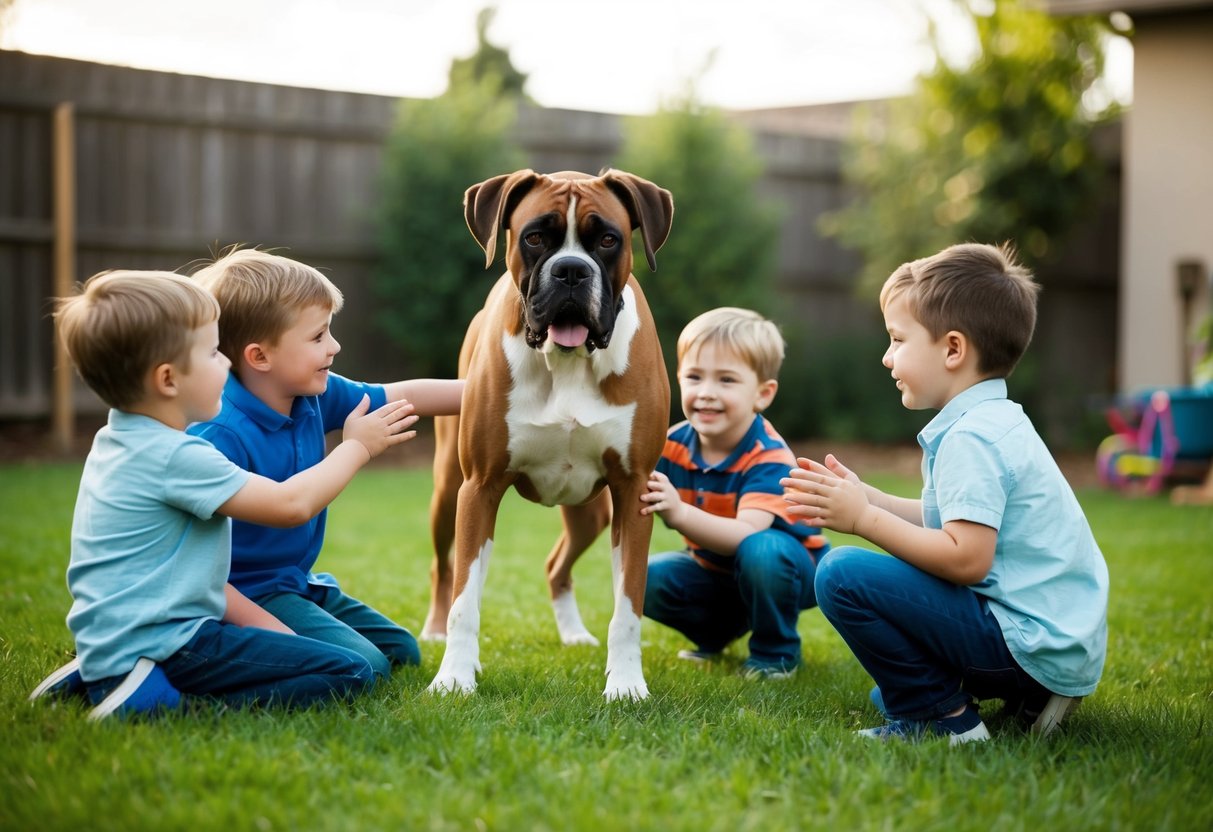
These dogs are not only energetic and fun-loving but also have a gentle side that shines when they interact with little ones. They are known for being goofy and loving, qualities that can make family life even more enjoyable.
As you explore the idea of adding a Boxer to your family, you’ll discover how their unique personality can enrich your home.
Boxer Basics: Understanding the Breed

Boxers are known for their strong and playful nature. These dogs have unique characteristics that make them great family pets. Understanding what sets them apart can help you decide if a Boxer is the right fit for your home.
Defining Characteristics
Boxers have muscular bodies that display strength and agility. Adult males usually stand 23-25 inches tall, while females are slightly smaller at 21.5-23.5 inches. Their weight ranges from 55 to 70 pounds, reflecting their robust build.
These dogs are intelligent and highly trainable, making them suitable for various activities. Their high energy levels mean they require regular exercise.
Playtime is essential since Boxers love to engage in games and activities.
Moreover, they are known for their loyalty. Boxers bond closely with their families and thrive on companionship. This breed has protective instincts, making them good watchdogs, yet they remain friendly and social.
Historical Role
Originally, Boxers were bred for working purposes. They were used as guard dogs and to assist in hunting. Their strong physical traits made them excellent in these roles.
Over time, Boxers transformed into family pets, thanks to their playful nature and adaptability. They excel in various dog sports due to their intelligence.
Today, Boxers remain versatile and are often used in roles such as therapy dogs. Their friendly demeanor and protective instincts allow them to connect well with people, adding to their popularity as family companions.
Prepping for a Boxer: Needs and Care
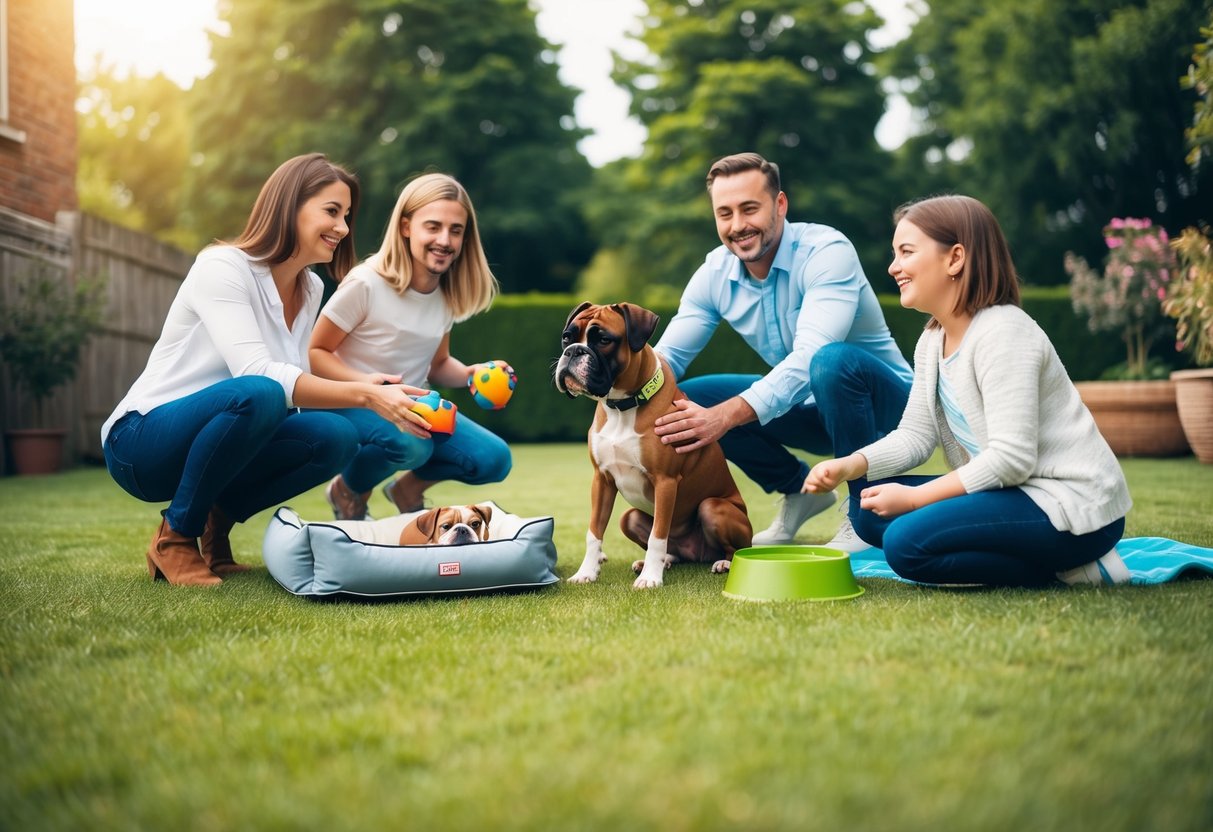
Taking care of a Boxer requires attention to their exercise and training needs as well as their health and maintenance. These dogs are energetic and loving but need your commitment to thrive. Prepare to engage with them both physically and mentally.
Exercise and Training
Boxers are high-energy dogs with boundless energy. They need at least 60 to 90 minutes of exercise each day.
Daily walks, playtime in a yard, and interactive games are essential.
Training is also very important. Obedience training helps channel their energy positively and prevents bad behaviors.
Positive reinforcement techniques work best, so use treats and praise to keep them motivated.
You can enroll in puppy classes or agility training to keep things fun. Boxers enjoy learning and can excel in various dog sports. Consistent training helps build a strong bond between you and your dog.
Health and Maintenance
Health checks play a vital role in a Boxer’s wellbeing. They are prone to certain health issues like hip dysplasia and heart conditions, so regular veterinary visits are important.
Regarding care needs, a nutritious diet is crucial for maintaining their energy levels. Choose high-quality dog food that meets their dietary requirements. Make sure they always have access to fresh water.
Mental stimulation is also key. Engage their minds with puzzle toys or training exercises to keep them sharp. Regular grooming helps with shedding and skin health. With the right care, your Boxer will be a happy and healthy addition to your family.
Boxers in the Family Setting
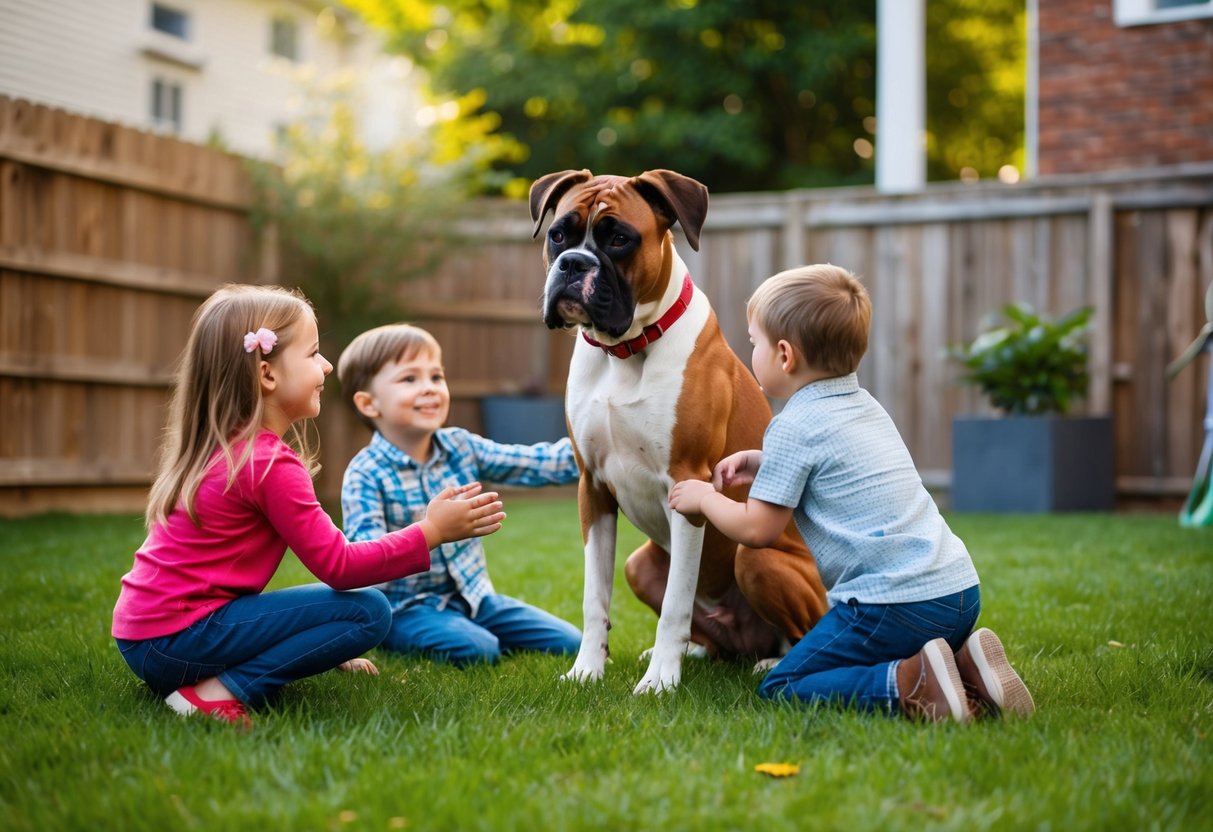
Boxers make excellent family companions due to their loyal and protective nature. They are playful, social, and have a gentle demeanor, making them a good choice for families with children and other pets.
Children and Boxers
Boxers are known for their playful spirit and patience with kids. They often enjoy running around and playing games, keeping your children active and engaged. This breed is protective, so they tend to watch over younger family members closely.
While Boxers are generally good with kids, supervision is important. This ensures that interactions are positive and helps prevent any accidental rough play.
Teaching your children how to approach and interact gently with a Boxer will promote a strong bond. Many families find that Boxers’ loyalty and loving nature create a wonderful atmosphere at home.
Boxers with Other Pets
When it comes to other pets, Boxers can adapt well, especially if they are socialized early. They are typically friendly and enjoy being part of a larger pack.
You can help your Boxer feel comfortable around other animals by introducing them slowly and positively.
Monitoring their interactions is essential, especially if you have smaller pets. Boxers have a playful nature, and sometimes their enthusiasm can be overwhelming. Encouraging calm behavior and providing training will help your Boxer integrate smoothly into your multi-pet household. With the right socialization, Boxers can be gentle and caring companions to other pets, contributing to a happy home.
The Emotional Side of Boxers
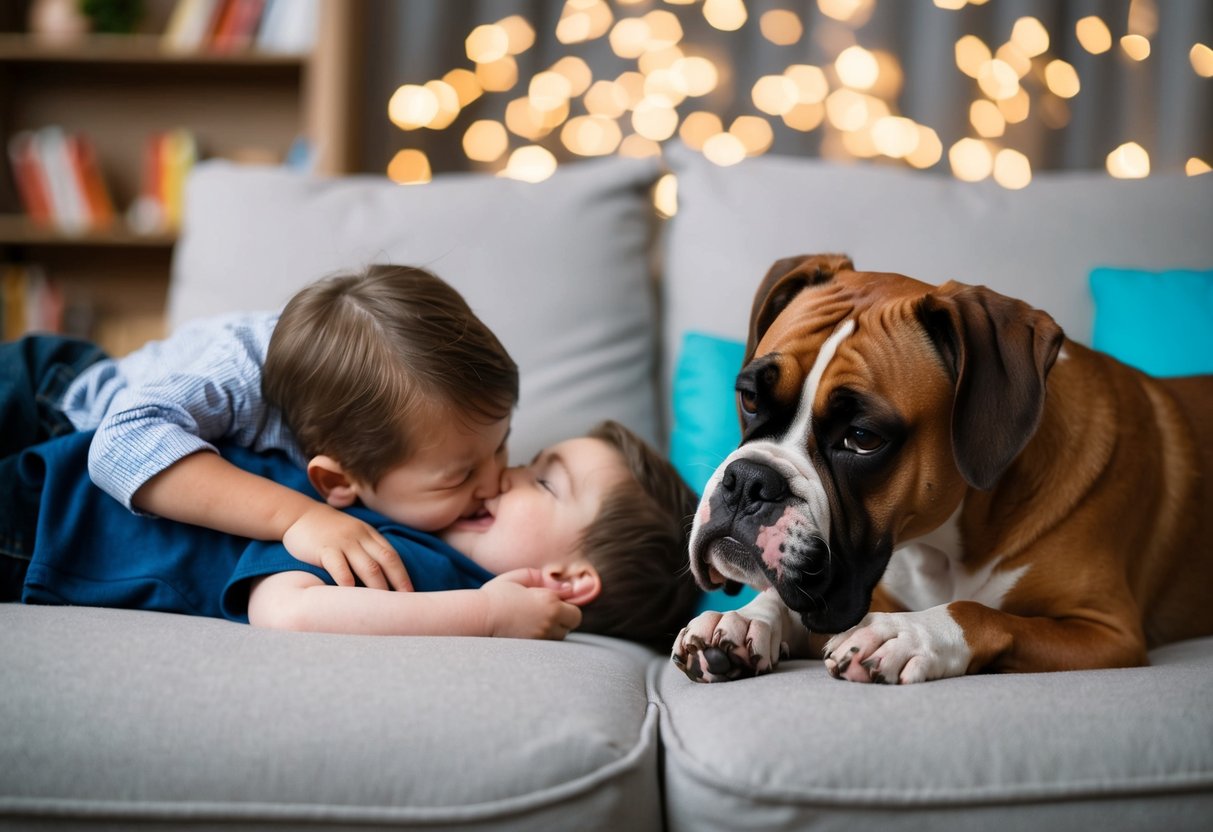
Boxers are known for their strong emotional connections with their families. Their loyalty and affection are part of what makes them great companions.
They thrive on companionship. Boxers enjoy being with you and often want to follow you from room to room. This is one reason they bond so closely with their families.
Separation anxiety can be an issue. If you leave your Boxer alone for long periods, your Boxer might feel stressed. This can lead to behaviors like excessive barking or trying to escape. To help, consider using interactive toys to keep them busy while you’re away.
Boxers are generally energetic dogs. They love to play and engage with you, making them perfect for active families. Regular exercise is essential to keep them happy.
Most Boxers are sociable and get along well with children and other pets. However, like any breed, early socialization is crucial to avoid potential aggression issues. Prepare them for different environments and people to ensure they remain friendly.
You can make your Boxer feel loved and secure by providing plenty of toys and engaging activities. Remember, a happy Boxer is an emotionally balanced Boxer!


