
If you have a Boxer dog, you might have noticed how they often jump with excitement. Boxer dogs jump so much because of their playful and energetic nature, which is part of their breed characteristics. This behavior is their way of greeting you and expressing their happiness.
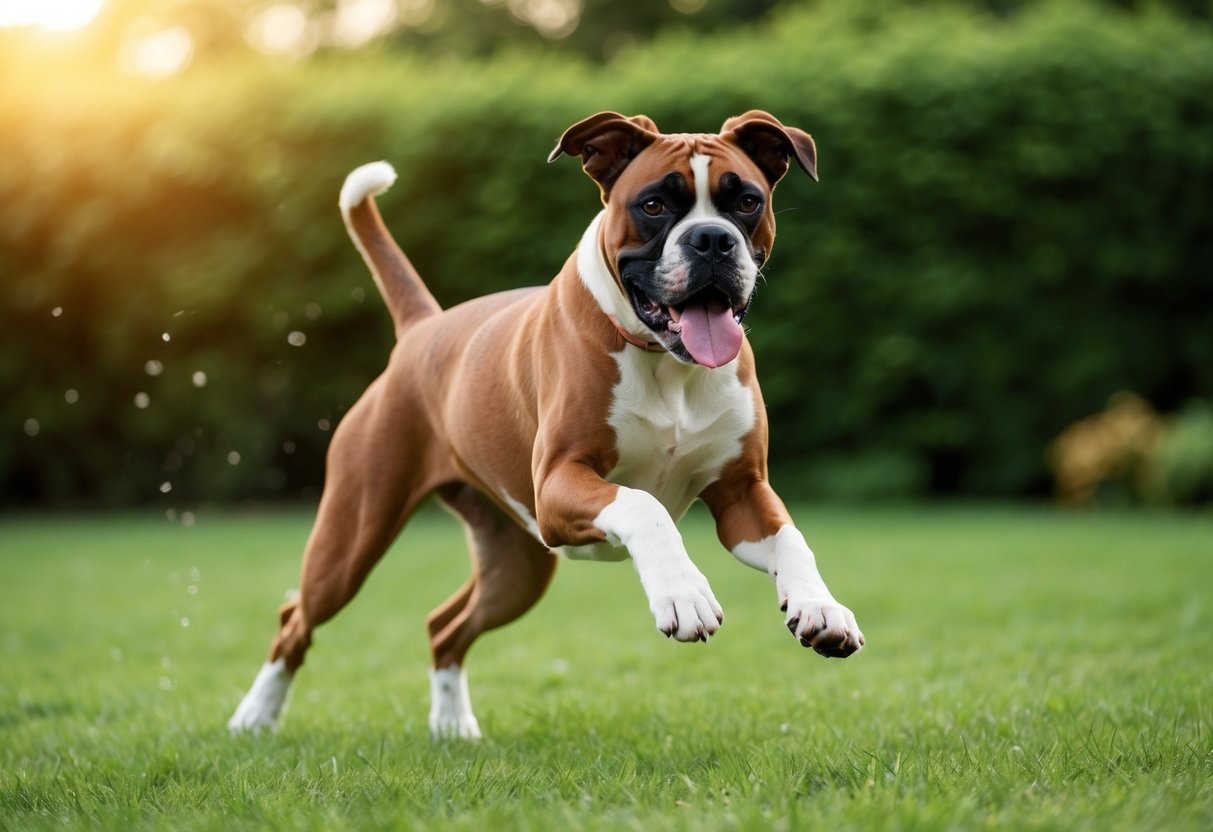
Understanding why your Boxer jumps can help you manage this energy better. It’s important to keep in mind that jumping is not only a trait of Boxers but also a way for them to bond with you and show affection.
In this article, you’ll discover some fun insights into their behavior and tips on how to encourage calmer greetings.
Understanding Boxer Dogs’ Temperament
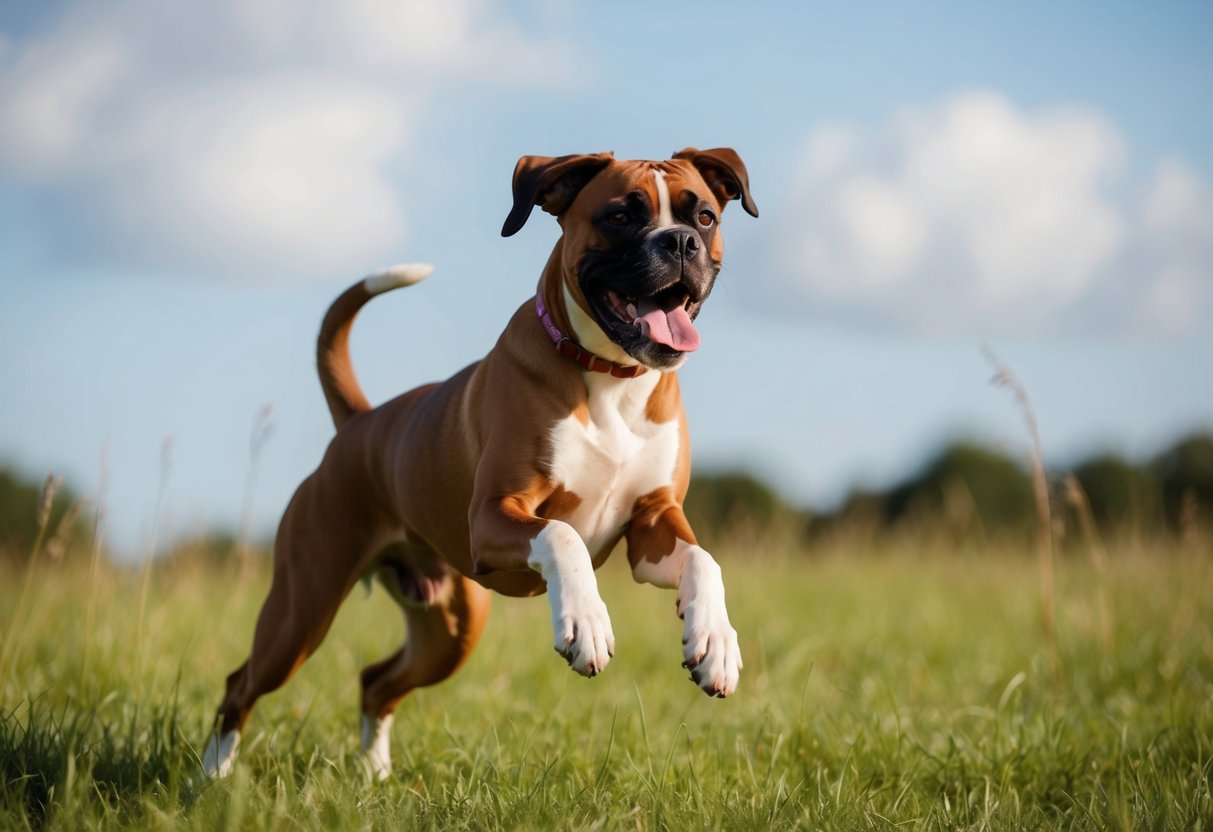
Boxer dogs are known for their lively and engaging personalities. Their energetic nature makes them fun companions, while their loyalty ensures they stick by your side. Let’s explore what makes these dogs special.
Energetic and Playful Nature
Boxers are an energetic breed that loves to stay active. They require daily exercise to keep their bodies and minds stimulated. This might mean long walks, playtime in the yard, or even games of fetch.
Their playful spirit means they often jump up in excitement. This behavior is not just for fun; it’s a way to engage with you!
Keeping your Boxer engaged with interactive toys and activities will help channel that high energy effectively.
Regular physical and mental activities, like training sessions or agility exercises, will keep your Boxer happy. When well-stimulated, they can relax and be more content at home.
Loyal Companions with Watchdog Traits
Boxers are known for their loyalty. They form strong bonds with their families. This loyalty can lead to protective instincts, making them excellent watchdogs.
Even though they are friendly, Boxers tend to be suspicious of strangers. This can result in barking or jumping, especially if they feel their family is at risk. Their natural alertness means you can feel secure with a Boxer around.
You’ll find that your Boxer will quickly learn the family routine, alerting you to unusual activities. Their combination of loyalty and protective instincts makes them reliable companions. These traits ensure your Boxer is not only a playmate but a committed friend.
The Reasons Behind High Jumping

Boxer dogs are known for their energetic personalities. Their jumping behavior can be a mix of excitement, a need for attention, and signs of hyperactivity. Understanding these reasons helps you manage this lively trait effectively.
Excitement and Attention Seeking
Boxers often jump when they’re excited. This breed is naturally playful and social. When you come home or others visit, they may leap up to greet you. This jumping is their way of showing joy and seeking your attention.
They want to engage with you. To manage this, redirect their energy. Encourage them to sit or stay when you enter. Reward them when they stay calm. This teaches your dog that quiet behavior gets attention.
Using toys can also be helpful. Distract them with a favorite ball or chew. This can reduce unwanted jumping during exciting moments.
Lack of Proper Socialization
Socialization plays a big role in how your Boxer behaves. If they haven’t met many people or dogs, they might jump out of anxiety or uncertainty. This can lead to overly excited reactions in new situations.
Introduce your Boxer to various environments and people. Take them to dog parks or family gatherings. Gradually, they’ll become comfortable and less prone to jumping during interactions.
Keeping your Boxer socialized helps them learn appropriate behaviors. You’ll notice they become more confident and less jumpy around new faces. Consistent training will ensure they know jumping is not acceptable in every situation.
Signs of Hyperactivity in Boxers
Boxers can be very energetic. If your dog jumps a lot, it might be a sign of hyperactivity. High energy levels can lead to excessive jumping, especially if they have not had enough exercise.
Daily walks and playtime are crucial. Aim for at least an hour of activity each day. This keeps them stimulated and reduces jumping behavior.
You can also try interactive toys or agility training. These activities engage their mind and body. A tired dog is often a well-behaved dog, leading to fewer jumping incidents.
Training Your Boxer to Jump Appropriately
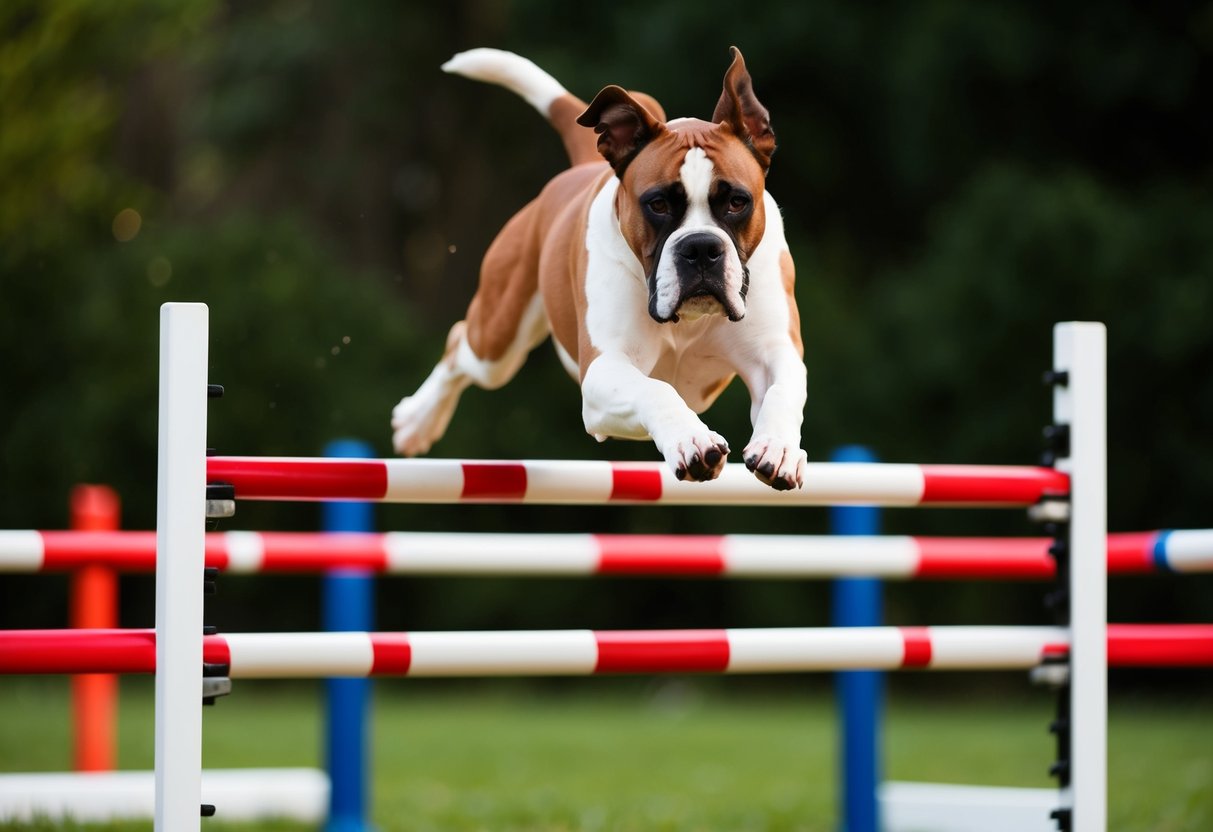
Training your Boxer to jump appropriately involves setting clear rules, practicing obedience, using consistent commands, and providing enough exercise. This approach helps manage their jumping behavior effectively.
Establishing Ground Rules for Jumping
To manage your Boxer’s jumping, start by establishing ground rules. Decide when it is okay for them to jump and when it is not. For example, jumping might be fine during playtime but not when greeting guests.
Consistency is key. Make sure all family members follow these rules. If everyone is on the same page, your Boxer will learn faster.
Additionally, consider using physical barriers, like baby gates, to help reinforce these rules when visitors arrive.
Obedience Training for Better Control
Obedience training is essential for controlling jumping. Start with basic commands like “sit,” “stay,” and “down.” Teaching these commands helps your Boxer understand what behavior is expected in various situations.
When your dog starts to jump, calmly redirect their energy by asking them to perform a command instead. Use a leash during training sessions for better control. Reward your Boxer with treats when they obey to encourage good behavior.
Consistent Commands and Positive Reinforcement
Using consistent commands is vital in any training routine. Pick simple phrases like “no jump” or “off” and use them every time your Boxer tries to jump. This helps them associate the command with the action.
Positive reinforcement is effective in changing behavior. When your Boxer greets someone without jumping, reward them with a treat or praise. This reinforces that calm behavior leads to positive outcomes.
Over time, this method encourages your dog to stop jumping in favor of a treat or attention.
Exercise and Mental Stimulation
Boxers are energetic dogs that require regular exercise to stay happy and healthy. A tired dog is less likely to jump out of excitement.
Aim for at least 30 to 60 minutes of exercise daily, including walks, play sessions, and agility activities.
Incorporate mental stimulation, too. Puzzle toys and training games keep your Boxer engaged and reduce hyperactivity. This balance of physical and mental challenges can lead to calmer behavior, including fewer jumping incidents.
Interactive Activities for Mental and Physical Stimulation
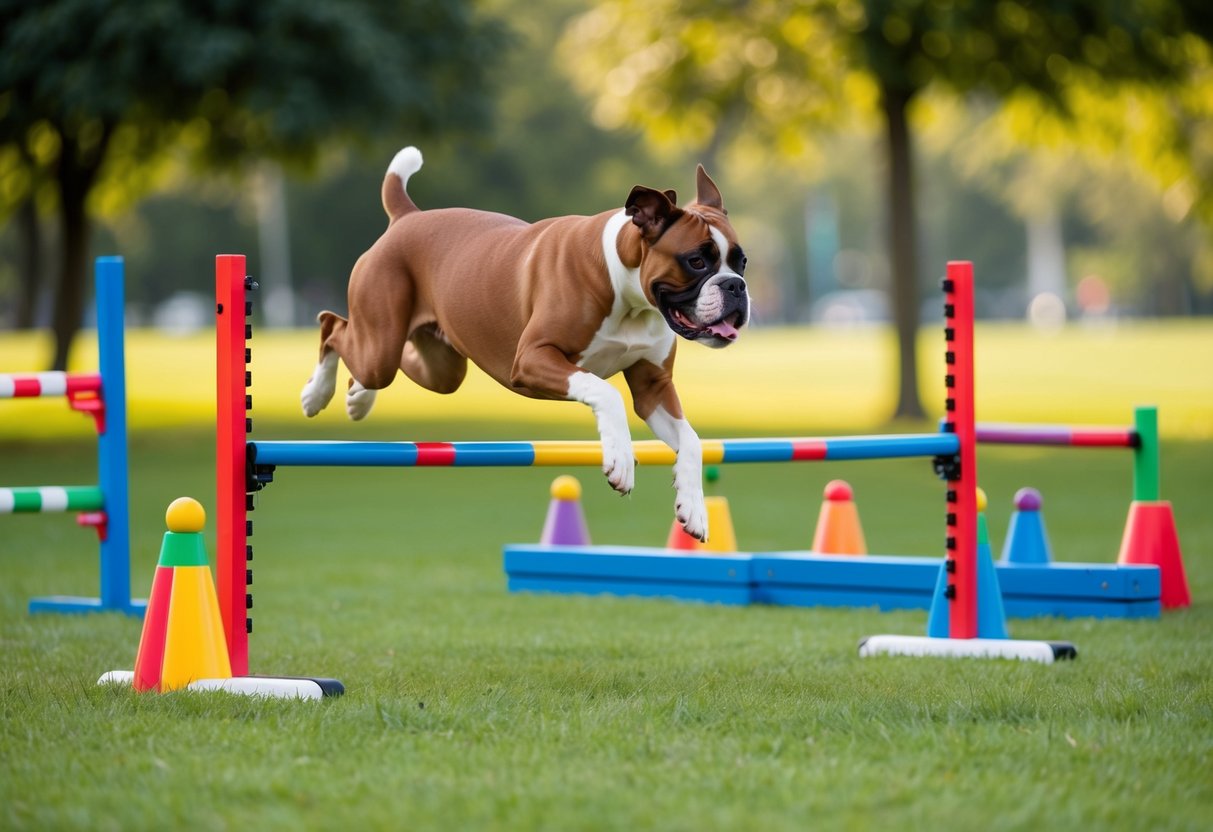
Keeping your boxer engaged through interactive activities is key to their happiness. These activities provide both mental stimulation and physical exercise, which help to prevent behavioral issues. Here are some effective options to keep your playful boxer busy.
Games That Keep Boxers Engaged
Playing games is a fun way to bond with your boxer while providing valuable exercise.
Games like fetch are perfect for their energetic nature. A good game of fetch not only helps them burn off energy but also improves their recall skills.
Another enjoyable game is the cup game, where you hide treats under cups and let your dog guess where the treat is. This encourages problem-solving and keeps their mind active.
Engaging in these games daily can improve your boxer’s behavior and strengthen your connection with them.
Puzzle Toys to Reduce Boredom
Puzzle toys are excellent for providing mental challenges for your boxer. These toys often require your dog to work to release a treat, keeping them occupied and stimulated.
Look for toys that are adjustable in difficulty, so they remain interesting as your boxer learns.
Examples of popular puzzle toys include the KONG Classic and Nina Ottosson’s interactive puzzles. These toys help reduce boredom, which can lead to unwanted behaviors like chewing or digging. Regular use of puzzle toys can turn playtime into a rewarding experience for your dog.
Addressing Separation Anxiety Through Activity
If your boxer struggles with separation anxiety, interactive activities can help ease their stress. Engaging your dog in active play before you leave can tire them out and reduce anxiety.
Consider using games and toys that can be utilized when you are away. You can also leave a puzzle toy filled with treats to keep your dog occupied for longer periods.
Activities that challenge their mind can distract them from your absence. Regular exercise and mental engagement are essential in helping your boxer feel secure and calm during alone time.


