
When you bring a Boxer puppy into your home, one of the essential decisions you’ll face is how long to keep them on puppy food. Puppies grow quickly and have unique nutritional needs that differ from those of adult dogs. Boxers can stay on puppy food until they are about 12 to 18 months old, depending on their growth and development.

Transitioning your Boxer from puppy food to adult food is important for their health. Puppy food is specially formulated to support growing pups, packed with higher levels of protein and essential nutrients. As your Boxer matures, their dietary needs change, and choosing the right time to make this switch can help prevent issues such as rapid growth or obesity.
Keep an eye on your Boxer’s growth and consult with your vet for personalized advice. By monitoring their development, you can ensure they are getting the right nutrition at every stage of their life.
Understanding a Boxer Puppy’s Nutritional Needs

Your Boxer puppy needs the right food to grow strong and healthy. Focusing on high-quality ingredients and proper nutrition helps support their growth and development. Let’s break down what you need to know about their dietary needs.
The Importance of High-Quality Puppy Food
Choosing high-quality puppy food is essential for your Boxer. Puppies require more protein and nutrients than adult dogs because they are still growing. Look for foods that list meat as the first ingredient.
Avoid fillers like corn or soy, as they don’t provide much nutrition. The food should be specifically formulated for large breed puppies to support correct bone growth. Remember to check the label for key nutrients, including DHA, which is important for brain development.
Puppy Nutrition and Development
Nutrition plays a key role in your puppy’s development. During early months, their bodies change rapidly. They need balanced meals that include proteins, fats, vitamins, and minerals.
Aim for a diet that contains around 20-30% protein and healthy fats. This balance helps support muscle growth and energy levels to keep them active. A diet rich in Omega fatty acids can also boost coat health and skin condition, making your puppy look shiny and healthy.
Weaning Process and Puppy Formulas
The weaning process is a critical time for your Boxer puppy. Begin around eight weeks of age when they transition from their mother’s milk to solid food.
You should introduce puppy formulas mixed with water or broth to make it easier for them to eat. Gradually increase the amount of solid food over a few weeks. It’s important to select a puppy formula that is nutrient-rich and supports their growing needs, giving them a strong foundation for health.
Remember to monitor your puppy’s reaction to new foods and adjust as necessary. This careful approach will help your Boxer thrive and grow into a strong adult dog.
Developing a Feeding Schedule

Creating a proper feeding schedule for your Boxer puppy is vital for their growth and health. You will need to consider when to transition to solid food, how often to feed, and keep track of their weight during their early months.
Weaning to Solid Food
Most Boxer puppies start the weaning process around four weeks of age. At this stage, they begin to eat soft foods mixed with water and later move to dry kibble. By six weeks, you should introduce dry food, as it helps strengthen their teeth.
Transition slowly from their mother’s milk or formula to solid food over a week. For instance:
- Days 1-3: 75% formula, 25% soft food
- Days 4-6: 50% formula, 50% soft food
- Days 7-9: 25% formula, 75% solid food
- Day 10: 100% solid food
This gradual change helps avoid digestive upset.
Determining Feeding Frequency
The feeding frequency depends on your puppy’s age. Generally, younger puppies require more frequent meals. Here’s a basic guideline for feeding frequency:
- 4-6 weeks: 4 meals a day
- 6-12 weeks: 3-4 meals a day
- 3-6 months: 3 meals a day
- 6 months and older: 2 meals a day
Choose the right schedule that fits your puppy’s routine. Consistency will help them establish good eating habits while providing essential nutrients for growth.
Boxer Puppy Weight and Feeding Chart
Keeping track of your Boxer puppy’s weight is critical for determining how much to feed them. A Boxer puppy’s dietary needs change as they grow. Here’s a simple feeding chart:
- 4 Week Old Boxer Puppy: About 1 cup of food daily
- 6 Week Old Boxer Puppy: About 1-1.5 cups daily
- 8 Week Old Boxer Puppy: About 2 cups daily
- 10 Week Old Boxer Puppy: About 2.5 cups daily
- 12 Week Old Boxer Puppy: About 3 cups daily
Adjust portions based on your puppy’s activity level and health. Always consult your vet if you’re uncertain about their needs. This chart can serve as a basic guide, but observe your puppy’s growth closely.
Transitioning to Adult Dog Food
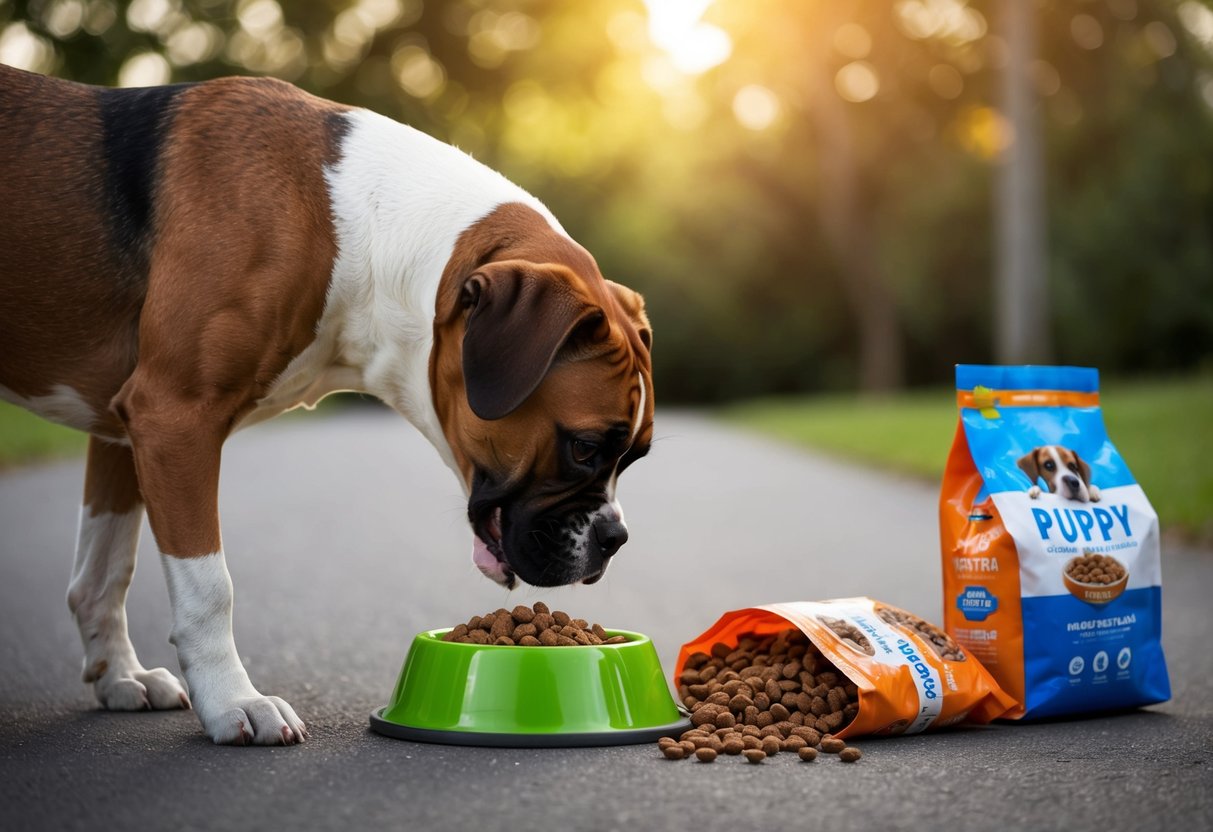
Transitioning your Boxer from puppy food to adult food is important for maintaining their health and well-being. Recognizing when to make the switch and how to do it safely can help support your dog’s growth and energy needs.
Knowing When to Switch
The best time to switch your Boxer to adult food typically falls between 12 to 18 months, depending on their size and energy level. For large breed Boxers, you may want to stay on puppy food until about 18 months. Observing your dog’s growth and activity level is key.
Look for signs such as a decreased interest in puppy food or a stable weight. If your dog doesn’t seem to need as many calories, it’s a good indication that they might be ready for adult food. Don’t forget that the resting energy requirement (RER) changes as they age, affecting their overall food needs.
How to Transition to Adult Food Safely
To change your Boxer’s diet, do it gradually over 7 to 10 days. Start by mixing about 25% adult food with 75% puppy food. Increase the adult food each day while decreasing puppy food.
Here’s a simple daily plan:
- Days 1-2: 75% puppy food, 25% adult food
- Days 3-4: 50% puppy food, 50% adult food
- Days 5-7: 25% puppy food, 75% adult food
- Days 8-10: 100% adult food
This method helps prevent digestive upset. Also, keep an eye on your Boxer’s eating habits and stick to consistent feeding times to create a routine. Making this change in a gentle way can help your Boxer adjust smoothly to adult food.
Potential Health Considerations
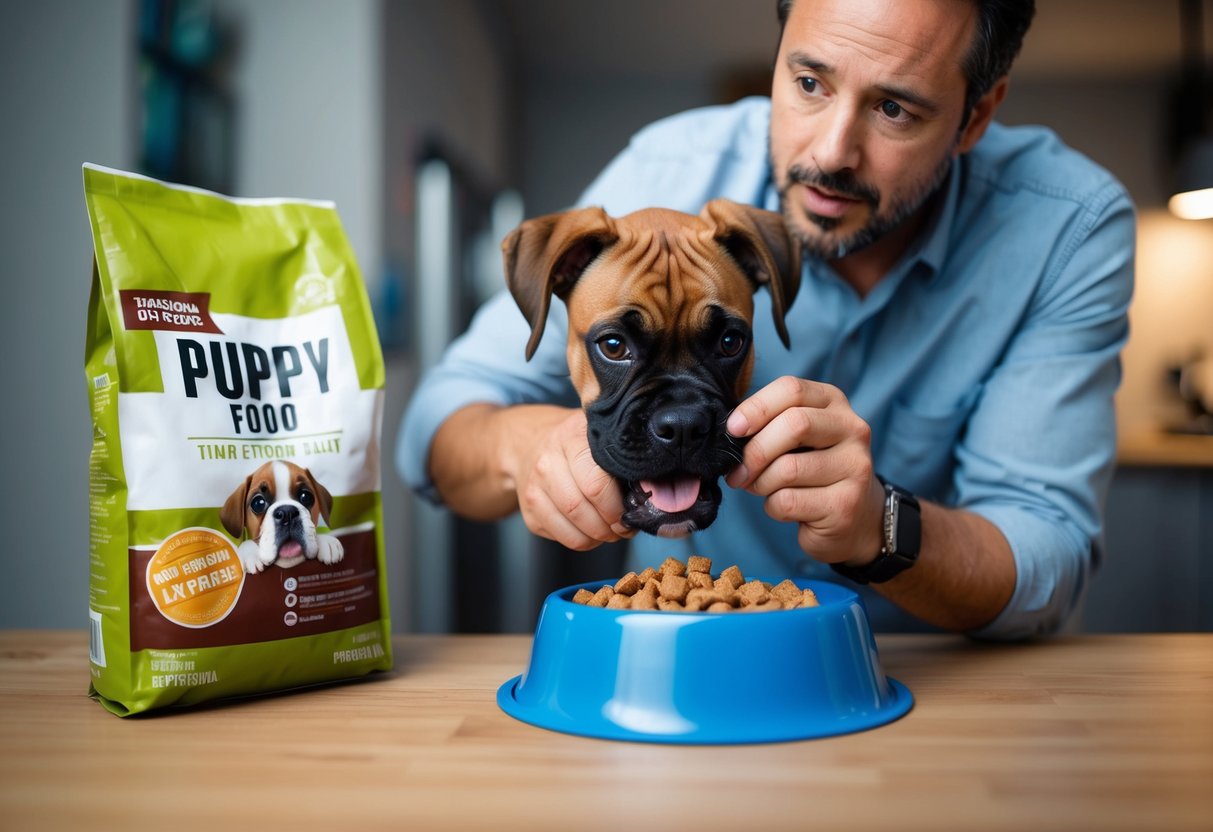
When feeding your Boxer puppy, it’s important to think about health issues that may arise during their growth. Bloat and dietary choices play significant roles in their overall well-being.
Understanding Bloat in Boxers
Bloat, or gastric torsion, is a serious condition that can affect Boxers. It happens when the stomach fills with gas and twists. This can cut off blood supply and be life-threatening.
Signs of bloat include:
- Restlessness: Your dog may seem uncomfortable.
- Swollen abdomen: This can look like your dog’s stomach is distended.
- Rapid heartbeat: An increase in heart rate can indicate stress.
If you notice these signs, it’s critical to seek veterinary help immediately. Feeding your Boxer smaller meals throughout the day can help reduce the risk of bloat. Avoid vigorous exercise right after eating too. These actions can keep your puppy healthier.
Supporting Your Boxer’s Health through Diet
Choosing the right diet can support your Boxer’s health. A nutritious diet ensures proper growth and can prevent obesity.
Here are some tips for feeding your Boxer:
- Quality puppy food: Look for options made for large breeds.
- Balanced nutrients: Ensure their food has the right mix of protein, fats, and carbohydrates.
- Monitor portions: Adjust the amount based on your Boxer’s weight and activity level.
Transitioning to adult food should be gradual. Mix in adult food with puppy food to avoid stomach upset. This helps your Boxer adjust comfortably to their new diet.
Keeping a close eye on their eating habits can aid in housebreaking too, ensuring they have regular bathroom breaks.


