
You probably imagine deer munching on leaves, not poking around in streams for fish. But sometimes, deer will eat fish—usually dead ones they find, or maybe a small, slow-moving fish if they get the chance and need extra protein. Deer don’t go out of their way to hunt fish, but they’ll eat them if the opportunity pops up and they’re lacking nutrients.
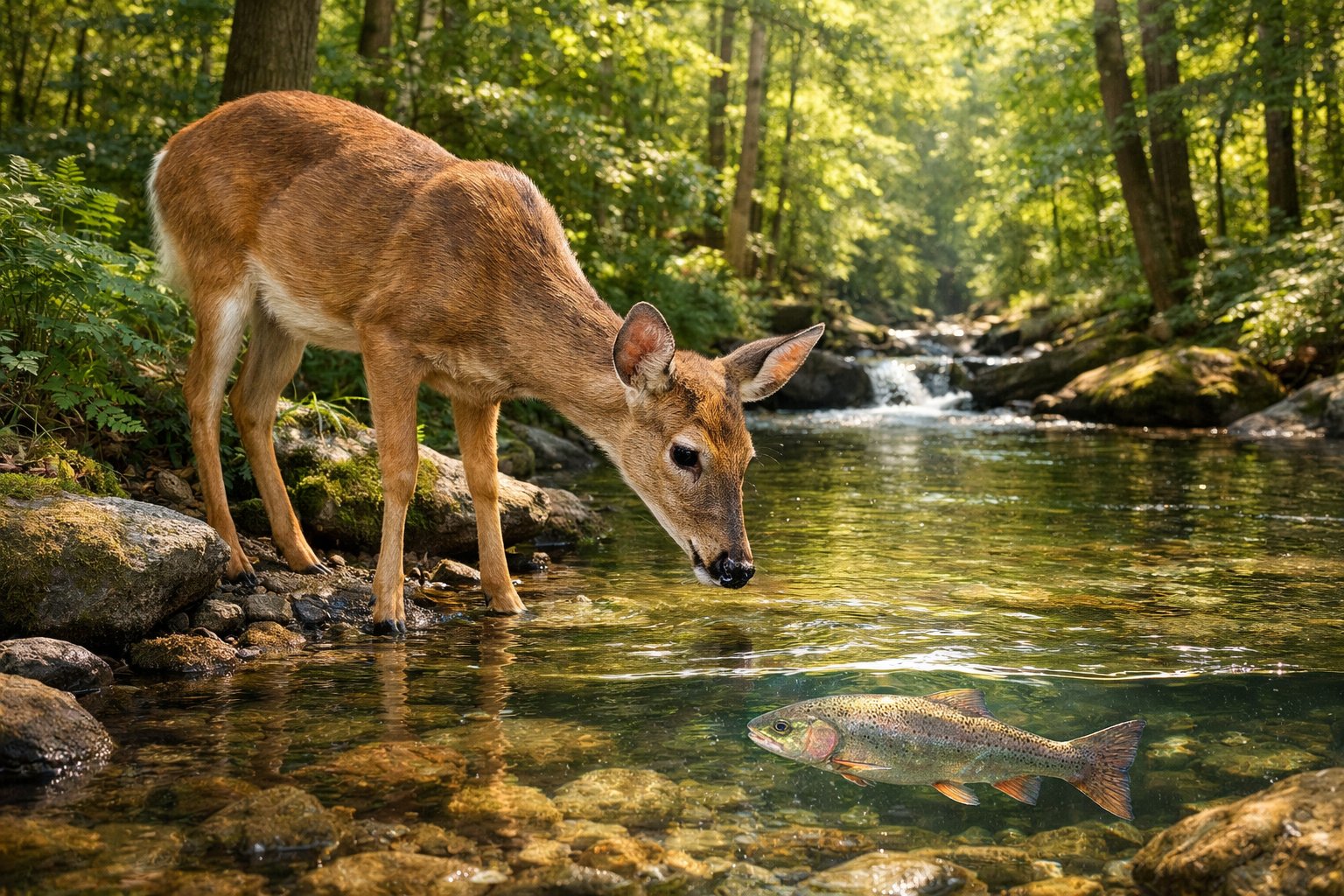
So, when does this actually happen? What kinds of fish do deer eat, and why would a plant-eater even bother? Their biology makes this rare, but not impossible. Let’s dig in.
Will a Deer Eat a Fish? Evidence and Observations

People have spotted deer eating fish here and there, and there’s some actual footage out there. Why do they do it? Mostly, it comes down to what fish can offer nutritionally and what’s happening in their environment.
Documented Cases of Deer Eating Fish
Trail cams and people out in the woods have caught deer eating fish now and then. In Minnesota, a young white-tailed buck got filmed snacking on small fish from a stream, right after it had eaten part of a bird carcass.
Zoo staff and wildlife park caretakers have seen deer eat fish when offered, too. Sometimes, scientists find bits of animal matter—like insects, eggs, tiny mammals, and yes, fish—in deer stomachs.
These stories aren’t common. Most of the time, it’s young deer or bold individuals who grab stranded fish or ones that are easy to catch. Photos and videos matter most here; word-of-mouth stories, not so much.
Conditions Prompting Fish Consumption
Deer might try fish if plants are hard to find, or if fish are just sitting there, easy to grab. Droughts, deep snow, or a long winter can wipe out their usual food, so they look for protein elsewhere.
You’ll sometimes spot this near shallow streams, fish kills, or spots where people left bait or fish remains behind. If a deer is hungry, injured, or just curious, it might take the chance. In areas where too many deer compete for food, they sometimes get creative.
Nutritional Reasons for Fish in a Deer’s Diet
Fish give deer a boost of protein, fat, and minerals—stuff that’s sometimes missing from plants, especially in winter. Protein helps keep muscles strong and, for bucks, supports antler growth in spring and summer.
Omega-3 fats and minerals like calcium and phosphorus from fish bones can come in handy when plants aren’t enough. Still, deer don’t really eat fish as a main food. It’s just a supplement, a little bonus when they get desperate.
Keep in mind, their guts are built for fibrous plants, not meat. Fish are just an add-on, not a replacement. If you’re curious about more cases like this, check out this article on documented deer-fish encounters.
Deer Diet Versus Eating Fish: Natural Habits and Biology

Deer stick to plants most of the time. Their stomachs are built for it. But in rare moments, they’ll try fish or other animal matter. Their food choices and anatomy really shape what they can handle.
Herbivorous Feeding Patterns
Deer are ruminant herbivores. They go for leaves, twigs, grass, forbs, and things like acorns or nuts. White-tailed and mule deer usually browse on shrubs and tree shoots, while elk eat more grass but still browse depending on the season.
They pick the best bits—young leaves, tender shoots, fruit—because those pack the most energy. What they eat changes with the seasons. In spring and summer, it’s green plants and forbs. Fall brings acorns and nuts for fat storage. Winter? They survive on woody twigs and whatever fat they’ve built up.
Digestive System and Dietary Adaptations
Here’s something to remember: deer have a four-chambered stomach, perfect for breaking down plant cellulose. Their rumen is full of microbes that slowly extract nutrients from tough plants.
They chew, swallow, regurgitate, and chew again to get every bit of nutrition. Because their digestive system is so plant-focused, deer don’t handle animal protein and fat all that well.
Fish can give them extra protein and minerals, but their guts aren’t set up for eating meat regularly. When deer eat fish or carrion, it’s usually just a rare, opportunistic thing—not a habit.
Impact of Environment and Food Availability
When plant food runs low, your local deer might act differently. During tough winters, droughts, or when the soil’s just missing key minerals, deer sometimes get desperate and scavenge whatever’s around—carcasses, washed-up fish, mushrooms, or even small animals like rabbits and frogs.
These situations don’t happen often, but they do pop up when things get rough.
People also change the landscape a lot—think urban edges, streams where dead fish gather, or spots where folks leave food out. These changes can make animal matter easier for deer to find.
But just because deer find fish more often doesn’t mean they start eating it regularly. It just bumps up the odds that a stressed-out deer might scavenge once in a while.


