
Ever sat outside at dusk and heard that haunting hoot? If you’re in the UK, chances are you’ve wondered what’s going on up in those trees. Owls hoot to talk, claim their turf, and find a mate. That hooting keeps them connected with each other and lets rivals know they’re not welcome.
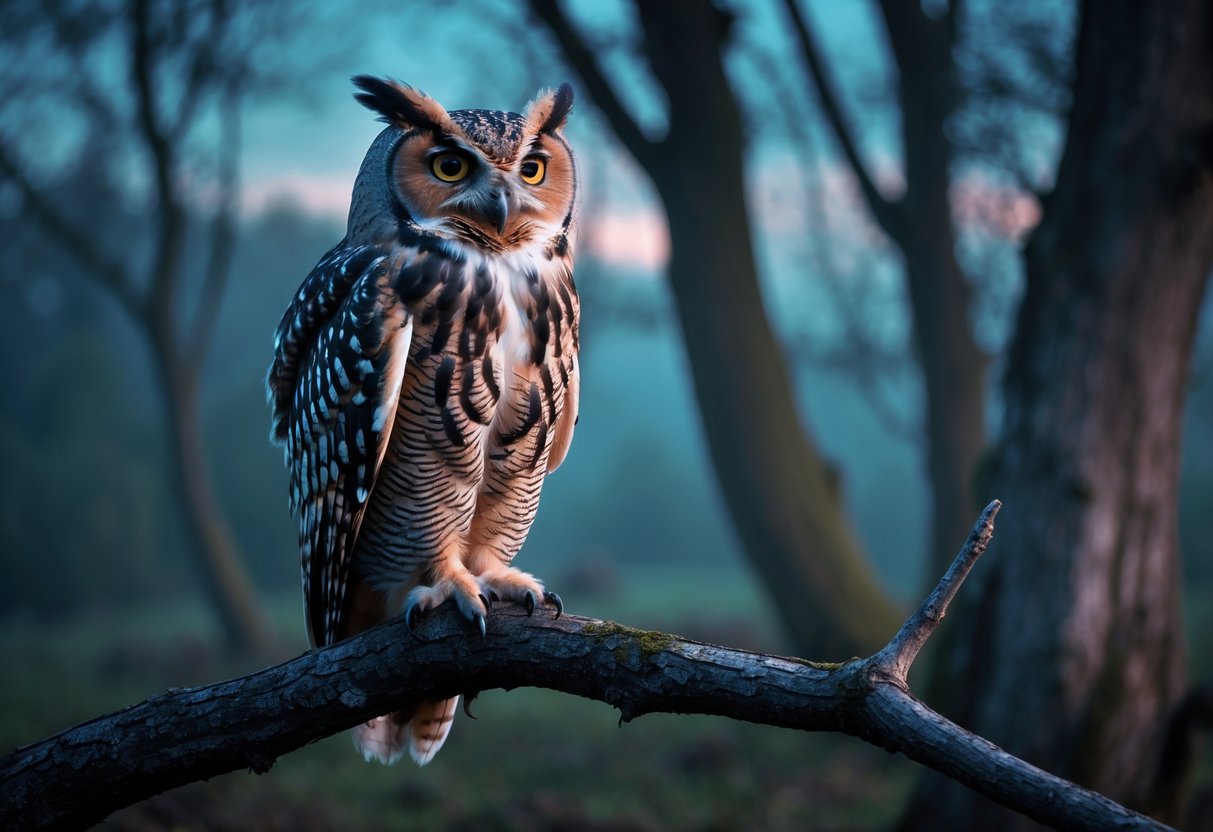
You’ll mostly catch the classic call of the Tawny Owl, which pops up all over the UK. Their hoots aren’t just random nighttime noise—there’s a reason for each one, especially when they’re looking for love or defending their patch.
If you dig into why owls hoot, you start to peek into their secret nighttime world. It’s a kind of quiet, hidden language—full of survival tricks, connections, and a bit of wild drama right outside your window.
Main Reasons Owls Hoot in the UK

Owls in the UK use hoots to send messages to other owls. Each hoot means something—maybe they’re marking their land, looking for a mate, or warning about danger.
Knowing why owls hoot can help you figure out what’s going on when you hear them at night.
Territorial Communication
When you hear an owl hoot after dark, it’s usually staking its claim. The owl is basically telling others to stay away.
They do this to protect their home and hunting grounds.
That hoot is like a “Keep Out” sign nailed to a tree. Male owls especially ramp up the hooting during breeding season to guard their nest sites.
Those deep hoots can carry a long way, warning rivals not to mess with them.
Each owl species has its own hoot pattern for this. Tawny owls, which you’ll find all over the UK, love to belt out loud, repeated hoots.
It’s their way of setting boundaries and avoiding fights.
Attracting Mates and Pair Bonding
Owls also hoot when they’re looking for love. In spring, male owls call out to show they’re ready to pair up.
Depending on the species, the calls might be softer or have a nice rhythm to them.
When a female answers, both owls sometimes hoot together. This duet helps them bond.
It also lets other owls know the territory is already spoken for.
Courtship hooting is busiest from late winter into early spring. Barn owls, for example, start calling as things warm up.
That’s their way of trying to impress a potential mate.
Warning Calls and Threat Displays
Sometimes, an owl’s hoot is a warning. If an owl spots danger—maybe a fox or a big bird—it’ll hoot loudly to warn others.
These warning calls sound sharper and more urgent than the usual hoots.
Owls use them to alert their own kind about threats. The idea is to keep everyone safe by letting them know it’s time to hide or move.
If something gets too close, you might hear quick, harsh hoots. That’s the owl’s way of scaring off intruders.
Family and Social Interactions
Hooting isn’t just for strangers—owls use it with family, too. Adult owls call to their chicks to guide or feed them.
Baby owls respond with soft hoots when they want food or attention.
Parents and fledglings keep in touch all night through these unique calls. The family stays connected until the young ones are ready to go solo.
Social hooting helps owls track each other in the dark. Different sounds can mean “I’m here” or “Follow me,” which keeps things running smoothly in the nest.
If you want more details about owl hooting and what it means at night, check out Why Do Owls Hoot at Night Understanding the Mysterious Calls.
Owl Species and Their Unique Calls in the UK
UK owls all have their own style when it comes to making noise. These calls help them find partners, claim territory, or just chat with each other.
Some owls hoot gently, while others go for shrieks or screeches. It’s honestly kind of wild how different they sound.
Tawny Owl Hooting Patterns
The tawny owl is probably the UK’s best-known nighttime hooter. Its call is a steady, soft “hoot, hoot, hoot.”
Funny thing—the classic “twit twoo” you hear in movies? That’s actually a duet between a male and female tawny owl.
Male tawny owls use those hoots to defend their turf. Females usually answer with higher-pitched calls.
The hoots come in slow, steady patterns, so you can often tell it’s a tawny just by listening. You won’t hear them much in the daytime—they’re all about the night shift.
The Distinctive Barn Owl Scream
Barn owls do things differently. Instead of hooting, they let out a loud, eerie scream or whistle.
It’s more of a “shhreeek” than a hoot, honestly.
You might hear that scream when a barn owl is hunting or protecting its patch. The sound is high-pitched and really cuts through the quiet night.
Barn owls almost never call during the day, but if you’re nearby, you might catch a hiss or a weird little snore when they’re resting.
Little Owl Behaviors and Sounds
The little owl sounds nothing like a tawny or barn owl. You’ll usually hear a sharp, repeated “kiew kiew” or sometimes a rattling noise.
These owls get active around dusk or dawn. So, you might notice them before other owl species even start up.
Little owls call out to stay in touch with their family or to warn away intruders. Sometimes, you’ll spot them fluttering their wings as part of how they communicate.
Their calls come out quicker and less musical than the slow, deep hoot of a tawny owl. Still, those short bursts of sound play a big role in helping them survive.
Curious about how tawny owls duet, or what a barn owl actually sounds like? Take a look at this video: Why do tawny owls hoot? The secret behind the twit twoo. For barn owl calls, you can find more at the Barn Owl Trust.


