
You’ve probably heard the classic “twit twoo” and wondered if a single owl makes that sound. Most people assume it’s just one bird, but here’s the twist: the “twit twoo” actually comes from two owls calling to each other. The male kicks things off with one part, then the female answers, and together they create that familiar duet.
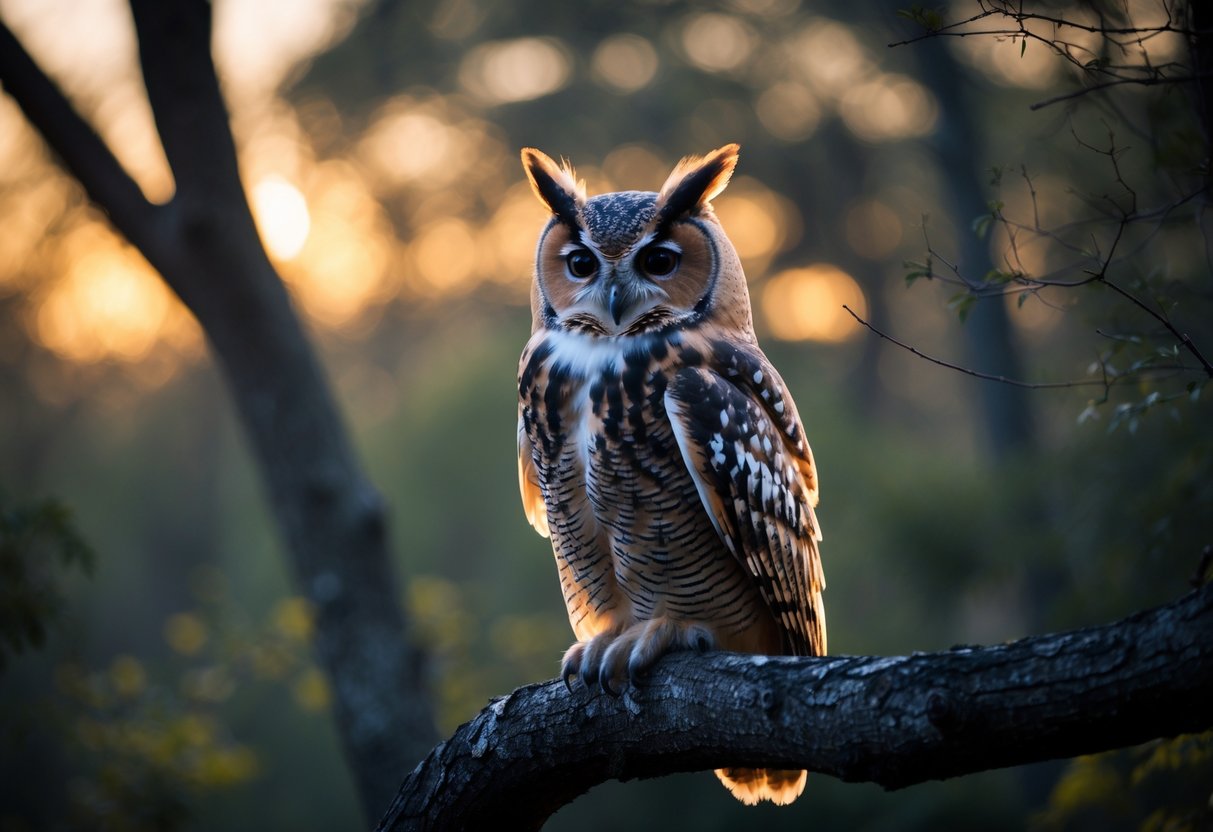
If you listen on a quiet night, you might pick up on how these two birds trade off making the sounds. Tawny owls do this the most, and they live all over Europe.
People often hear tawny owls but rarely catch a glimpse. Once you realize it’s a duet, you start to appreciate how owls chat in the wild.
In this post, let’s dig into why owls call like this and what “twit twoo” is all about. Maybe you’ve heard it before, or maybe you’re just curious—either way, it’s a pretty neat detail about these mysterious birds.
Why do tawny owls hoot? The secret behind the twit twoo
Does an Owl Really Say ‘Twit Twoo’?
Most folks think owls always say “twit twoo,” but honestly, the story’s a bit more interesting. Two owls call back and forth, not just one.
Each owl makes a different sound, and together it blends into “twit twoo.”
Origins of the ‘Twit Twoo’ Sound
The phrase “twit twoo” comes from the calls of the tawny owl. Ages ago, people tried to put the owl’s sounds into words.
The “twit” is the sharp, higher call, while “twoo” is a lower, drawn-out hoot.
Many think the same owl says both, but actually, two owls are involved—one for each sound.
This idea stuck because it’s catchy and easy to remember. You usually hear both calls together, so it sounds like a single bird singing a two-part tune.
Tawny Owl Calls Explained
The tawny owl is the main culprit behind the “twit twoo.” It hangs out in woodlands but pops up in towns and gardens, too.
Its calls are loud, clear, and carry through the night.
The male tawny owl gives the deep, hooting “twoo.” The female answers with a sharp, high-pitched “twit” or “kewick.”
These calls help them talk to each other, mark territory, and find mates.
Tawny owls also make softer warbles when they’re courting. Their chicks can get pretty noisy too, squeaking for food.
Difference Between Male and Female Owl Calls
When you hear “twit twoo,” it’s really a duet between a male and female tawny owl.
The female starts things off with the “twit,” which sounds more like “kewick” and is high and quick.
Then the male follows with the “twoo,” which is deeper and longer.
These calls happen close together, but they come from different birds.
The female’s “twit” gets the male’s attention, and his “twoo” lets everyone know he’s got his spot.
They’ll repeat this duet a lot during the night to keep other owls in the loop.
This back-and-forth makes “twit twoo” unique to tawny owls. Other owls like barn owls or short-eared owls don’t really do this.
You can read more about tawny owls and their calls at Walkhighlands’ article on Tawny Twits and Tawny Twoos.
Owl Sounds Around the World

Owl sounds aren’t the same everywhere. The way people write or imitate owl calls changes depending on where you are.
“Twit twoo” is popular in some cultures, but it’s not universal.
How Owl Calls Are Heard in Different Languages
In English, people usually say owls go “twit twoo” or “hoo hoo.” Other languages have their own spin.
For example:
- In Estonian, owls say uhuu.
- In Finnish, they say huhuu.
- In French, owls sound like ouh ouh.
These differences show how people interpret owl calls based on what they’re used to hearing. Some languages pick up on soft hoots, others hear sharper or higher sounds.
No real owl says “twit twoo” by itself. It’s almost always a mix of calls, especially the tawny owl’s duet.
Popular Culture and the “Twit Twoo” Phrase
You’ve probably heard someone mention “twit twoo” in stories or songs about owls. It’s become a classic “owl sound” in the UK and a few other English-speaking places.
This phrase stands out for a quirky reason—it’s actually a duet. The female tawny owl calls out a sharp “twit,” and the male fires back with a low “twoo.” When they trade calls quickly, you get that familiar “twit twoo.”
But here’s the thing: other owls don’t really make this sound. A lot of people still assume all owls say “twit twoo,” probably thanks to movies and books. The phrase pops up a lot in children’s stories and pop culture, but it barely scratches the surface of what owls actually sound like in the wild.
If you’re curious, you can find videos that show what tawny owls really sound like. Learn more about these unique owl calls here.


