
Ever been out at night and heard an owl hoot three times in a row? It’s a bit mysterious, right? That deep, rhythmic “hoo-hoo-hoo” comes from the Great Horned Owl. This three-note pattern isn’t just for show—it helps the owl stake its claim on territory and chat with other owls.
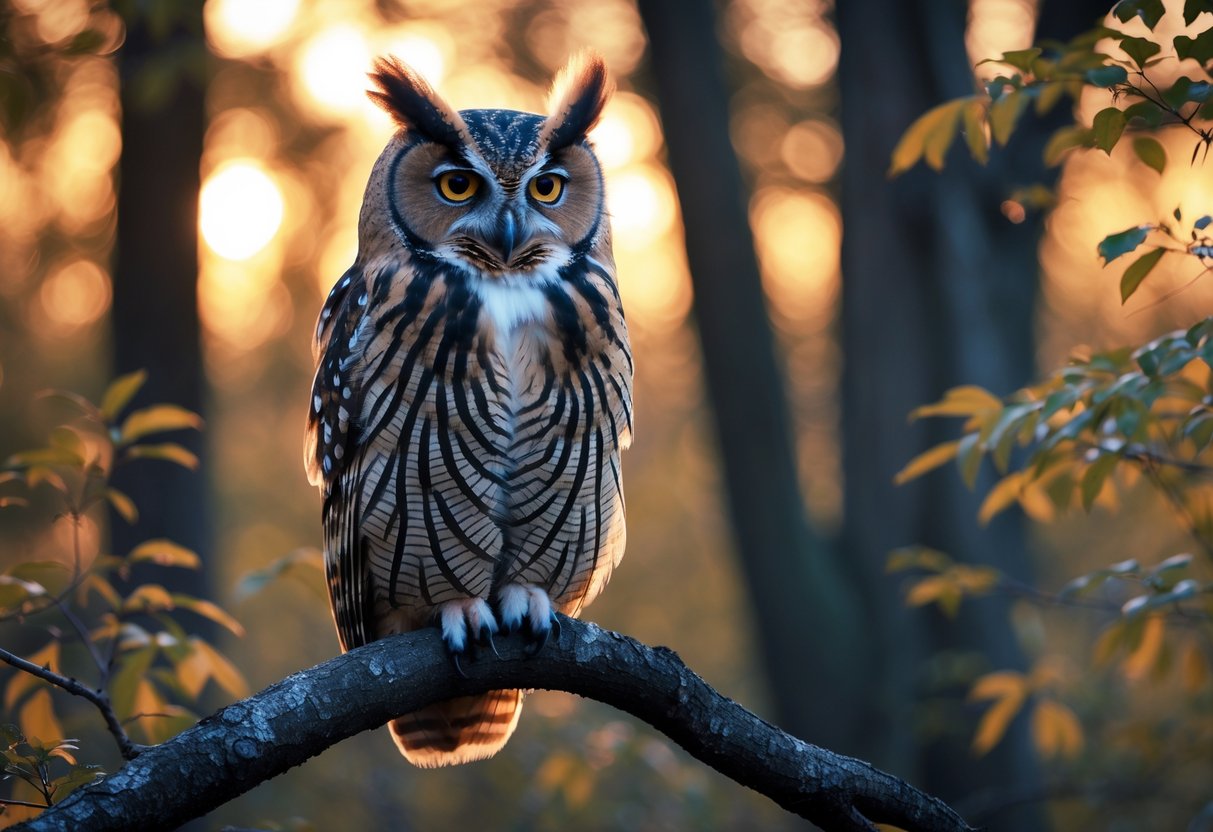
You’ll usually hear this hooting in late fall or early winter. That’s when these owls get busy setting up territories and searching for mates.
Knowing this little detail can make your nighttime walks a lot more interesting. You might even start picking out the different calls and guessing what’s going on in the trees above.
Listening to the Great Horned Owl’s hoots connects you to the wild in a way that’s hard to explain. Learning to spot their call is honestly a cool skill—it turns quiet nights outside into a bit of an adventure.
Identifying the Owl That Hoots Three Times

If you catch an owl hooting three times, try listening closely to the tone and rhythm. Some owls use simple hoots, while others craft their calls to mark territory or connect with a mate.
Paying attention to these details makes it much easier to figure out which bird you’re actually hearing. It’s almost like solving a little nighttime puzzle.
Common Species Known for Distinctive Hooting
Some owls just have unforgettable hoots. In North America, the Great Horned Owl and the Barred Owl are probably the ones you’ll hear most often.
Great Horned Owls go for low, soft hoots in a steady, three-part rhythm. The Barred Owl, though, almost sounds like it’s asking a question: “Who cooks for you? Who cooks for you all?”
A few others, like the Western Screech Owl, hoot too, but their patterns are a bit faster or maybe just quieter. If you know which owls live nearby, you’ll have a better shot at guessing who’s making noise at night.
Understanding the Barred Owl’s Signature Call
The Barred Owl’s hoot is pretty memorable. It really does sound like someone asking, “Who cooks for you? Who cooks for you all?”
This call usually runs eight or nine notes long and cuts through the woods pretty well. You’ll often hear Barred Owls calling back and forth, especially when they’re pairing up.
Sometimes, they even snap or clack their bills if they get annoyed or feel threatened. So, if you hear that familiar, almost human-like call, you’re probably listening to a Barred Owl.
Great Horned Owl Hoot Patterns
Great Horned Owls stand out with their deep, low hoots—usually in groups of three. The pattern goes something like “hoo-h’HOO-hoo,” with the middle hoot coming out louder or a bit higher.
They repeat these hoots to claim territory and talk to their mates. You might also catch them hissing or clacking if they’re feeling defensive.
Both males and females hoot, but the females have a slightly higher voice. If you listen for the rhythm and pitch, you’ll know when there’s a Great Horned Owl nearby. For more detail, check out this owl hooting pattern.
Comparison of Hooting Behaviors Among Owls
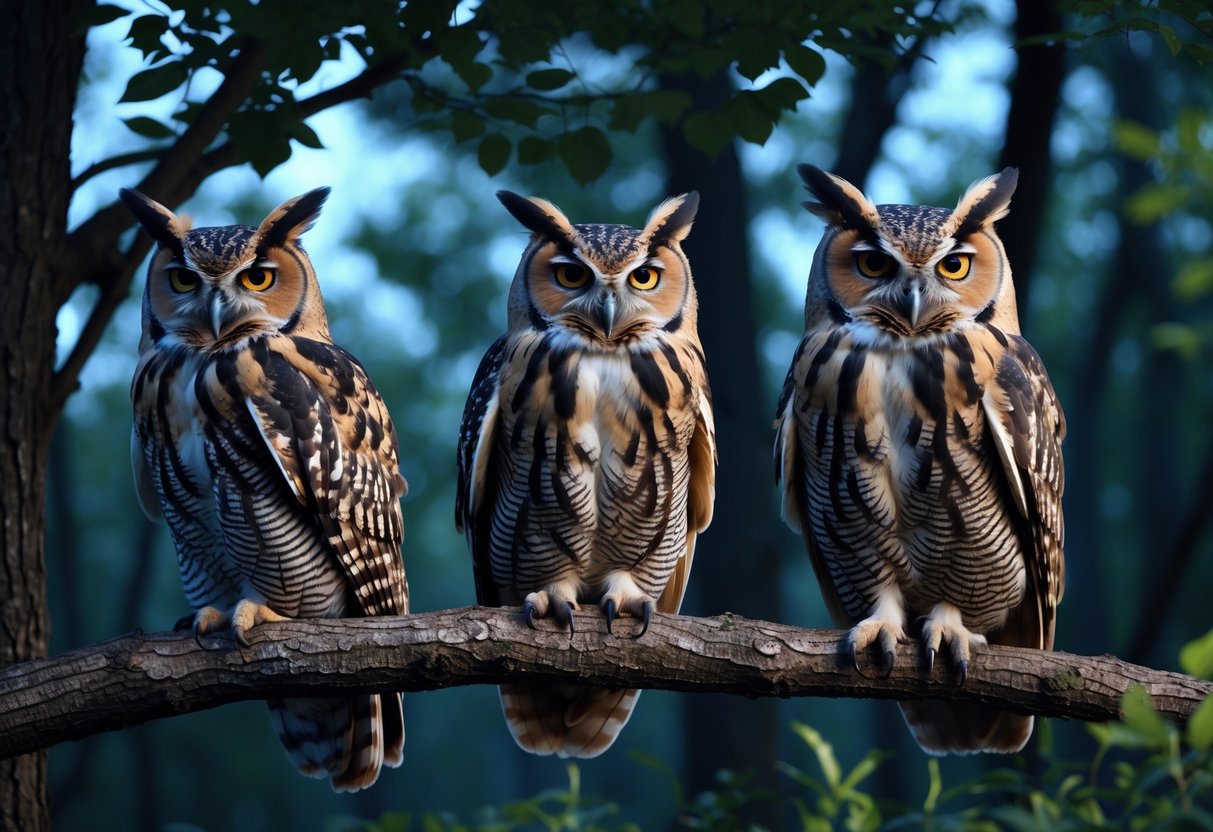
Owl hoots are all over the map, really. Each species has its own twist—some go for slow, steady hoots, while others get a little more creative with longer, complicated calls.
If you pay attention, you’ll start to notice which owl is which. It’s especially handy for telling apart Great Horned Owls and Barred Owls.
Hoot Owl Call Characteristics
Hoot owls usually go for slow, spaced-out hoots. They use these to mark their territory or attract a mate.
Take the Great Horned Owl, for example. You’ll hear its classic pattern of three deep hoots: hoo-h’HOO-hoo. That call cuts through the night air, clear and steady.
Other hoot owls mix things up with different patterns. Some speed up their hoots or repeat them more times.
These calls are mostly low and rhythmic, which makes it easier to figure out where the owl is hiding. Timing and tone can change, especially during mating season when they get a bit more vocal.
Differences in Vocalizations Between Barred and Great Horned Owls
Barred owls usually let out a longer hooting pattern. It often sounds like “who cooks for you, who cooks for you all”.
You’ll hear 7 to 8 hoots in a row from them. Their calls come across as more musical, and sometimes people even mistake them for actual words.
Great horned owls don’t hoot as much in one go. They stick to 3 or 5 hoots per series, and you’ll notice longer pauses between each one.
Their voice sounds deeper and more emphatic. Males might spend weeks hooting loudly just to catch a female’s attention.
You can also spot differences if you actually see the owl. Barred owls have dark eyes and a yellow bill. Great horned owls, on the other hand, have yellow eyes and a dark bill.
Both owls will snap their bills or throw in some clacking sounds when they feel disturbed or annoyed. That extra noise can give you a hint about their mood.
If you’re curious, you can check out more on hooting patterns of barrowed and great horned owls and listen for yourself.


