
Ever notice a deer tucked in, legs folded, just chewing away while barely moving? It always looks so peaceful, but that slow chewing isn’t just about relaxation. Deer chew while lying down mainly because they’re ruminating—they’re bringing up partially digested food and chewing it again to finish breaking it down.
This process helps them squeeze more nutrients out of plants. Plus, they save energy by resting while their stomachs do the hard work.
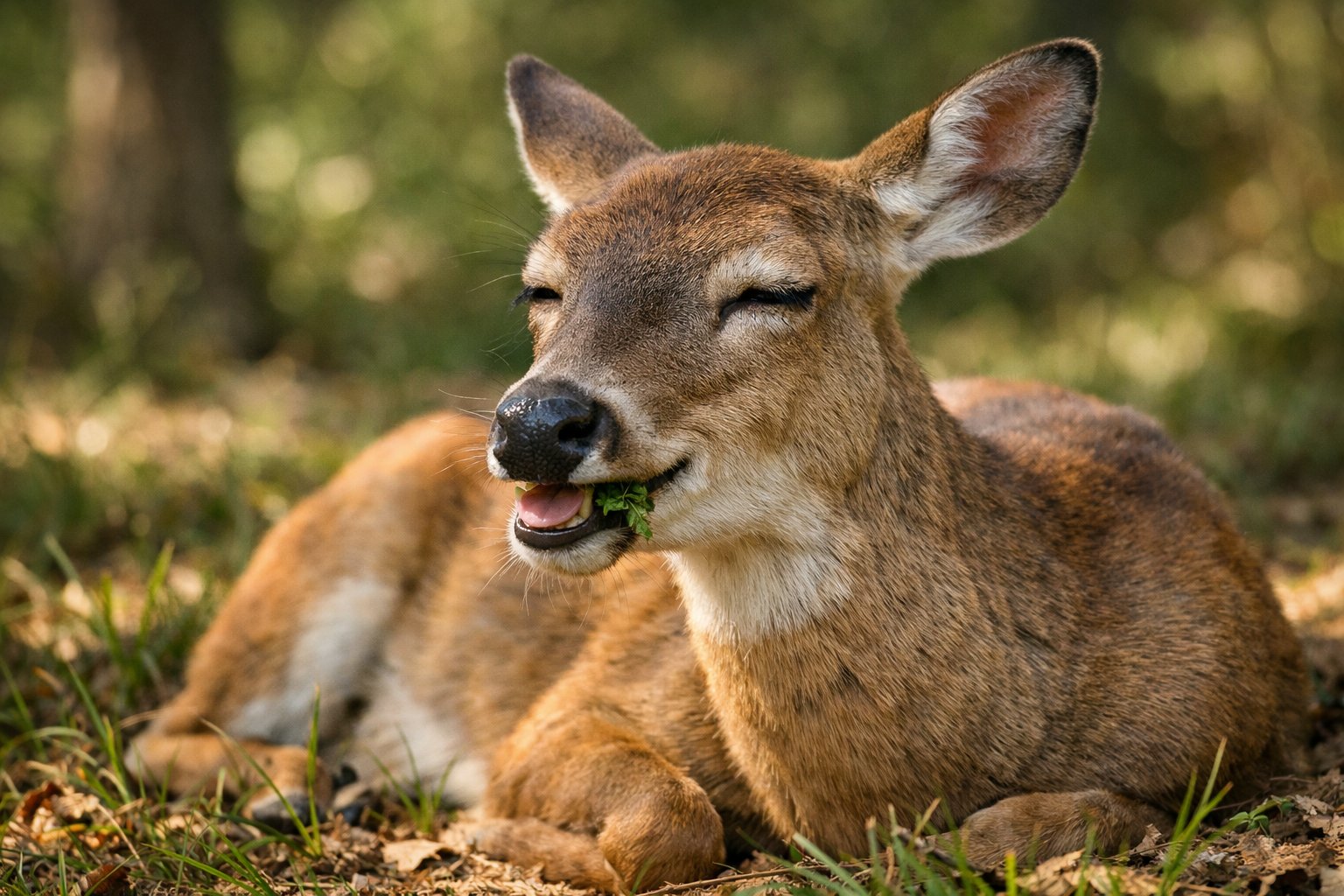
Their four-chambered stomach really shapes this habit, and lying down helps them stay alert if they need to bolt. It’s kind of fascinating how chewing, digestion, and safety all fit together in a deer’s day.
Why Deer Chew When Lying Down

Deer often choose to lie down to rest, digest, and keep out of sight. Let’s dig into how their resting posture links up with chewing and why bringing up cud actually helps their digestion.
Understanding Deer Resting and Chewing Behavior
If you watch a deer lying down, you’ll notice its relaxed pose and those slow, steady jaw movements. Deer usually get active at dawn and dusk, so midday or nighttime is prime time for them to hunker down and chew.
They tend to keep their heads raised, always sniffing and listening for trouble even while they’re chilling out. The chewing you see looks kind of deliberate and calm, right? That’s because after a good feeding session, deer switch from moving around to just sitting and chewing, which saves them energy.
Lying low brings down their heart rate and cuts down on fidgeting, making chewing more efficient. It also keeps them from getting startled right in the middle of digesting.
The Role of Rumination and Chewing Cud
Deer, like cows and other ruminants, chew twice. First, they swallow their food, and then they bring up partially digested stuff—cud—for another round of chewing.
When you spot a deer chewing while lying down, it’s almost always ruminating, reworking those tough plants to pull out every bit of nutrition. Ruminating takes a lot of chewing and plenty of saliva to help break down all that fiber.
You’ll see slow cheek movements, some swallowing, and even long pauses between chewing. Deer really need this second round because their four-chambered stomach only works if they chew the cud well and let microbes ferment all that rough plant material.
Why Lying Down Aids Digestion in Deer
Lying down helps keep a deer’s body steady so rumination can happen without much fuss. When you see a deer tucked up with its legs under, it’s not just cozy—it’s conserving muscle use and keeping warm.
That steady position helps stomach microbes do their job and keeps the deer from accidentally spitting up cud too soon. Being close to the ground also lowers stress, which is a big deal.
Stress can spike their heart rate and actually stop rumination. So a quiet spot—maybe in tall grass or under some brush—lets the deer chew longer and get more from each bite.
Deer Digestive System: The Secret Behind Chewing Cud

Deer have a pretty wild stomach setup that helps them handle tough plants. Their system stores food, lets microbes get to work, and then sends little balls of partially digested food back up for another chew.
How the Multi-Chambered Stomach Works
You’ll notice deer often just sit and chew after eating because their stomachs store a ton of plant material for later. The first two chambers basically work as a fermentation tank, where microbes start breaking down all that cellulose.
Once the rumen fills up, some of that fermented stuff heads back up the esophagus as cud. The deer chews the cud again, smashing up fibers and mixing everything with saliva.
That makes it way easier for microbes to finish breaking things down, and for the next stomach chambers to soak up water and nutrients. This whole cycle—eating, storing, regurgitating, and re-chewing—lets deer get as much energy as possible from leaves, twigs, and grass.
The Rumen, Reticulum, Omasum, and Abomasum Explained
The rumen stands out as the biggest chamber. It holds most of the plant matter a deer eats, along with a wild mix of microbes.
Inside the rumen, all that food ferments. Fatty acids come out of the process, and deer rely on those for energy.
Right next to the rumen, you’ll find the reticulum. It traps the heavier, denser bits of food—kind of like a filter.
People often call the rumen and reticulum together the “reticulorumen.” It’s a mouthful, but it makes sense.
Once everything gets small enough, it moves along to the omasum. The omasum’s folded layers soak up water and minerals.
Finally, the abomasum steps in. This chamber acts a lot like a regular stomach, using acids and enzymes to break down proteins.
By the time food leaves the abomasum, it’s ready for the intestines. Each chamber handles its own job, and honestly, it’s pretty impressive how deer can get so much nutrition from tough, fibrous plants.


