
So, you’ve spotted a frog in your house. That’s always a bit of a surprise, isn’t it? But honestly, you don’t need to panic.
The best move is to calmly keep the frog in one room, close the doors, and then either guide it outside or gently catch it in a container to release outdoors. This way, everyone—including the frog—stays safe.
You might wonder how the frog even got in, or what you should do if you have pets or kids running around. Keeping things simple and gentle makes the whole process a lot easier and way less stressful.
If you know a few easy steps, you’ll feel more in control next time. It’s really not as scary or messy as it might seem at first.
Safe Steps to Take When You Find a Frog Indoors
When you find a frog inside, acting carefully keeps both you and the frog safe. Stay calm, try to figure out what kind of frog you’re dealing with, catch it gently, and decide if you need help.
Stay Calm and Assess the Situation
Seeing a frog hopping around your house is surprising, but try not to freak out. Frogs don’t usually harm people, and sudden movements just make them more nervous.
First, spot where the frog is. Does it look injured or just lost?
If you’ve got pets nearby, move them to another room. Pets tend to chase or scare frogs, so it’s better to separate them before you do anything else.
Close doors to other rooms. That way, the frog can’t wander off and you’ll have an easier time catching or guiding it out.
Identify the Frog If Possible
If you can, figure out what kind of frog you’ve found. Most frogs that sneak indoors are harmless and just looking for bugs or a bit of moisture.
Notice its size, color, and any unique markings—just don’t try to pick it up yet. If it’s small and green, it’s probably a tree frog. Bigger frogs might live near ponds or streams outside.
If you think the frog might be dangerous or you’re not sure, don’t touch it. Snap a clear photo and ask a professional if you need to.
How to Humanely Catch and Remove the Frog
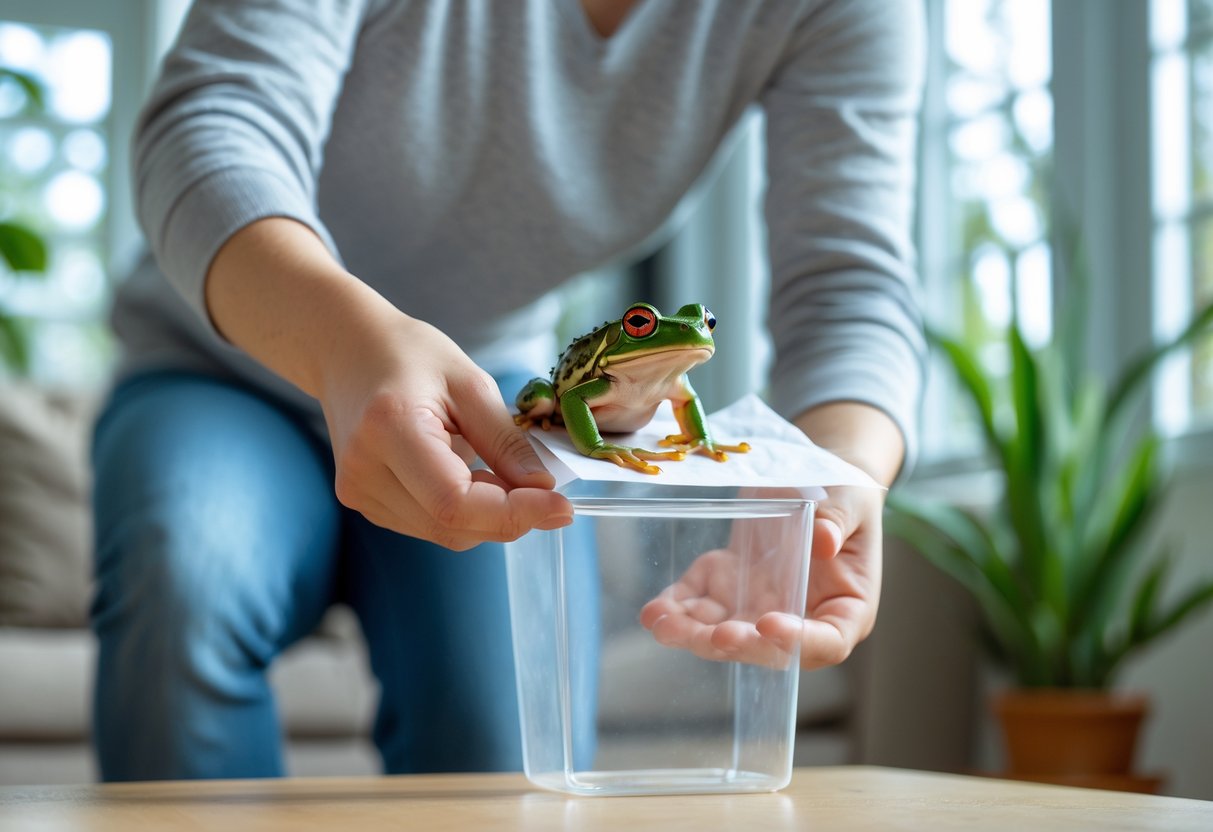
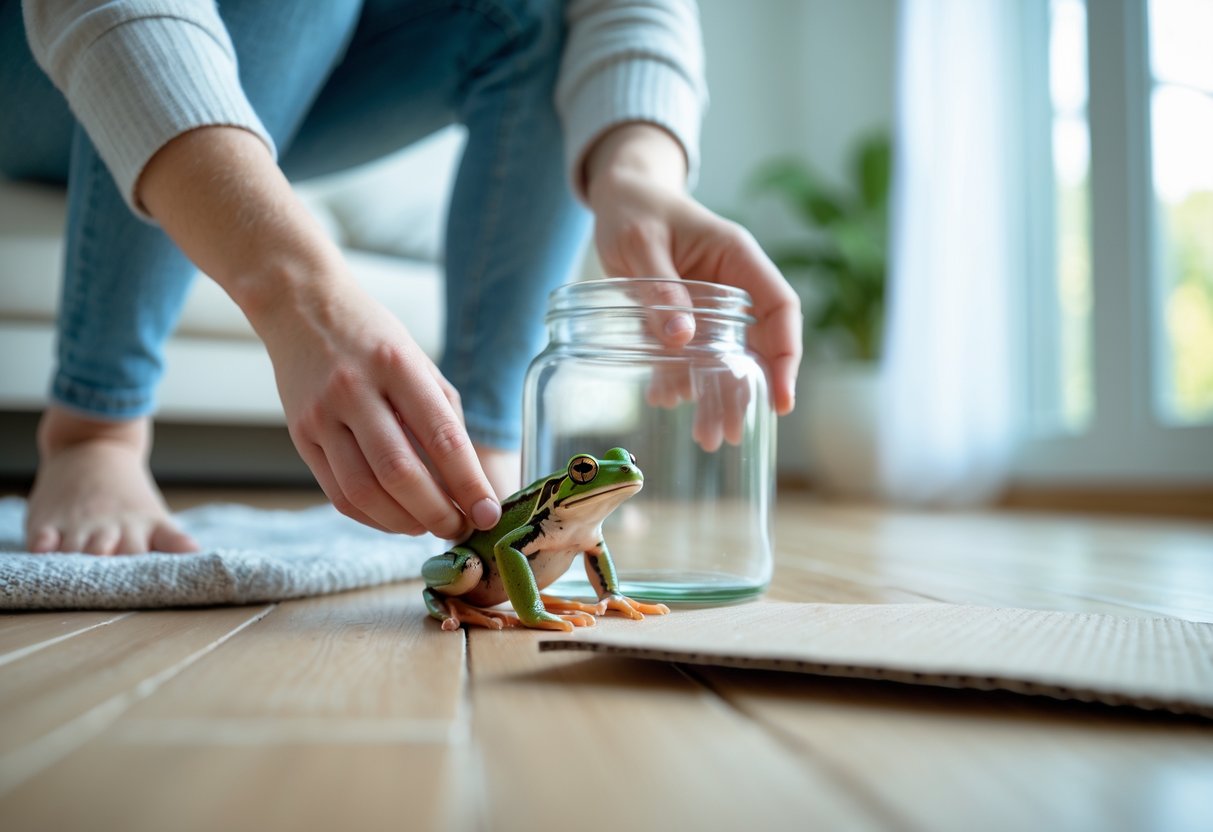
Grab a small plastic container or cup to catch the frog. Move slowly, place the container over the frog, and then slide a piece of cardboard underneath so the frog’s inside.
Make sure the container has air holes or a little gap for breathing. Hold it gently—you don’t want to hurt the frog.
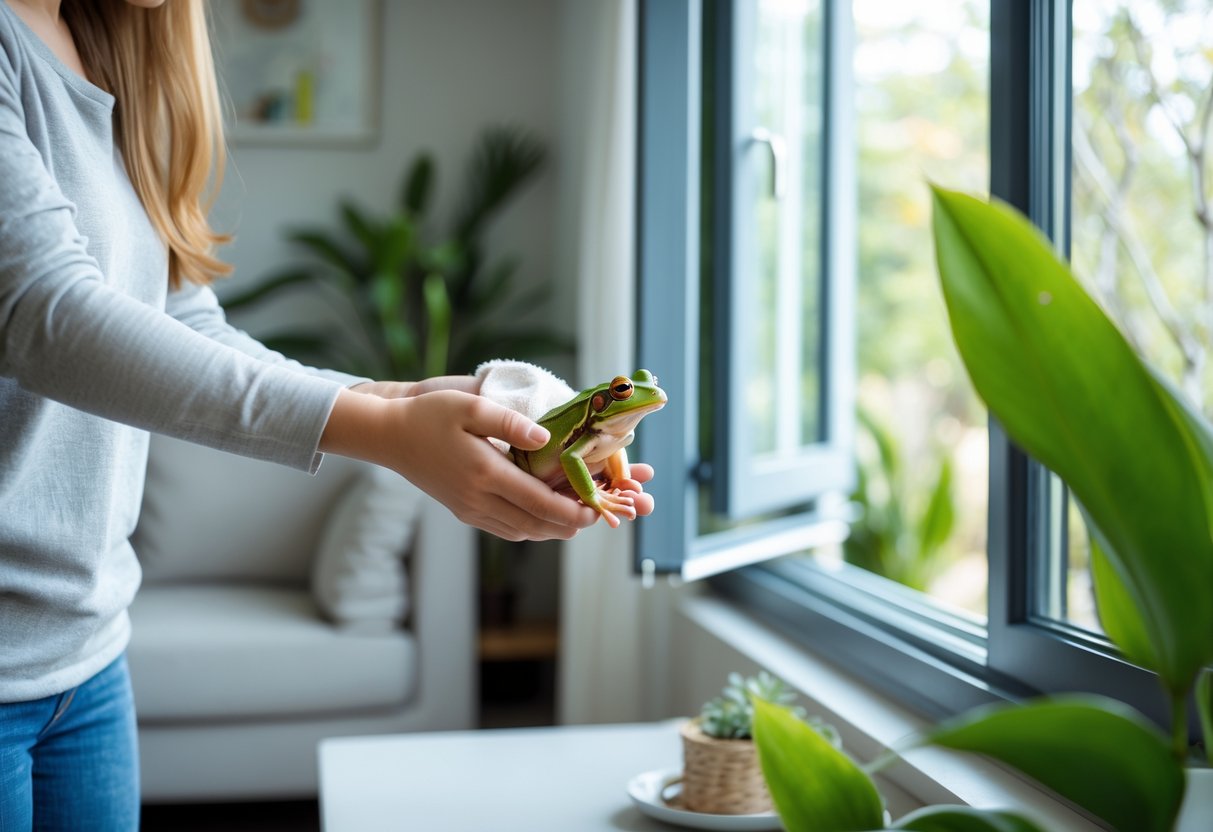
Take the frog outside to a shady, moist spot with plants or near water. Let it go gently and let it hop away on its own.
If you’d rather not catch it, you can try guiding the frog toward an open door. Walk calmly behind it and encourage it in the right direction. Try not to touch the frog directly if you can help it.
When to Call a Professional for Help
If you find a bunch of frogs or a type you don’t recognize, call a wildlife removal expert. These folks know how to handle frogs safely and humanely.
Call for help if the frog is stuck somewhere tricky or if you just don’t feel comfortable dealing with it.
Professional removal can cost anywhere from $100 to $600, depending on how many frogs and how tough the job is. It keeps things safe for everyone involved.
Look for local wildlife or pest control services that actually handle amphibians. Those are your best bet.
What To Do If There Is A Frog In Your House? How To Safely Remove It has some extra tips if you want more details.
Preventing Future Frog Visits in Your Home
You can keep frogs out by blocking how they get in, cutting off water sources, and reducing the bugs they eat. These steps make your place less attractive to frogs.
Seal Entry Points and Reduce Attractants
Check around your home for any little gaps or cracks where frogs might sneak in. Look at doors, windows, vents, and the foundation. Seal up those spots with weather stripping, caulk, or mesh screens.
Frogs can squeeze through tiny holes, so don’t skip the small stuff.
Turn off outdoor lights or swap them for yellow bulbs. Bright lights draw in bugs, and bugs bring frogs. Trim weeds and tall grass near your house, too. Frogs love hiding in damp, shady places right up against your home.
Eliminate Indoor and Outdoor Water Sources
Frogs need water to survive and breed, so standing water near your house is basically an invitation. Empty or cover birdbaths, plant saucers, clogged gutters, and pet water bowls often.
Fix leaks as soon as you spot them.
Keep gutters and downspouts clear so water drains away from your house. Cover pools when you’re not using them, and try not to overwater your lawn or garden in the evening.
Less moisture means fewer frogs hanging around.
Reduce Indoor Insect Populations
Frogs wander inside because they’re after food like flies, mosquitoes, and other bugs. Try using sealed trash cans and keep your kitchen surfaces clean—less mess means fewer insects.
Fix up any screens on your windows and doors so insects can’t sneak in. You could also try some natural insect repellents or set up a few traps around the house.
With fewer bugs hanging around, frogs just won’t find much to eat indoors.


