
The Arctic fox is a remarkable animal, well adapted to the harsh conditions of its environment. Despite being a skilled hunter, the Arctic fox has its own set of predators.
The biggest threats to Arctic foxes include polar bears, wolves, and red foxes, which can impact their populations significantly.
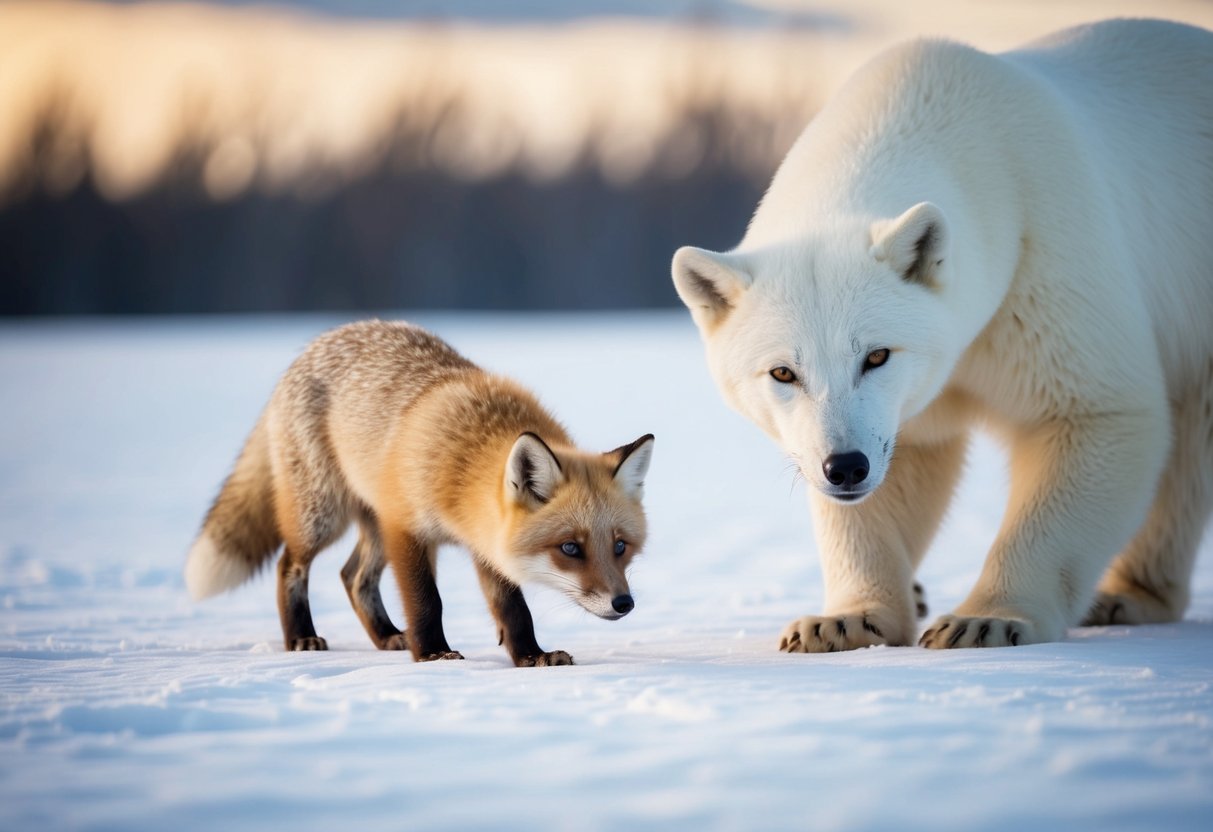
These foxes have several adaptations that help them survive, such as their thick fur and ability to find food in icy conditions. However, when other predators intrude on their territory, their chances of survival become much slimmer.
Understanding the challenges that Arctic foxes face can help you appreciate these resilient creatures even more.
Predators of the Arctic Fox
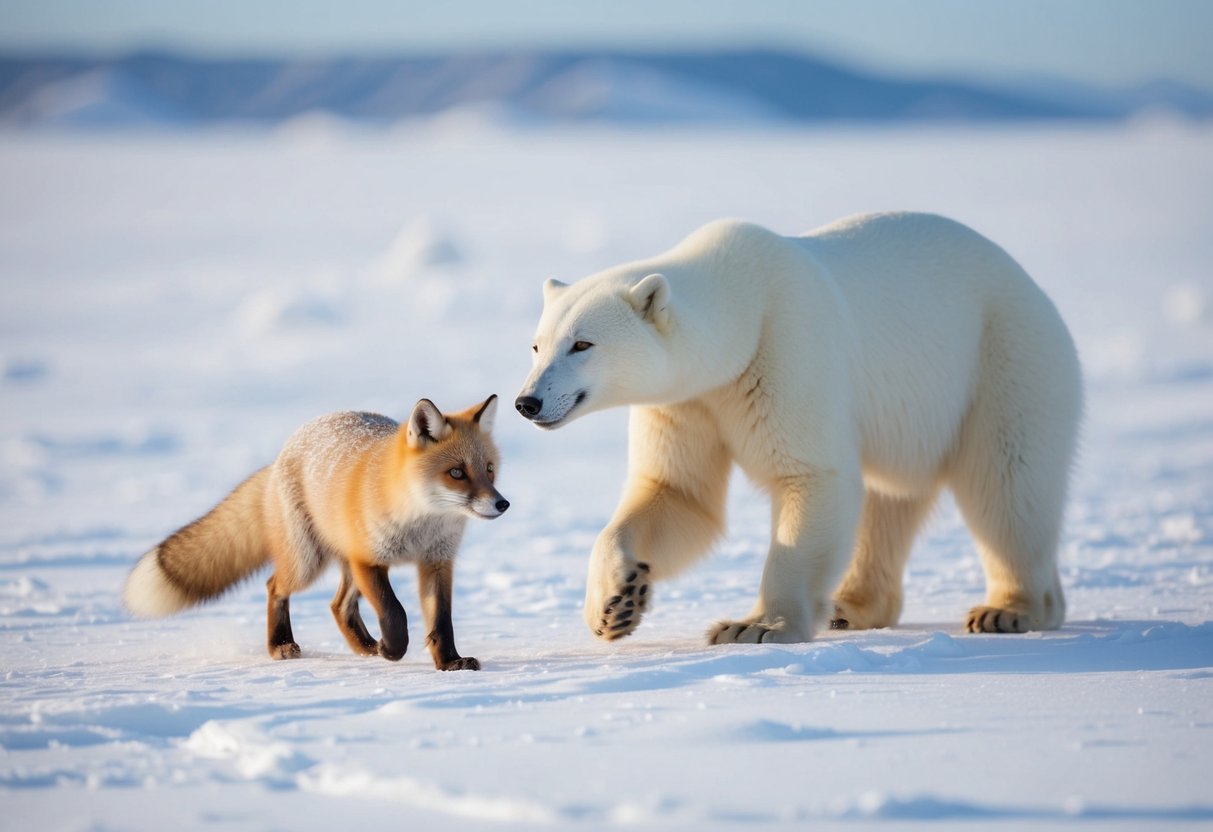
The Arctic fox faces several predators that threaten its survival in the harsh tundra environment. Understanding these predators is crucial for recognizing the challenges this species faces today. Here are the main threats to the Arctic fox.
Polar Bears and Red Foxes
Polar bears are not direct hunters of Arctic foxes, but they pose a significant threat when their territories overlap. These large carnivores may scavenge on Arctic foxes if food is scarce.
Red foxes have become one of the biggest predators of the Arctic fox, especially in regions where climate change reduces snow cover. The red fox has a competitive advantage and can prey on both juvenile and adult Arctic foxes. This competition leads to a decline in the Arctic fox population in some areas.
Wolves and Birds of Prey
Wolves are a traditional predator of the Arctic fox, often hunting in packs. They can overpower an Arctic fox easily due to their size and teamwork. Their presence reduces the local fox population and affects the predator-prey relationship in this ecosystem.
Birds of prey, like golden eagles and snowy owls, also hunt Arctic foxes. These birds use their keen eyesight to spot foxes from great heights before diving down to catch them. This form of predation affects young foxes, making survival even more challenging.
Human Impacts
Humans have impacted the Arctic fox population through habitat destruction and the fur trade. The loss of icy habitats due to climate change limits the fox’s ability to camouflage. This change increases their vulnerability to predators.
Additionally, hunting for their fur has reduced the Arctic fox population in some areas. Conservation efforts are critical to protect this species from further decline. Although you may not see direct impacts from these activities, they are still significant threats to Arctic foxes and their survival.
Adaptations for Survival
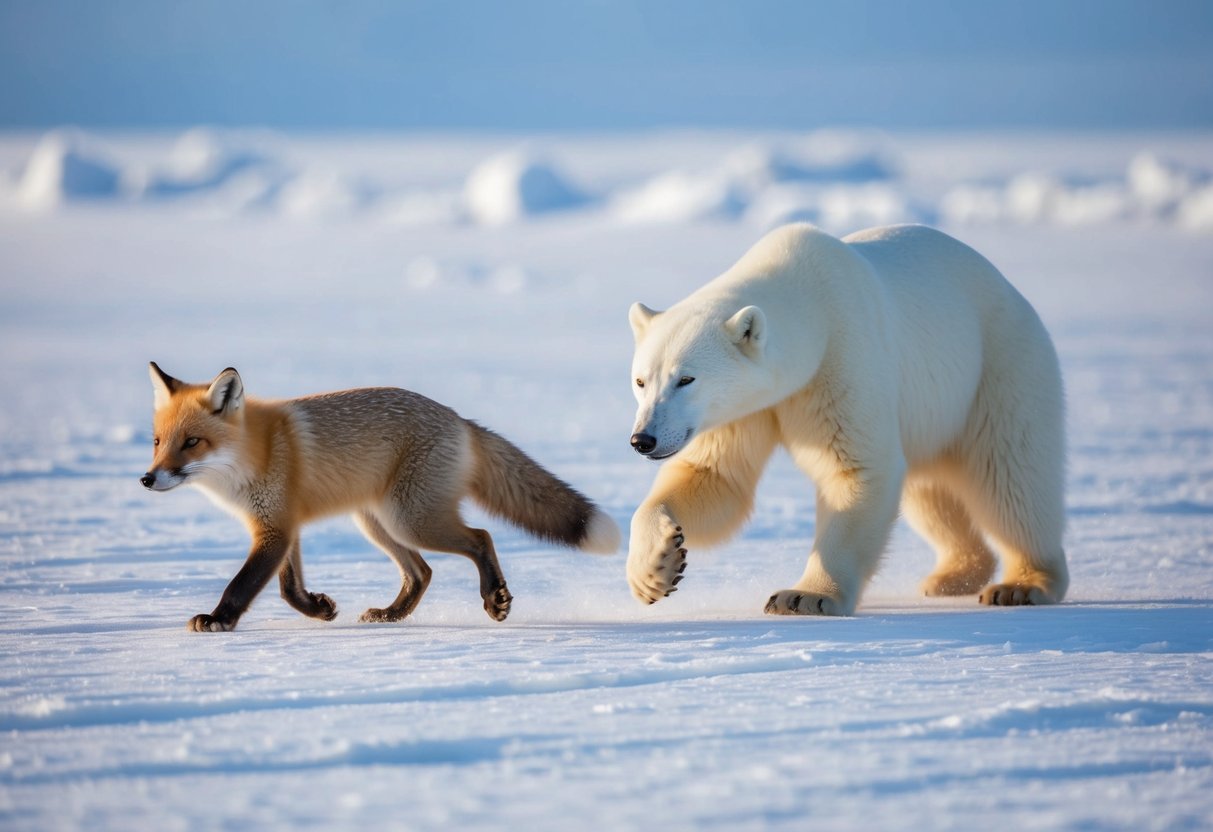
Arctic foxes have unique adaptations that help them survive in the harsh Arctic environment. These adaptations include physical traits that enhance their ability to endure cold temperatures and behavioral strategies that support their lifestyle and hunting success.
Physical Adaptations
You’ll notice that Arctic foxes have small ears, which minimize heat loss. This feature helps them conserve body heat in freezing temperatures. Their thick fur provides exceptional insulation, keeping them warm even in extreme cold.
Furry soles are another important adaptation. These help provide grip on icy surfaces and prevent frostbite. The color of their fur changes with the seasons, offering effective camouflage. In winter, their fur turns white, blending in with snow, while in summer, it turns brown or gray to match the tundra.
Behavioral Adaptations
During the breeding season, Arctic foxes form monogamous pairs. This social structure aids in raising their young, as both parents help protect and feed the pups.
They create dens in the ground, which offer shelter from predators and harsh weather. In addition, Arctic foxes are stealthy hunters, relying on their agility to capture prey. This adaptability in their diet also helps them thrive, as they can eat small mammals, birds, and even scavenged food.
These combined adaptations make Arctic foxes resilient, allowing them to live and thrive in a challenging environment.
Arctic Fox Diet and Hunting Strategies
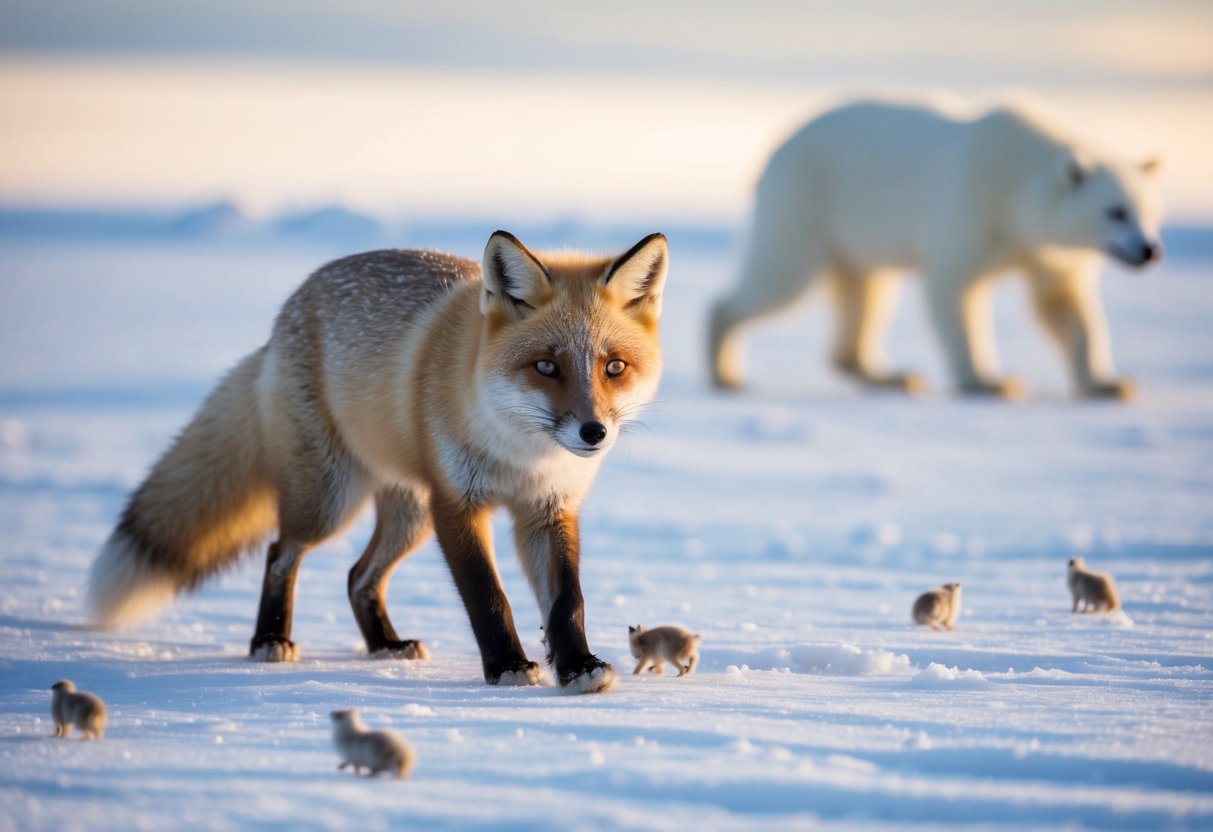
Understanding the Arctic fox’s diet and hunting strategies can help you appreciate how these animals thrive in their harsh environment. These clever creatures are opportunistic feeders, which means they use various methods to find food.
Primary Prey Species
Your Arctic fox mostly relies on small mammals for food. The most common prey includes lemmings and voles, which are abundant in their habitat. During peak seasons, an Arctic fox can eat around 12 lemmings in a single day.
In addition to rodents, Arctic foxes also hunt seabirds and scavenge for carrion. They are adept at finding fish when available. This wide range of food choices reflects their adaptability to the environment.
This flexibility allows them to survive during food scarcity, exploiting whatever resources are present.
Seasonal Diet Changes
As the seasons change, your Arctic fox’s diet changes too. During the winter, they primarily hunt small mammals like lemmings and voles. The thick snow makes hunting challenging, but these foxes use their keen sense of hearing to locate prey beneath the snow.
In spring and summer, their diet shifts. You will find them foraging for berries and other plant materials to supplement their food intake. During these warmer months, they continue to hunt small mammals but also take advantage of predation opportunities from nesting seabirds.
This seasonal adaptability is crucial for survival in an environment where food availability can vary widely.


