
Wolves and foxes are both members of the Canidae family, but their relationship is not friendly. Wolves often view foxes as competition for resources and territory, which leads to hostility. This can escalate when foxes invade areas that wolves consider their own, especially around dens or hunting grounds.

If you’ve ever wondered why these two animals don’t get along, it goes beyond mere size differences. Wolves are much larger and stronger, which gives them an advantage. Yet, they still see foxes as threats to their way of life. The hunt for food and territory can turn into a battle between these two canids, creating a tense dynamic in the wild.
As you read on, you’ll discover more about the intriguing behaviors and interactions between wolves and foxes, shedding light on why their rivalry exists in the animal kingdom.
Understanding Canidae Dynamics

The relationship between wolves and foxes offers insights into their shared family characteristics and behaviors. By examining their taxonomy and evolution, you can better appreciate their differences.
Additionally, physical traits and behaviors highlight how these species interact within their habitats.
Taxonomy and Evolution
Wolves and foxes both belong to the Canidae family. This group includes various species such as the gray wolf and red fox. The gray wolf is among the largest canids, typically weighing 50 to 110 pounds. In contrast, the red fox is much smaller, averaging about 10 to 15 pounds.
Evolutionally, gray wolves evolved to hunt in packs, making them effective hunters. Foxes often hunt alone and are more opportunistic. They tend to rely on stealth and speed rather than sheer strength. This difference in hunting strategies impacts how they coexist and interact in the wild.
Physical Characteristics and Behaviors
When comparing the physical traits of these two canids, you find key differences. Wolves have a sturdy build, standing up to 2.8 feet at the shoulder. Their fur can range from gray to black, providing camouflage in various habitats.
Foxes, on the other hand, have a more slender body and often have reddish-brown fur, making them recognizable.
Behaviorally, wolves are social animals, exhibiting pack dynamics and strong body language. You can observe their coordination during hunts, emphasizing teamwork. Foxes are generally more solitary, using quick movements and adaptability to survive. They communicate with body language and vocalizations, although their interactions with wolves tend to be more cautious.
These differences in physical traits and behaviors contribute to the complex dynamics within the Canidae family.
Dietary Habits and Predatory Behaviors
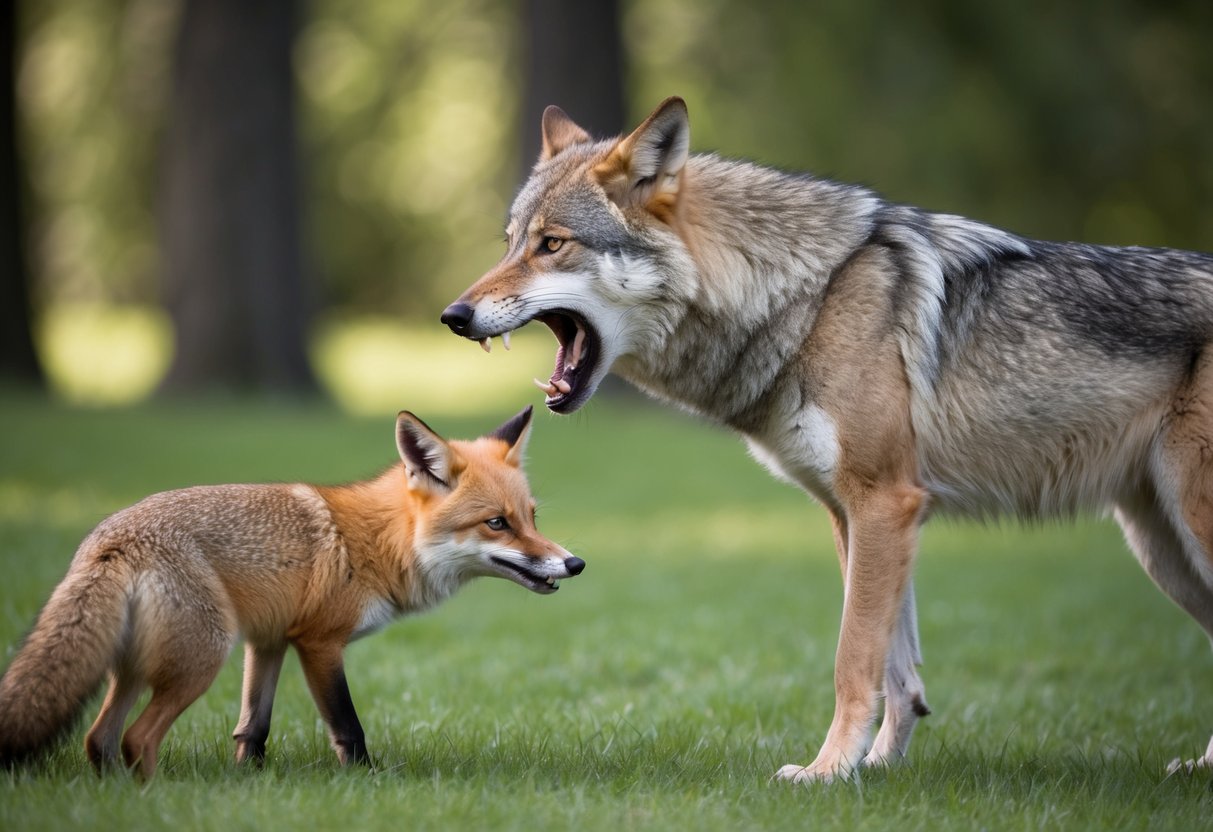
Wolves and foxes have different dietary habits and hunting behaviors that define their roles in the ecosystem. Understanding these differences can shed light on why these two species approach each other with caution.
The Food Chain and Feeding Strategies
Wolves are carnivores and are considered apex predators. They primarily target large ungulates, like deer and elk, as their main food sources. This focus allows them to hunt in packs for greater success. Wolves rely on a strategy called cooperative hunting, where teamwork is essential.
In contrast, foxes are smaller and are classified as opportunistic feeders. Although they primarily eat small mammals, birds, and insects, they will scavenge if necessary. This flexibility in diet helps them adapt to available resources. The different food chains each species belongs to illustrates their roles as predators and scavengers in their habitat.
Hunting Techniques and Prey Selection
When hunting, wolves employ several techniques to ensure successful captures. They often stalk and chase their prey, making use of their powerful bodies and keen sense of smell. Their ability to run in packs increases their odds of taking down large animals. You might see them working together to tire out their targets before the final attack.
Foxes, being smaller and lighter, use stealth and cunning. They often hunt alone or in pairs, relying on their agility to catch small animals. Their tactics include pouncing and making quick strikes. Unlike wolves, foxes are not known for large-scale hunting, which aligns with their smaller size and different dietary needs.
Interactions and Competition
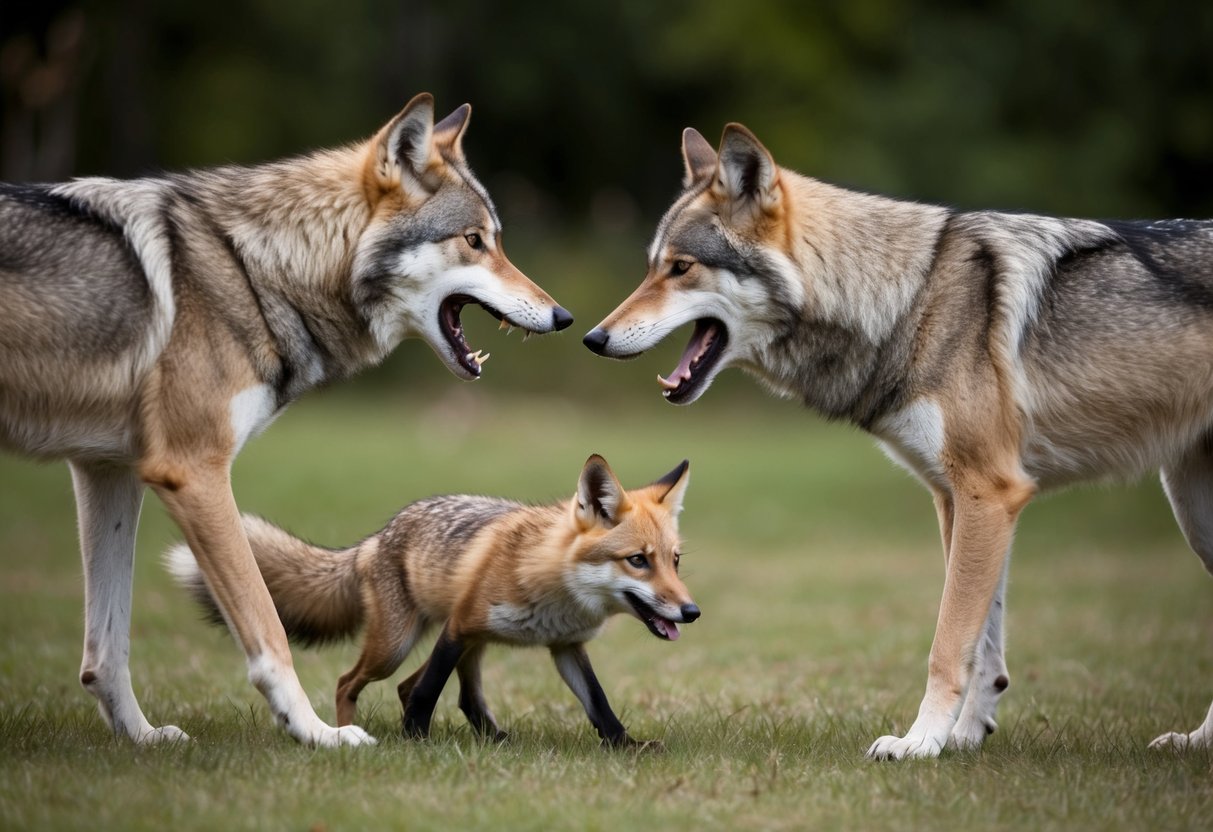
Wolves and foxes have complex interactions characterized by competition for resources and the establishment of territories. Understanding these dynamics can give insights into why wolves may appear hostile toward foxes.
Territorial Conflicts and Coexistence
Wolves are territorial animals that claim large areas for hunting and breeding. They often use scent marking to communicate their presence to other animals. This behavior can lead to conflicts with foxes, especially red foxes and Arctic foxes, which also seek food in the same areas.
When wolves encounter foxes, they may see them as intruders within their territory. Although competition exists, wolves often prefer larger prey, like deer, over smaller animals like foxes. However, the presence of coyotes and other predators can intensify territorial disputes.
Foxes must be cautious and often rely on their agility to escape potential confrontations. In areas where wolves and foxes coexist, they might adapt their behaviors, avoiding each other’s territories during crucial food shortages.
Survival and Adaptation
Interference and competition for food can directly impact survival for both species. Wolves are natural enemies to foxes and other small carnivores. When resources become scarce, wolves might chase foxes away from kills. This puts pressure on fox populations, leading them to adjust their hunting strategies.
Foxes have developed unique ways to survive alongside wolves. They use different vocalizations and sounds to communicate when they sense danger. By employing clever tactics, such as hunting at different times or in less populated areas, foxes can minimize direct competition.
In some regions, animals like bears and mountain lions can further complicate the food web. Jackals might also compete for similar prey, creating an intricate balance of interactions. In these ecosystems, successful adaptation is vital for both wolves and foxes to thrive.
Reproduction and Lifecycles
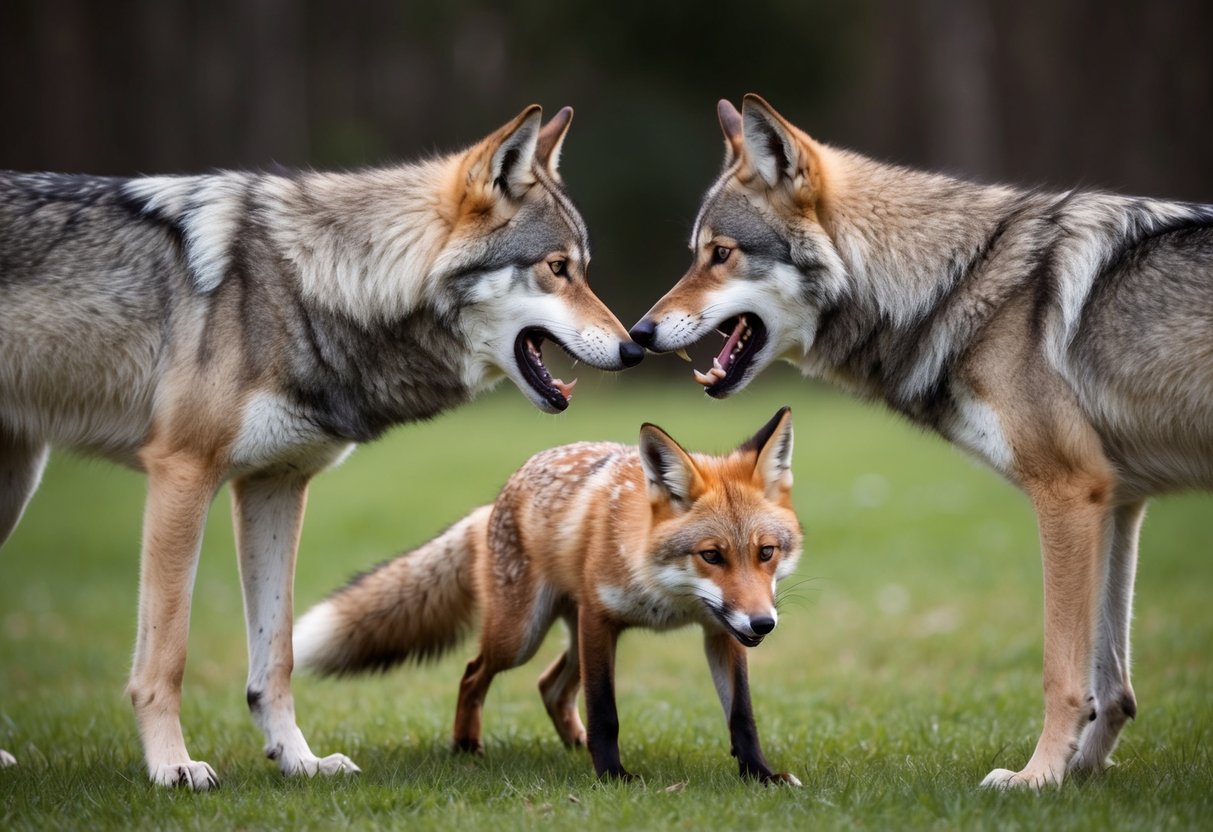
Understanding how wolves and foxes reproduce helps to clarify their behaviors and how they grow. While they are both canids, their breeding habits and parental care differ greatly.
Breeding Habits and Mating Systems
Wolves typically mate for life. Their mating season occurs in winter, usually between January and March. The gestation period lasts about 62 to 75 days. During this time, the female wolf prepares a den for her future pups.
Foxes, in contrast, tend to have a shorter mating season in early spring. Their gestation lasts 52 to 53 days. Once mated, female foxes also create dens but often do so alone. In both species, males play a role in helping to raise the young, although this involvement differs.
Parental Care and Growth of Offspring
After birth, wolf cubs are born blind and helpless. They rely completely on their mother for warmth and milk. The entire pack often assists in caring for the young. Wolves provide protection and instruction as cubs grow, which helps develop their hunting skills.
Fox kits, on the other hand, are also cared for primarily by the mother. They emerge from their den after about three weeks. While the male may bring food, the female spends more time raising the kits. Both species emphasize social learning, where young ones observe adults to learn vital survival skills.
This nurturing approach greatly influences how effectively cubs and kits become successful hunters as they mature.


