
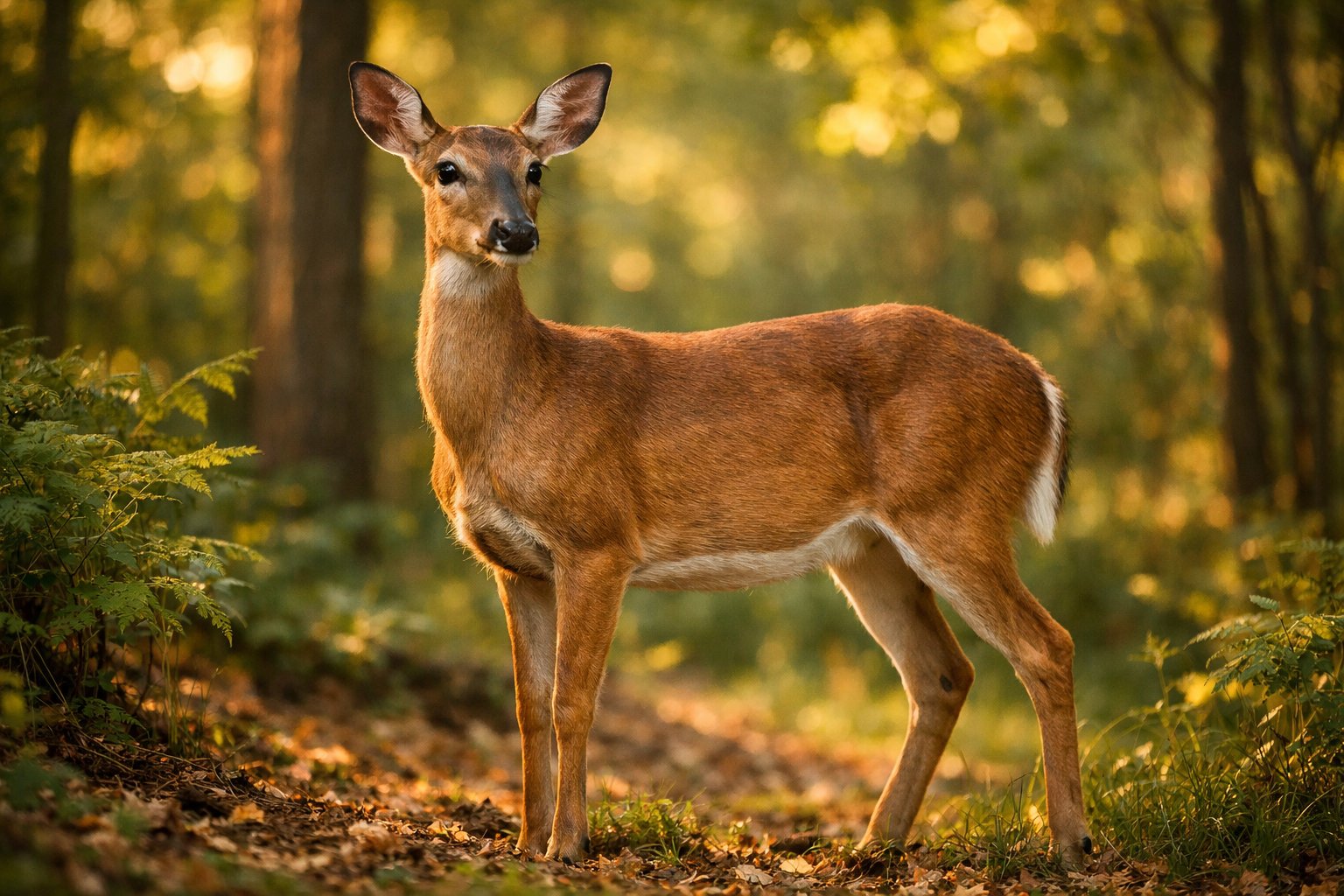
You probably already think a female deer is called a doe—and that’s right for a lot of species. Most folks call a female deer a doe, but for bigger types, you’ll hear names like hind or cow depending on the species and size.
Stick around and you’ll see why the names change, where those other terms come from, and which deer actually get called hind or cow.
If you ever want to sound like you know your stuff when you spot a deer—or just want to impress your friends—this will help.
What Is a Female Deer Called?

Different deer species use different names for the females. You’ll come across “doe,” “hind,” or “cow,” and each one fits a certain kind of deer and their male counterpart.
The Terms Doe, Hind, and Cow
A doe is the term you’ll hear most for adult female deer. People use it for white-tailed deer, mule deer, roe deer, and most smaller or mid-sized species.
It’s short, easy, and everyone seems to know what it means.
A hind is the name for females in larger species, especially red deer and sika deer. Folks use hind for mature females, usually those older than two years. The male for a hind? That’s a stag.
A cow is what you call the biggest female deer, like elk (wapiti), moose, and caribou. When you say cow, the male is a bull. These names just follow the classic pattern you see with other big animals.
Differences Based on Deer Species
The species really decides the name. Smaller and medium deer? Usually “doe.” For red and sika deer, which are bigger and have their own group habits, you use “hind.” Elk and moose? People stick with “cow” and “bull.”
Some deer don’t fit neatly in these boxes. Caribou (or reindeer) are a bit odd since both sexes grow antlers, but folks still call the females cows.
If you’re not sure, “doe” is usually safe for small deer, while “hind” or “cow” works for the big ones.
Comparison With Male and Young Deer Names
Male deer names change by species too. For most smaller deer, the male is a buck. Red and sika deer have stags. Elk and moose? Those are bulls.
Young deer get their own names as well. A baby deer is a fawn—or a calf if it’s one of the bigger species.
So you end up with pairs like doe + fawn, hind + fawn, or cow + calf. Using the right combo helps you talk about the deer’s age and size without confusion.
Female Deer Names by Species

Here’s a quick look at what people call adult female deer in various species, plus a few clues to help you spot them outside.
White-Tailed Deer and Mule Deer
Most North American small- and medium-sized deer have females called does.
You’ll hear white-tailed doe and mule deer doe all the time. A doe doesn’t have antlers and is smaller than a buck. Fawns are the babies, and they usually stay hidden for a bit after birth.
Look for clues: white-tailed does have a white underside on their tail and a reddish-brown coat in summer. Mule deer does show off big ears and a black-tipped tail.
You might spot black-tailed deer in the same regions, and people still call the females does.
If you’re in Asia and see a small, tailless-looking deer, that could be a roe deer doe or a muntjac doe. Chinese water deer and water deer females also go by doe, even though they don’t have antlers.
Red Deer and Sika Deer
Some of the bigger Old World species use a different name: the adult female is a hind.
You’ll find hinds in red deer across Europe and Asia, and sika hinds in East Asia and a few other places. Hinds are bigger than does and usually have just one calf at a time.
Hinds don’t have antlers and often stick together in groups led by older females. Their young are usually called calves instead of fawns.
Spotted deer and fallow deer females are still called does, but for red and sika deer, “hind” is the right term. That helps you keep things clear when you’re talking about European or Asian deer.
Elk, Moose, and Caribou/Reindeer
For these really big cervids, folks call the adult female a cow.
So, if you’re talking about the female, just say “cow elk,” “cow moose,” or “cow caribou/reindeer.” Cows tend to be much larger than does or hinds, and usually, they give birth to a single calf every year.
Reindeer cows stand out because the females actually grow antlers. That’s not the case for elk and moose cows—those girls usually don’t have antlers at all.
When you’re out in the field, pay attention to size and antlers. Cow moose look heavy-bodied and have those long legs.
Cow elk show off a lighter tan coat, and you won’t see the big antlers that bulls have.
Female caribou or reindeer might sport small antlers, especially late in the season. That little detail can really help you pick them out in Arctic and subarctic herds.


