
If you have a boxer dog, you know they can be full of energy and sometimes hard to calm down. These lively pups need regular activities to help manage their excitement. To calm down a boxer dog, make sure to provide them with plenty of exercise, mental stimulation, and a safe environment where they can relax.
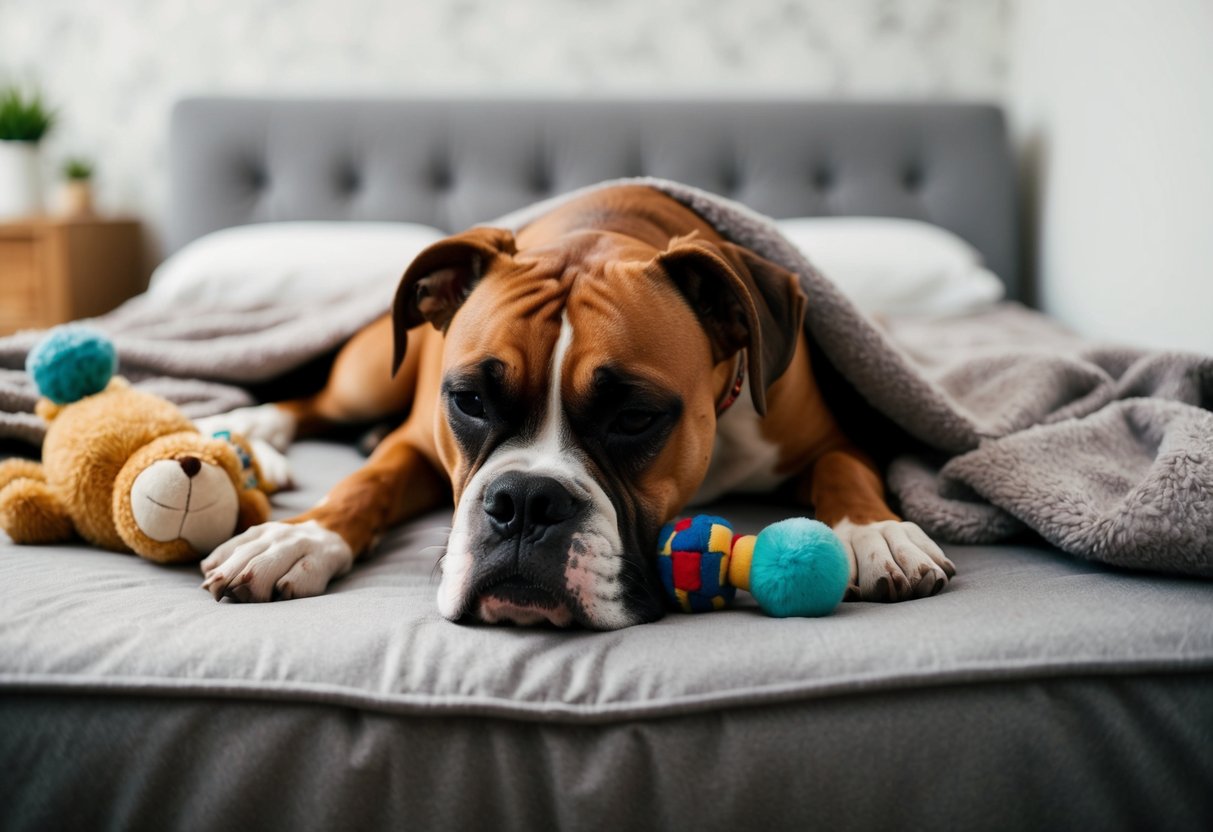
You might find that a mix of physical activities like walks or playtime combined with mental challenges, like hide-and-seek games, can work wonders. Plus, creating a routine helps your dog feel more secure. This can lead to a calmer and happier companion.
Understanding your boxer’s needs and being patient with their energy levels can make a significant difference. Keep reading to learn more tips and tricks to help your boxer chill out when it matters most!
Understanding Boxer Behavior

Boxers are known for their playful nature and high energy. To help them calm down, it’s important to understand their behavior during different life stages and the need for mental stimulation.
Energy Levels and Mental Stimulation
Boxers are high-energy dogs that require plenty of physical and mental exercise. They thrive on activities that engage their minds. Without proper stimulation, they can become bored, leading to destructive behavior.
To keep your boxer active, consider these activities:
- Daily walks: Aim for at least 30 minutes.
- Interactive toys: Puzzle games can keep their minds sharp.
- Training sessions: Short sessions with positive reinforcement can work wonders.
Engaging in these activities can help reduce excess energy and promote calm behavior.
Puppyhood Versus Adulthood
During puppyhood, boxers are exceptionally playful and full of energy. They can be very curious, often leading to mischievous behavior. At this stage, training and socialization are key. Establishing routines and boundaries helps them learn acceptable behaviors.
As your boxer matures into adulthood, usually around 2-4 years, their energy levels may somewhat decrease. They will still need regular exercise and mental challenges, but their playful antics may stabilize. Understanding these life stages helps you provide the right care and activities tailored to your boxer’s age and energy needs.
Training Your Boxer Dog

Training your boxer dog is key to helping them calm down. Focus on positive reinforcement, address any signs of separation anxiety, and incorporate fun activities like nose work games and interactive toys.
Positive Reinforcement Training
Positive reinforcement training involves rewarding your boxer for good behavior. Use treats, praise, and toys to encourage your dog when they follow commands or show calm behavior.
- Be Consistent: Always use the same commands and rewards to help your dog learn faster.
- Keep Sessions Short: Aim for 5 to 10 minutes per session, a few times a day. This keeps your dog engaged without overwhelming them.
- End on a High Note: Finish training when your dog succeeds to build a positive association with learning.
This method reinforces desired behaviors and helps your boxer develop a strong bond with you.
Addressing Separation Anxiety
Boxers can be prone to separation anxiety, making training even more essential. If your dog shows signs of distress when you leave, start by making departures low-key.
- Practice Short Absences: Leave your dog alone for short periods, gradually increasing the time.
- Create a Safe Space: Set up a comfortable, quiet area for your dog with their favorite toys.
- Use Comfort Items: Consider leaving an item that smells like you, such as a worn t-shirt, to provide solace.
These steps can help your boxer feel secure and reduce anxiety when you’re away.
Nose Work Games and Interactive Toys
Engaging your boxer with nose work games keeps their mind active and can calm their energy. Use basic scent games to stimulate their natural hunting instincts.
- Hide and Seek: Hide treats around the house and encourage your boxer to find them.
- Interactive Puzzle Toys: These toys challenge your dog and make them think while they play.
Not only do these activities provide mental exercise, but they also help strengthen the bond between you and your boxer.
Creating a Calm Environment
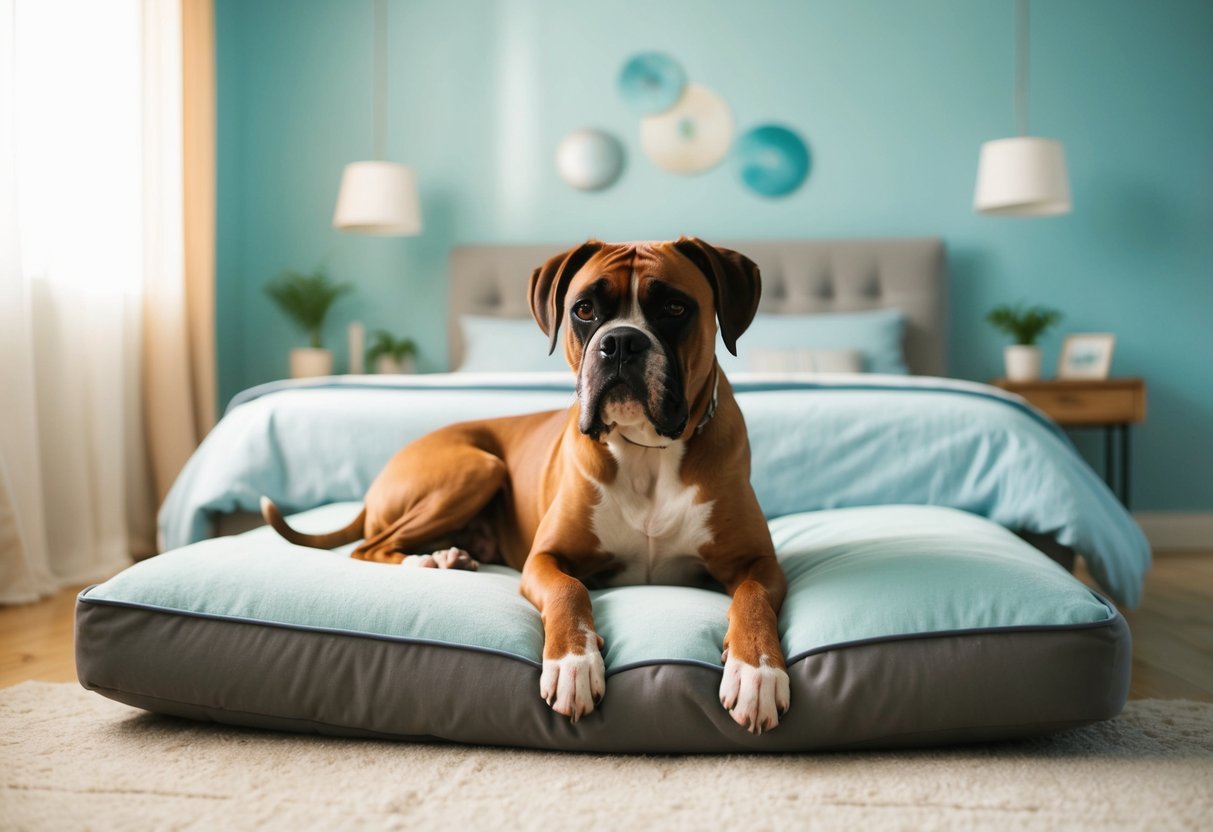
Creating a calm environment is essential for helping your boxer relax. By focusing on regular exercise and using calming products, you can make a positive difference in your dog’s behavior. Let’s explore these important elements.
The Role of Regular Exercise
Regular exercise is crucial for your boxer’s health and behavior. Boxers are energetic dogs that need daily physical activity to stay calm and happy. Aim for at least 30 to 60 minutes of exercise each day.
Take your boxer for walks, play fetch, or engage in tug-of-war games. Not only does this help release pent-up energy, but it also strengthens the bond between you and your dog.
Keep in mind that mental stimulation is just as important. Consider puzzle toys or scent games that challenge their minds. These activities can tire your dog out and reduce anxiety, making it easier for them to settle down.
Calming Products and Pheromone Diffusers
Calming products can greatly enhance your boxer’s environment. Consider using pheromone diffusers. These products release calming scents that can help reduce anxiety in dogs. You can find them in pet stores or online.
Additionally, there are calming collars that emit similar pheromones. These collars provide continuous comfort and can be useful during stressful situations like thunderstorms or fireworks.
You might also explore calming treats or supplements. Look for those with natural ingredients like valerian root or chamomile. These can promote relaxation and help your boxer feel more at ease.
Incorporating these calming products into your routine can create a peaceful space for your dog. This way, your boxer can enjoy a comfortable environment while feeling secure and relaxed.
Socialization and Play
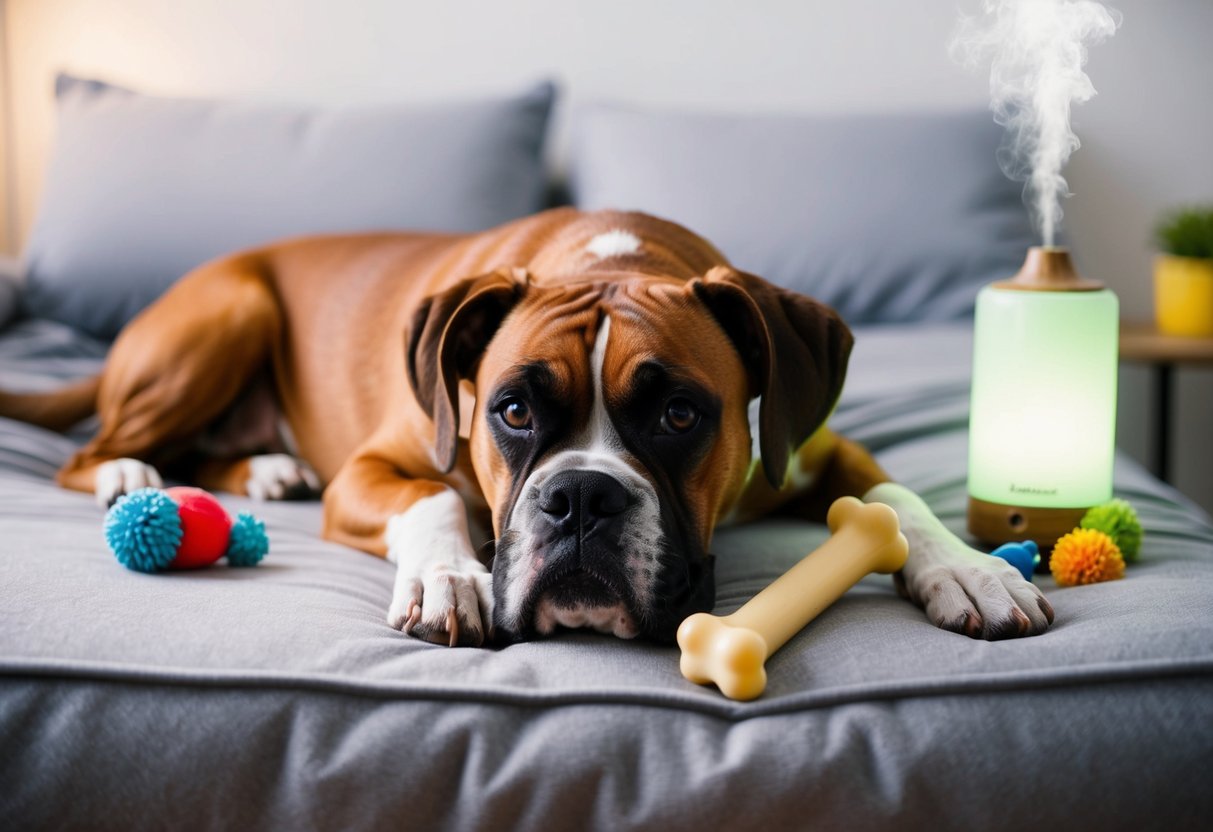
Socialization and play are essential for keeping your Boxer calm and happy. Engaging with other dogs and using stimulating activities can help reduce anxiety and improve behavior.
The Importance of Socialization
Socialization is key for your Boxer to feel comfortable around other dogs and people. Start early by introducing them to different environments, sounds, and smells. This can help them adapt and reduce fear or aggression.
Arrange playdates with other friendly dogs. This interaction allows your Boxer to learn how to behave and communicate. Taking them to dog parks is also a fun way to meet new friends.
Make sure to supervise their interactions. Positive experiences will lead to a well-behaved Boxer. Remember, a well-socialized dog is usually calmer and more confident.
Puzzle Toys and Stimulating Activities
Puzzle toys are great tools to keep your Boxer mentally engaged. These toys can challenge your dog to solve problems, which helps reduce boredom. Many Boxers enjoy working for treats, making these toys a fun way to stimulate their minds.
You can also try hide-and-seek games at home. Hide treats around the house and encourage your Boxer to find them. This activity keeps them active and sharpens their mind.
Incorporating engaging activities into your Boxer’s routine leads to a happier and calmer dog. Providing variety in play helps them release energy and stay well-rounded. A good mix of socialization and stimulating activities will contribute to a calming effect on your Boxer.


