
When winter hits, you might wonder how cold is too cold for your Boxer dog to be outside. Boxer dogs can generally handle temperatures down to about 32°F (0°C) when conditions are dry and sunny. Because they have short coats, Boxers may feel chilly more quickly than other breeds, especially in windy or wet weather.
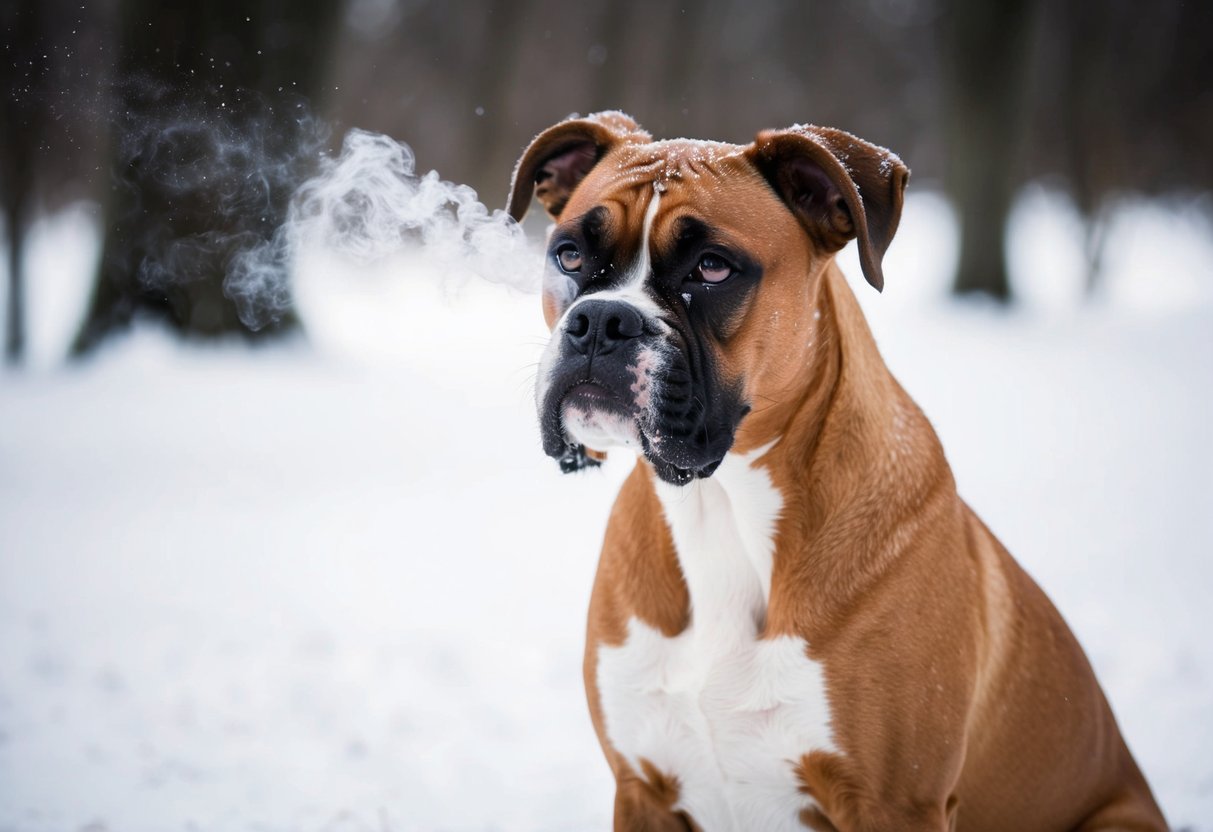
Understanding your Boxer’s cold tolerance is essential for their health. If temperatures drop below 32°F (0°C), it’s best to limit their time outdoors. You should also consider their age and health, as younger or older Boxers may require extra care.
Keeping your furry friend comfortable during winter is important. Look for signs that your Boxer is cold, like shivering or reluctance to stay outside. Providing a warm coat and safe footwear can make a big difference when the temperature drops.
Understanding Boxer Dogs’ Cold Tolerance

Boxer dogs have unique traits that affect how well they handle cold weather. Knowing these traits and recognizing signs of discomfort are essential for keeping your Boxer safe and happy in chilly conditions.
Breed-Specific Traits Affecting Cold Sensitivity
Boxers are medium-sized dogs with short coats. This means they do not have a natural barrier against the cold. Healthy adult Boxers can typically tolerate temperatures between 0-5°C (32-40°F), especially when the weather is calm and dry.
If the conditions are windy or wet, it’s best to keep your Boxer indoors if temperatures drop below 8-10°C (45-50°F). Meanwhile, puppies, elderly Boxers, and those with health issues are more sensitive to the cold. Their muscles and body fat may not provide the same protection.
Consider dressing your Boxer in a warm coat when outside in frigid temperatures. This could help maintain comfort during walks.
Recognizing Signs of Discomfort in Cold Weather
Watch for signs that your Boxer is uncomfortable in the cold. Common symptoms include shivering, whining, or trying to burrow into your clothes. If your dog lifts their paws off the ground, they may be feeling the chill.
Hypothermia is a serious condition to watch for. Symptoms include lethargy, weakness, and difficulty walking. If you notice these signs, bring your Boxer inside immediately. Always check their ears and paws for frostbite, as these areas can be the most affected.
Regularly monitor your Boxer to ensure they are safe and comfortable during winter activities.
Critical Temperature Thresholds for Boxers
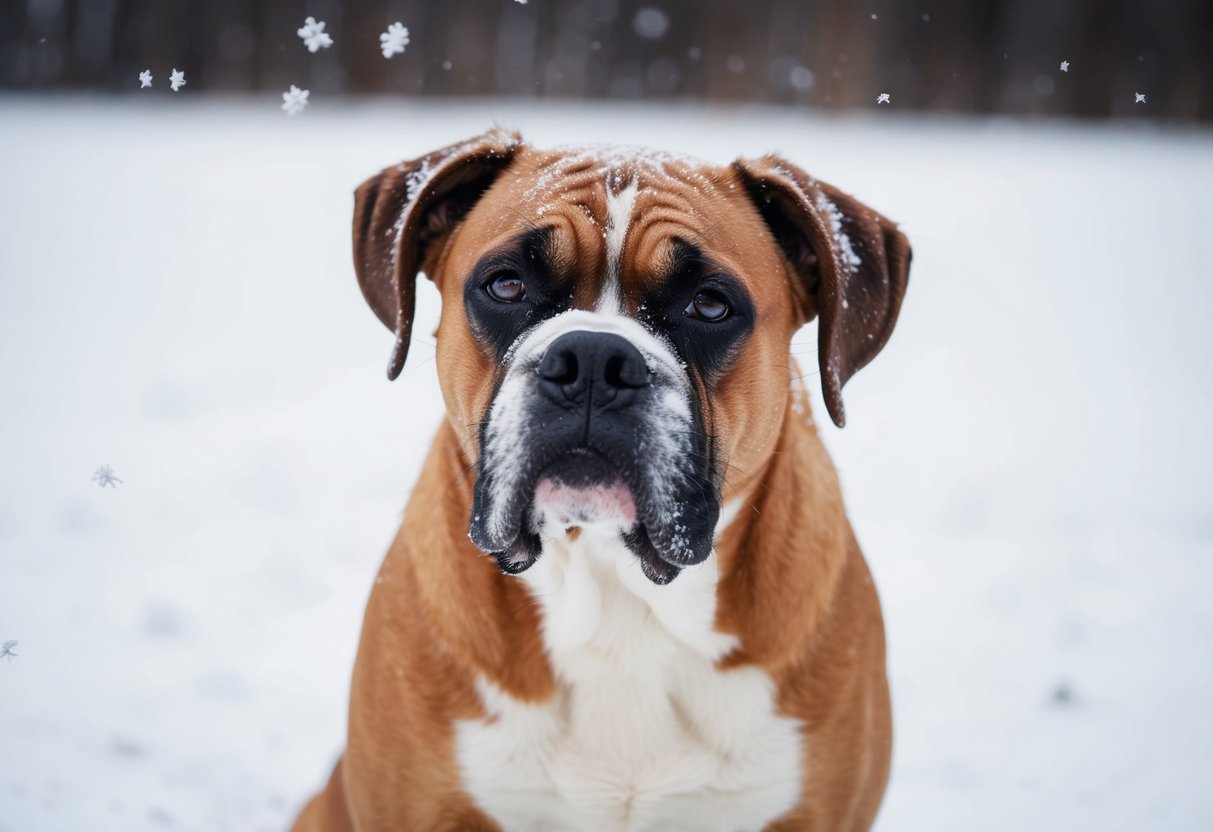
Understanding how cold is too cold for your boxer is important for their health and safety. It helps to know the specifics for puppies and senior boxers, as well as the risks of hypothermia and frostbite in colder temperatures.
Age-Specific Considerations for Puppies and Senior Boxers
Your boxer puppy and senior boxer have different needs when it comes to cold weather. Puppies are still developing and can struggle with temperatures below 32°F (0°C). A good rule of thumb is to monitor their time outside. Limit their exposure if temperatures drop to around 40°F (4°C).
Senior boxers can also be sensitive to the cold. Just like people, they may have health issues that make them more vulnerable. It’s best to keep them indoors in temperatures below 32°F (0°C) to prevent discomfort or illness.
Assessing Risks of Hypothermia and Frostbite
Both hypothermia and frostbite pose serious risks for your boxer. Hypothermia can occur if your dog is exposed to cold for too long. Symptoms include shivering, lethargy, and difficulty moving. If it’s under 32°F (0°C), keep a close eye on your dog.
Frostbite can affect your dog’s ears, tail, and paws. Signs include discoloration and swelling. If you notice these symptoms, seek veterinary help immediately. Always monitor your dog’s behavior to ensure they’re safe in cold weather.
Safeguarding Your Boxer During Winter
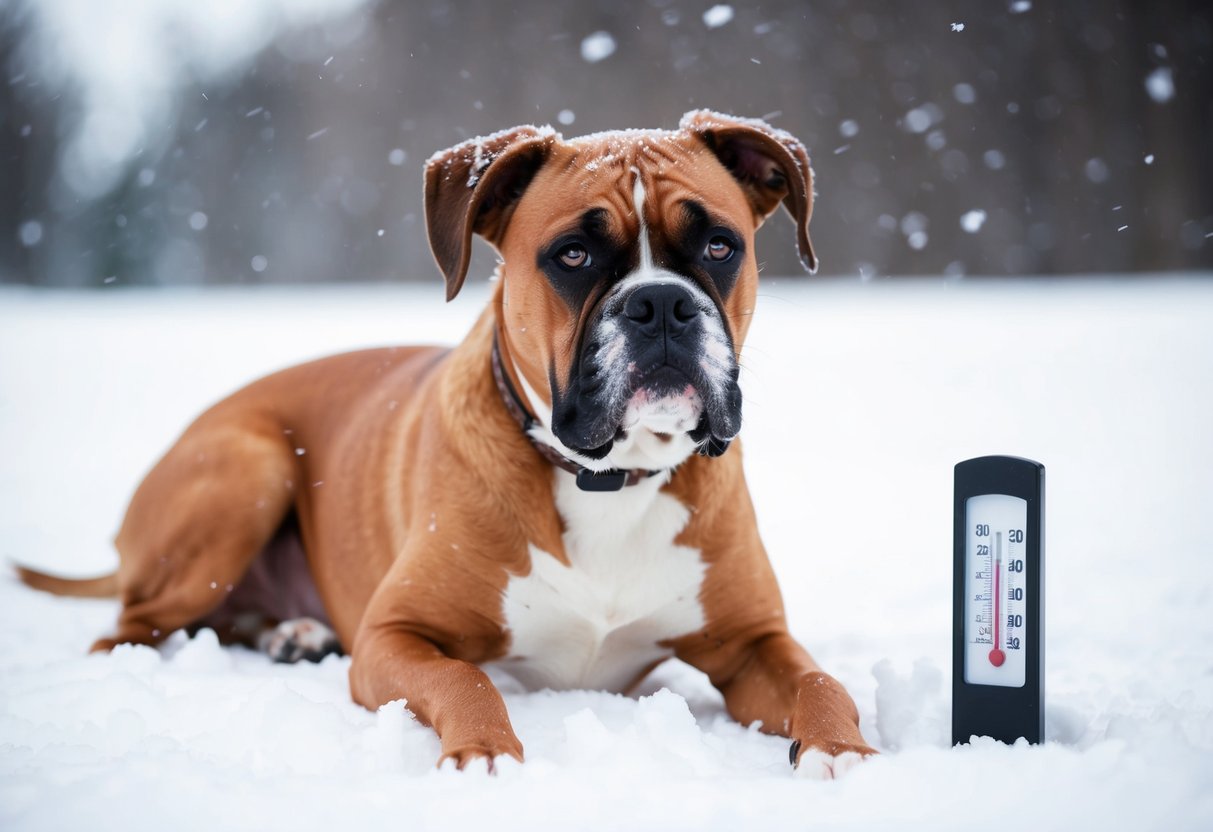
Keeping your Boxer safe during winter involves several key steps. You need to ensure they have the right gear, protect sensitive areas like their paws and nose, and adjust your indoor environment for their comfort and health.
Appropriate Winter Gear for Boxers
When the temperature drops, providing your Boxer with suitable winter clothing is essential. A well-fitted dog coat or sweater will help retain body heat. Look for materials that offer insulation without restricting movement.
Consider dog booties to protect their paws from the cold and snow. Booties can prevent ice and salt from getting stuck between their toes, which can cause discomfort. Make sure to take time to get your Boxer used to wearing them, as some dogs may need a little training to adjust.
It’s also important to keep your Boxer groomed. Regular brushing can reduce shedding, allowing their coat to trap heat better. Remember, a healthy coat is crucial during cold weather.
Effective Paw and Nose Protection Techniques
Your Boxer’s paws and nose are particularly vulnerable in winter. Applying paw wax can create a protective barrier against ice and salt. This will not only keep their pads safe but also help prevent cracking.
For your Boxer’s nose, using a nose balm is a good idea. This balm hydrates and protects the sensitive skin on their nose from becoming dry or chapped. Both products can be applied before going outside.
When you go for walks, try to limit exposure to extreme cold. If your Boxer shows signs of discomfort, such as lifting their paws or whining, it’s time to head indoors. Stay mindful of how long your dog spends outside in the cold.
Best Practices for Outdoor Activities in Cold Weather
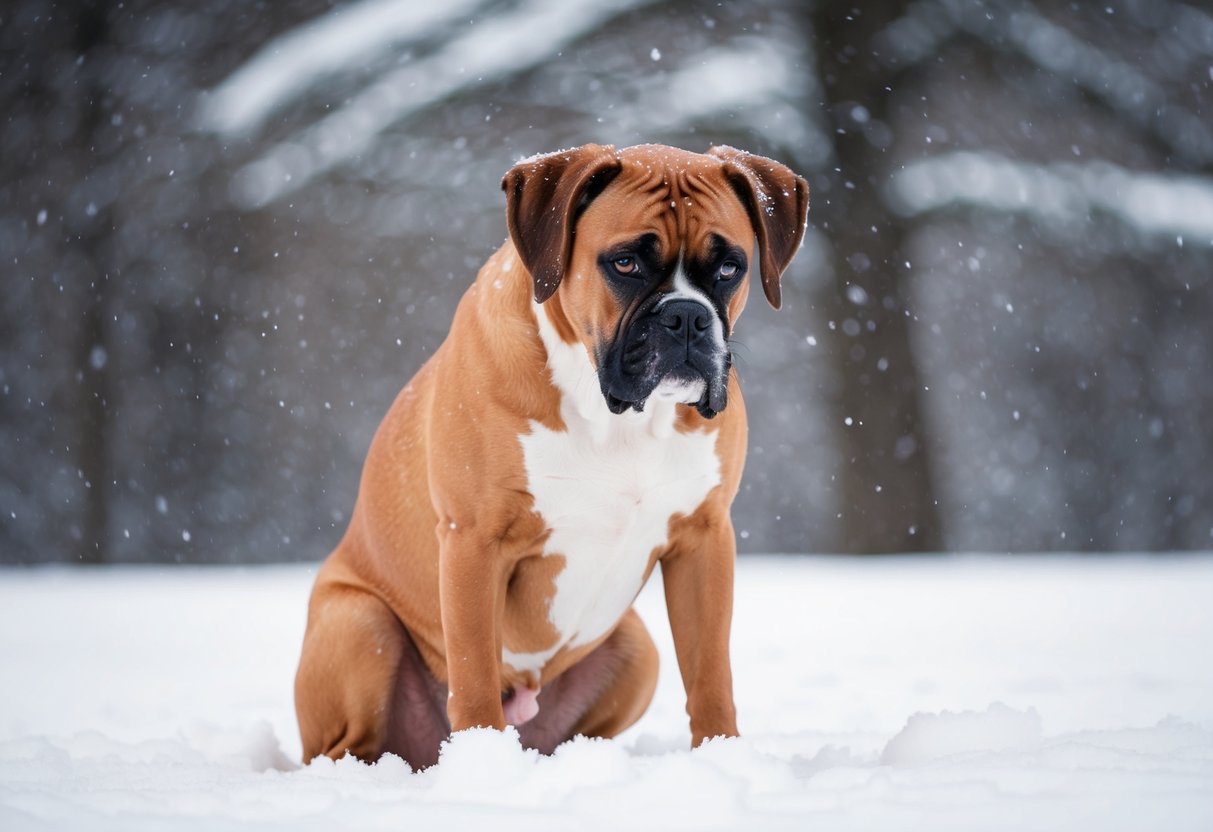
When it’s chilly outside, keeping your boxer dog active requires some adjustments. You can ensure their safety and comfort by modifying their exercise routines and being mindful of their hydration and nutrition needs.
Adjusting Exercise Routines and Duration
In cold weather, it’s smart to shorten walks to avoid overexposure. Aim for quick outings of about 15-20 minutes, focusing on allowing your boxer to stretch their legs and relieve themselves.
Consider indoor activities like fetch or tug-of-war for additional exercise. These can help burn energy without the cold danger. If your boxer enjoys playing in the snow, supervise carefully.
Lastly, always keep them bundled up if necessary, especially during extreme temperatures. A dog jacket or sweater can make a big difference in keeping them warm and comfortable while outside.
Monitoring Hydration and Nutrition Needs
Even in winter, your boxer needs plenty of fresh water. Make sure to provide access to water, especially after walks or playtime. It’s easy to overlook their water needs when it’s cold.
Consider adjusting their food intake, too. Cold weather may increase their energy needs. A small increase in high-quality food can help maintain their energy levels while keeping them warm. Always monitor their body condition to avoid overfeeding.
Pay attention to their activity level, as they may need more sustenance during colder months. Healthy snacks can also supplement their nutrition when they are more active.


