
If you want to bring owls into your UK garden, focus on creating a quiet, safe spot where they feel comfortable enough to nest and hunt.
Add a nest box in open spaces or near trees, skip the rat poison, and keep some rough grassland for their favorite prey like mice and voles. Owls love calm areas with a steady food supply, so if you manage your garden with them in mind, you’ll probably see more of them around.
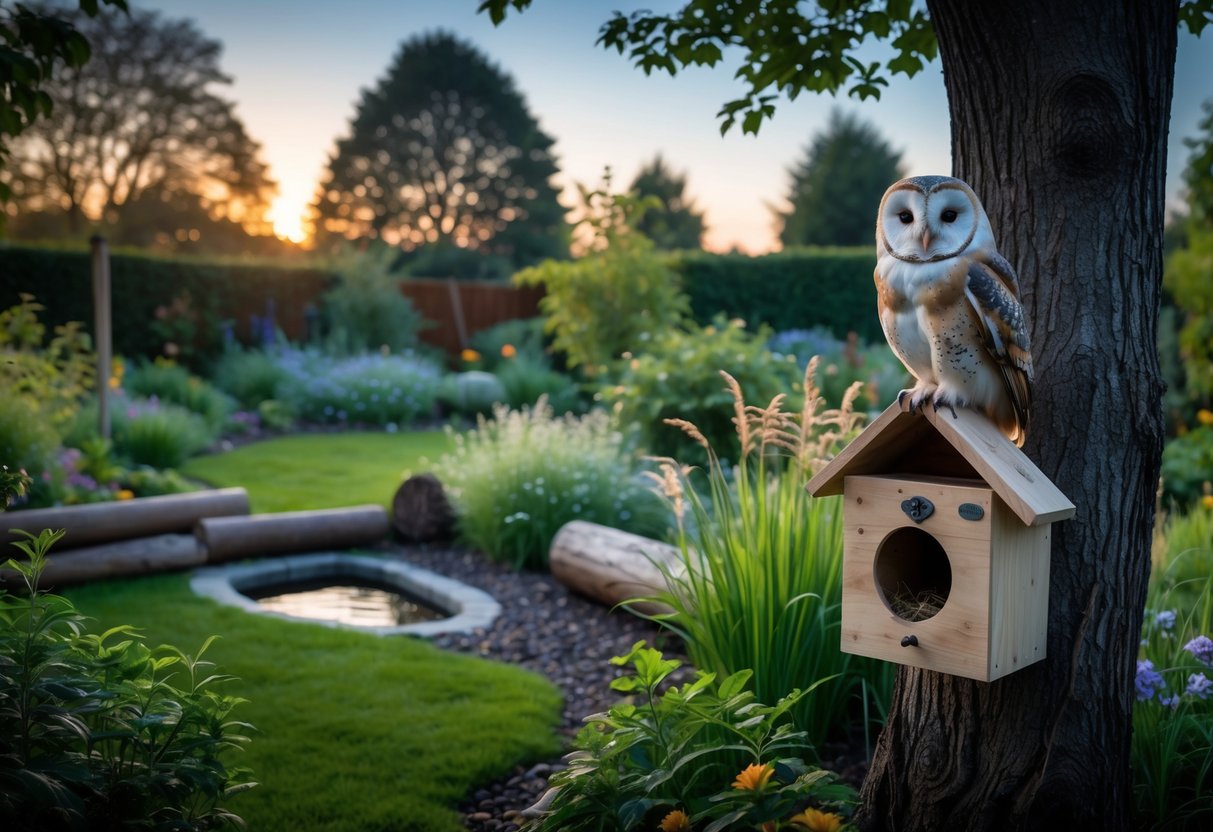
You can help owls by planting native species, leaving trees standing, and piling up some brush for shelter.
Bright lights at night? Try to avoid those—they’ll scare off these shy birds. Even small tweaks, like a nesting box or a patch of tussocky grass, might bring these special visitors right to your doorstep.
Owls keep rodent numbers down, making them pretty useful garden guests.
If you’re wondering how to set things up just right, there are plenty of simple steps you can try to welcome owls and maybe hear their soft calls at night. For more inspiration, check out tips on encouraging Barn Owls to your garden.
Creating an Owl-Friendly Garden Habitat
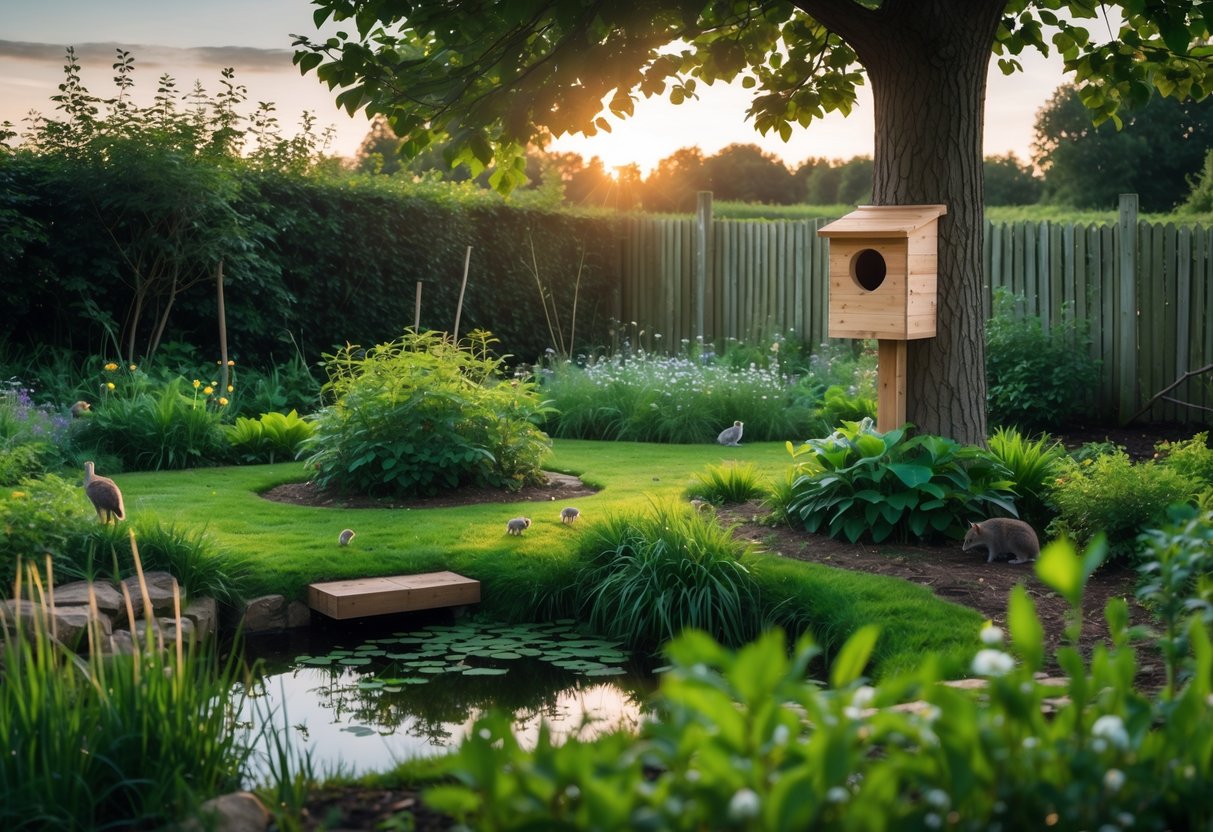
To attract owls, start by making your garden feel safe and meet their basic needs.
Give them a quiet place to nest, keep things dark at night, and always offer clean water for drinking and bathing.
Providing Nesting Boxes for UK Owls
Barn owls and screech owls often use nesting boxes to raise their chicks.
You can build or buy a box made for these species and put it high up on a tree or building, away from strong winds.
The entrance hole should be 15-20 cm wide, and the box needs to be at least 3-4 meters above the ground in a peaceful spot.
Try to avoid busy areas with lots of people coming and going.
Check and clean boxes when the birds aren’t using them, but don’t peek in if there’s an active nest.
A box near open fields or rough grassland can really boost your chances of seeing owls, especially barn owls who love to hunt there.
Managing Lighting for Nocturnal Visitors
Owls hunt at night, so bright lights can chase them away.
Keep your garden lighting soft and use motion sensors instead of leaving floodlights on all night.
Don’t put bright lights near nesting boxes or hunting areas.
Warm-colored bulbs are better than harsh white or blue ones, which mess with night vision.
Cutting down on noise helps too. Try to keep things quiet after dark so owls can hunt and rest without being startled.
Adding Deep Bird Baths and Water Features
Owls need fresh water for drinking and bathing.
A deep bird bath or small water feature works well. Aim for 15-20 cm depth and sloped sides so they can get in and out easily.
Put the bath somewhere quiet with cover nearby, like a shrub or tree, so owls feel safe.
Change the water regularly to keep it clean.
Water attracts other small animals, like mice and insects, giving owls more hunting opportunities. If you want more ideas, take a look at this site.
Boosting Food Sources and Natural Shelter

A rich, inviting garden helps owls find food and stay safe.
If you support insects, small animals, and birds, you’ll build a natural food chain right in your backyard. Providing homes for these creatures draws wildlife in, and owls will follow.
Encouraging Insects with Wildflowers and Natural Planting
Planting wildflowers is a simple way to bring in insects like bees, butterflies, and lacewings.
Go for native wildflowers—they’re better for local pollinators. Try oxeye daisy, knapweed, and buttercup for nectar and pollen throughout the year.
If you let some of your lawn grow wild, you’ll create homes for insects and small creatures.
This approach attracts prey for owls and even brings in bats and toads.
Mix up your plant choices so something’s blooming from early spring to late autumn.
That way, insects have food all season, and owls have plenty to hunt.
Developing Wildlife Ponds and Compost Heaps
A wildlife pond brings water for everyone and attracts amphibians like toads, which owls eat.
Even a small pond with shallow edges works.
Compost heaps are another win. They warm up the soil, break down garden waste faster, and give insects and invertebrates a place to hide.
Those bugs feed birds and small mammals—prime owl food.
Keep your compost heap tucked away in a quiet corner, and add waste bit by bit so you don’t upset the balance.
This way, you’ll encourage insects and keep your garden buzzing with life.
Allowing Brambles, Hedges, and Native Trees to Flourish
Brambles, hawthorn, crab apple, and oaks offer shelter and food.
These plants draw in insects and produce berries and fruit for small animals and birds.
Brambles, in particular, make safe nesting spots for wrens, sparrows, and blackbirds.
Hedges and trees give birds like robins, jays, and finches places to perch. They also create cover for small mammals to hide from predators.
If you let these plants grow naturally, your garden becomes a more complex habitat.
You’ll end up with more small creatures, and that means more food for owls.
Supporting Birds for a Balanced Ecosystem
When you feed and attract different kinds of birds, your garden starts to feel more alive and balanced. Summer visitors—like warblers and native songbirds—bring a splash of diversity and help keep insect numbers down in a way that just feels right.
Try putting up feeders with seeds and suet to draw in sparrows, finches, and blackbirds. If you set out a birdbath, especially during those dry stretches, you’ll notice birds flocking in for a drink or a quick splash.
Birds in your garden tend to bring in small mammals and insects, which owls love to hunt. If you add some shrubs and native plants, you’ll give birds the shelter they need to nest and roost—plus, it just looks good.
Curious about helping owls by managing their food and shelter? You can check out this guide on how to attract owls to your garden in the UK.


