
If you keep hearing owls hooting a lot at night, you’re definitely not alone. Owls mostly hoot to mark their territory or attract a mate.
When an owl hoots over and over after dark, it’s usually warning other owls to stay away and showing off that it’s strong enough to find food and raise a family.
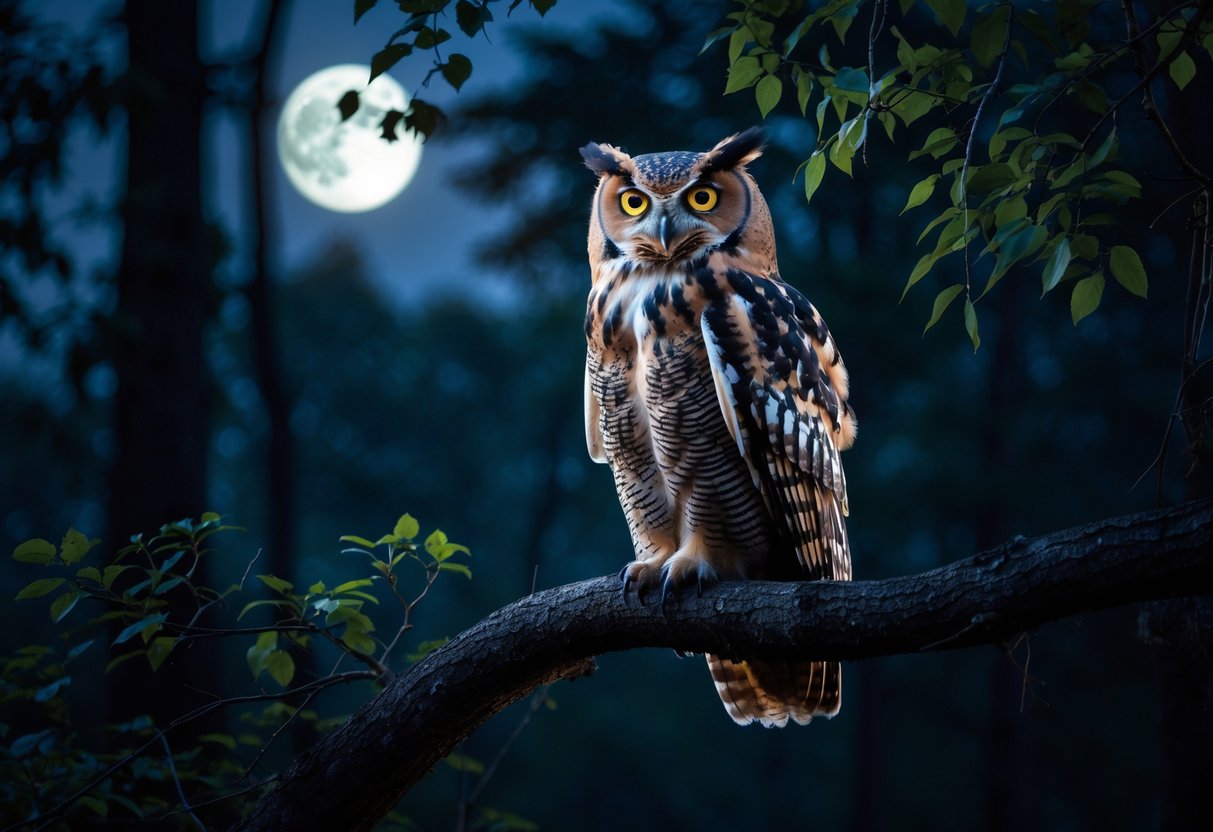
Owls stay active at night, so their calls travel far in the quiet. You might catch a steady hoot if a male owl tries to keep rivals away or chat with a female nearby.
Sometimes, hooting means owls are fending off threats to their home. That’s just how they communicate.
Once you start noticing these nighttime sounds, your outdoor adventures get a lot more interesting. You might even begin to recognize different calls and figure out what those mysterious noises mean.
For more on owl hooting habits, you can check this article on owl hoots and their meanings.
Reasons Owls Hoot Frequently at Night

Owls hoot a lot at night for reasons tied to their survival and social lives. Their calls help them protect homes, find mates, and chat with other owls nearby.
Depending on the owl species in your area, you’ll hear different patterns or sounds. Some are subtle, others are loud and impossible to miss.
Territorial Claims and Defense
When you hear an owl hoot again and again, it’s probably marking its territory. Male owls—like great horned or barred owls—use deep, rhythmic hoots to say, “This is my spot.”
They want to avoid fights over hunting grounds and nesting places. If a rival owl comes too close, you might hear more aggressive sounds.
That could be hissing, beak snapping, or harsh calls. The owl feels threatened and tries to scare off intruders.
Owls get really vocal about territory in the fall, as they get ready for winter and the breeding season. Keeping a clear territory helps them survive and raise chicks safely.
Mating Calls and Courtship Rituals
Owls also hoot to find a mate or keep their partner close. In winter, you might hear pairs like barn or barred owls calling to each other.
These duets show they’re healthy and ready to breed. A male’s hoot tells females he’s got good hunting spots and a safe place to nest.
That helps convince the female to stick around. Most owls mate for life, so these calls keep the pair’s bond strong.
Courtship hooting sounds softer and more rhythmic than territorial calls. It helps the owls get to know each other and get ready to raise chicks.
Communication With Other Owls
Owls use hoots for more than territory and mating. Sometimes, family groups call softly to stay in touch while moving around at night.
Young owls use whistles and quiet hoots when learning from their parents. Some species, like barred owls, keep making these family calls even after the young leave the nest.
Owls don’t just hoot—sometimes they screech, bark, or even growl. The variety of sounds tells you if the owl feels relaxed, alert, or annoyed.
If you pay close attention, you might start to pick up what the owls are “saying.” Nighttime nature walks get a lot more interesting that way.
For more details, here’s a handy owl hooting guide.
Types of Owls and Their Nighttime Vocalizations
If you listen to owls at night, you’ll notice each one has its own unique sound. Some use hoots to mark territory, while others have softer or more varied calls for social or warning reasons.
Learning these patterns helps you figure out which owl you’re hearing. It’s kind of fun once you get the hang of it.
Great Horned Owl Hooting Patterns
The Great Horned Owl has a deep, rhythmic hoot that’s hard to miss. Usually, you’ll hear a series of 4-6 hoots—something like “hoo-hoo hoo hoo.”
They use these calls to mark territory or attract a mate. Mated pairs keep in touch by hooting back and forth, often pretty softly.
Their hoots are loud and carry far, especially on quiet nights. If you hear hoots nearby, there’s a good chance a Great Horned Owl is close.
Sometimes, they hoot during the day in winter, but mostly at night. When defending territory, their hoots can sound more aggressive.
Barred Owl Calls and Social Behavior
Barred Owls have a call that sounds a bit like, “Who cooks for you? Who cooks for you-all?” It’s a smooth, repeated hoot that can travel a long way.
This species stays active both day and night. You might hear duets between pairs—the male and female sometimes sound a little different.
Barred Owls also use whistles and softer calls to chat with family groups, especially the younger ones. They’re more social than some other owls, with vocal exchanges common during the day or early evening.
If you listen closely, you might catch these subtle but meaningful conversations. That’s part of what makes listening to owls at night so fascinating.
Screech Owl Noises and Their Meanings
Screech Owls, especially the Eastern Screech Owl, make a surprising variety of sounds. Their main call? It’s this soft, trilling whistle that drifts through the night and sometimes goes on for several seconds.
It’s gentle, honestly, but you’ll notice it repeats a lot after dark.
When something threatens or disturbs them, these owls don’t hold back—they’ll screech loudly. That sharp call works as a warning and, really, it can sound like a high-pitched scream.
Sometimes, you’ll catch them barking or even hissing if they’re in conflict or defending themselves. Even though they’re small, they rely on these different sounds to talk with their mates or scare off anything that looks like trouble.
So, if you hear a strange scream outside at night, there’s a good chance a Screech Owl is letting the world know it feels threatened or is staking out its territory.


