
When you ask how do bees pollinate, the short answer is simple: they move pollen from one flower to another while collecting nectar and pollen for food. That movement supports plant reproduction, helps crops make seeds and fruit, and keeps gardens, farms, and wild landscapes productive.

Bees are among the most effective pollinators because their bodies, behavior, and flower choices are built for pollen transfer, which is why pollination matters so much to food production and healthy ecosystems.
In the United States, native bees, honeybees, and wild bees all contribute to pollination in different ways. According to the US Forest Service, bees seek out flowers rich in nectar and pollen, and that foraging habit turns each visit into a chance for pollen transfer.
What Happens When A Bee Visits A Flower

The pollination process starts with a bee searching for food, then ends with pollen reaching another bloom. That exchange can drive cross-pollination, support seed production, and increase genetic diversity in plants.
How Bees Find Nectar And Pollen
A bee uses color, scent, and ultraviolet nectar guides to locate flowers quickly. The US Forest Service notes that many bee-pollinated flowers are bright, open in daytime, and shaped with landing platforms that suit bee foraging.
How Pollen Sticks To A Bee’s Body
As a bee pushes into a flower, pollen grains cling to its fuzzy body through static and tiny surface hairs. A working bee often ends up dusted with pollen on the head, legs, and thorax while it also fills its mouthparts with nectar.
How Pollen Reaches The Next Flower
When the bee lands on the next flower, some of that pollen rubs off onto the stigma. That pollen transfer is the heart of bee pollination, and it often supports cross-pollination more effectively than self-pollination.
How Pollination Leads To Seeds And Fruit
Once pollen reaches the right part of the flower, fertilization can begin. From there, the plant can form seeds, fruit, or both, which is why crop pollination has such direct value for farms and home gardens.
Why Bees Are Effective Pollinators
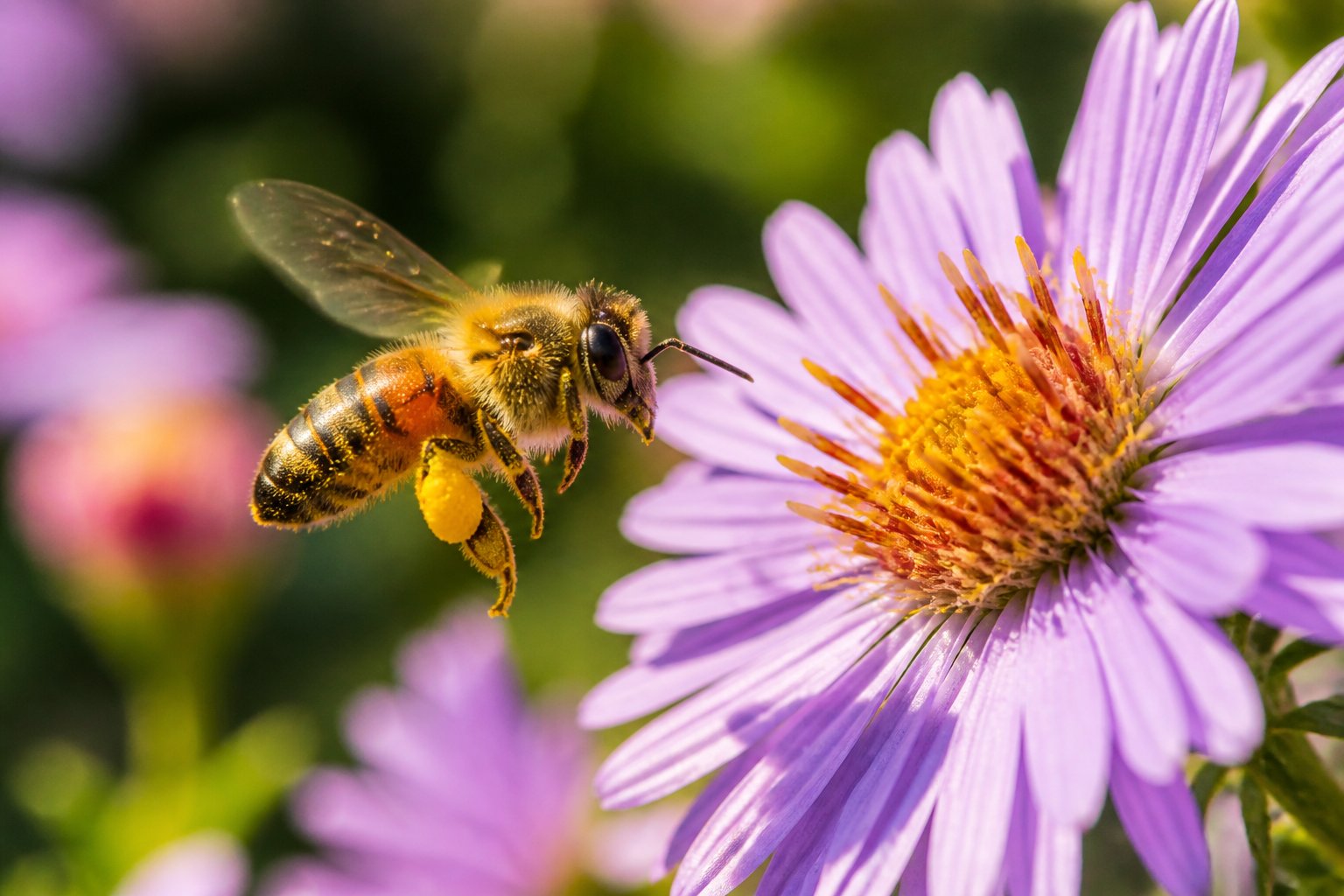
Bee biology gives you a close match between food collection and pollen movement. Their body shape, hair, tongue, and carrying structures all make them efficient at working flowers while moving pollen from bloom to bloom.
Body Features That Help Carry Pollen
A bee’s fuzzy body traps pollen easily, and the proboscis helps reach nectar in deep flowers. Many species also use a pollen basket, or corbicula, on the hind legs to carry food back to the beehive, which still leaves plenty of pollen to drop on flowers along the way.
How Different Bee Species Pollinate Differently
Honeybee, honeybees, honey bees, and Apis mellifera are social managed bees that often visit many flowers in a row. Bumblebees, bumble bees, and Bombus species can vibrate flowers to release pollen, while solitary bees and wild bees, including squash bees and carpenter bee species, often specialize in certain plants.
Why Flower Design Matters To Foraging Bees
Flower shape affects which bees can feed efficiently. Sunflowers, coneflower, black-eyed susan, lavender, and other bee-friendly flowers offer easy access, while some blooms reward only bees of the right size or weight, as the US Forest Service explains with snapdragon examples.
Other Pollinators And Why Bee Pollination Stands Out

Bees are not the only animals that move pollen, and you often see flies, butterflies, beetles, hummingbirds, and bats helping too. Bee pollination stands out because bees visit flowers frequently, carry pollen efficiently, and support a huge range of pollination services.
How Bees Compare With Flies Butterflies And Beetles
Flies, butterflies, and beetles can all pollinate, yet they usually transfer less pollen per visit than a busy bee. Bees tend to forage deliberately for both nectar and pollen, which gives them more consistent contact with flower parts.
When Hummingbirds And Bats Pollinate Instead
Hummingbirds and bats take over on flowers that fit their feeding styles, such as tubular blooms or night-opening plants. Those species play an important role where bees are less active, especially in specialized habitats.
Why Pollinator Diversity Supports Ecosystem Health
A wide mix of pollinators strengthens biodiversity and ecosystem health. When one pollinator group declines, others can sometimes fill part of the gap, which makes diverse pollinator communities valuable for both wild plants and agriculture.
Threats To Pollinators And How To Help

Pollinator populations face pressure from pesticides, habitat loss, urbanization, and climate change. When bee habitat shrinks, pollinator health often drops too, which affects gardens, farms, and the broader landscape.
How Pesticides Habitat Loss And Urbanization Reduce Pollinator Health
Pesticides, especially neonicotinoids, can weaken foraging and navigation. Habitat loss and urbanization remove nesting sites and bloom-rich areas, a trend the U.S. Fish and Wildlife Service links to shrinking places for pollinators to feed and breed.
Ways To Create Better Bee Habitat At Home And On Farms
You can help by planting bee-friendly plants with staggered bloom times, leaving some bare ground for nesting, and reducing pesticide use. On farms, integrated pest management can limit chemical exposure while still protecting crops.
Practical Actions From Beekeepers Gardeners And Communities
Beekeepers, gardeners, and local groups can work together to support local bee populations through community engagement and bee conservation. The Pollinator Partnership is one example of the kind of network that promotes habitat planting, and small changes in yards, parks, and roadsides can add up quickly.


