
Ever watched a bee buzzing around your garden and wondered, “Wait, is that a bumble bee or a honey bee?” Honestly, it’s not always obvious at first glance. Bumble bees are bigger and rounder, and they usually nest underground. Honey bees, on the other hand, are smaller, slimmer, and prefer to live in complex hives above ground. These facts can help you figure out which bee you’re looking at and why they matter.
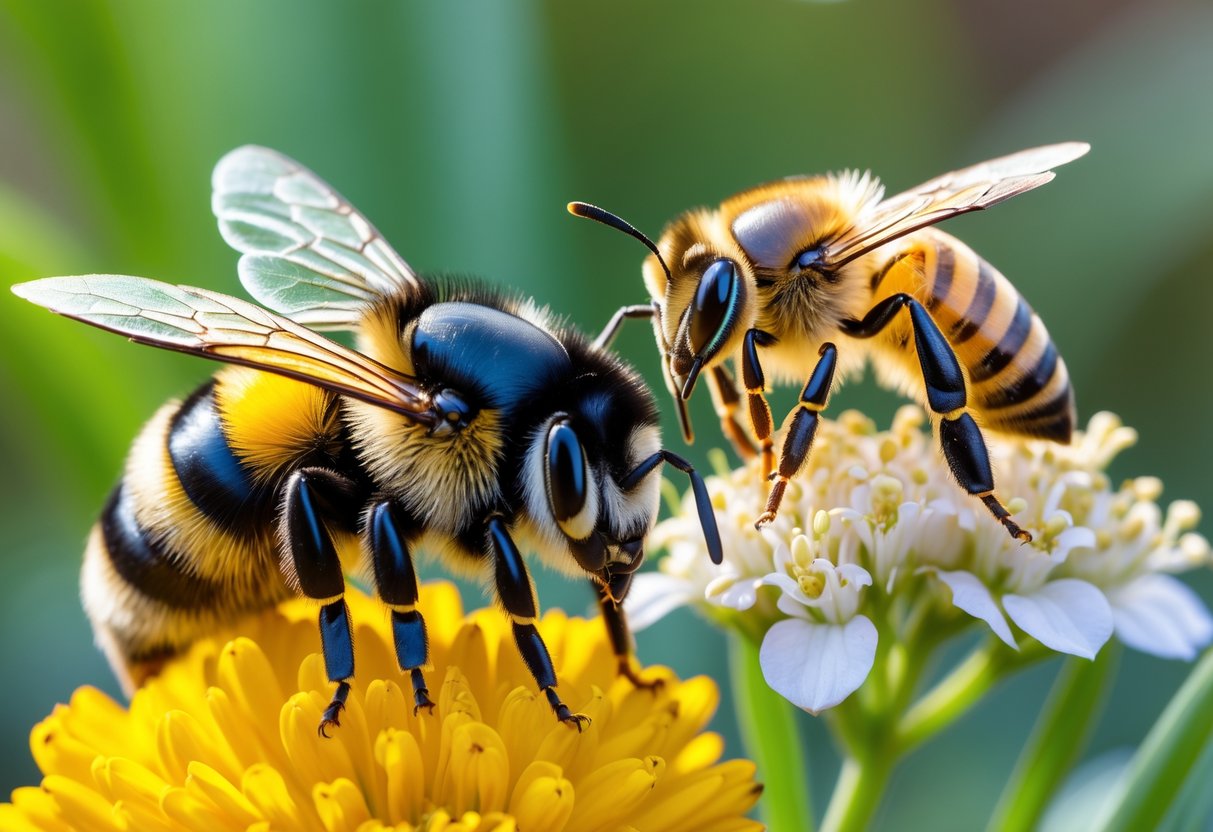
It’s not just about size or where they live. Their behavior sets them apart too. Honey bees live in huge, well-organized colonies and crank out a lot of honey together. Bumble bees stick to smaller groups and don’t make as much honey.
Your garden might attract one or the other depending on what grows there. Some flowers just seem to call to certain bees more than others.
If you’re curious about how these bees act, what makes them look different, or why both types matter, you’re in the right place. Their world is surprisingly complex. For more, check out key differences between bumble bees and honey bees.
Main Differences Between Bumble Bees and Honey Bees

You’ll spot differences in how bumble bees and honey bees look, live, and work. Their size, their colonies, where they build nests, and the way they make and store honey all stand out.
Physical Appearance and Size
Bumble bees look bigger and fuzzier. Their bodies are round, and thick hair covers them, which helps them grab pollen.
Honey bees, like Apis mellifera, have slimmer bodies and not as much hair. They’re smaller and a bit more streamlined.
Bumble bees show off bright yellow and black stripes and look pretty robust. Honey bees usually look light brown with darker bands.
You’ll notice honey bees have pollen baskets on their hind legs, which are less fuzzy than what you see on bumble bees.
Colony Structure and Social Organization
Honey bees form large, organized colonies. A hive might have anywhere from 20,000 to 80,000 bees.
They include one queen, tons of workers, and a few drones. Honey bees communicate a lot, care for their queen, and survive winter by clustering together.
Bumble bee colonies are much smaller—maybe just a few hundred bees. They have a queen and workers too, but not as many.
Bumble bees don’t organize as tightly. Only the queen survives the winter by hibernating, while the rest of the colony doesn’t make it.
Nesting Habits and Locations
Honey bees build their nests above ground, like in tree hollows or man-made hives. They make their hives from wax they produce.
The structure of a honey bee hive is pretty complex and meant to last. It’s kind of impressive how intricate it gets.
Bumble bees go for ground nests or hidden spots in grass, old rodent burrows, or even compost piles. Their nests are smaller and not meant to last forever.
Bumble bee nests are really just a bunch of wax pots, not a big hive with lots of structure.
Honey Production and Storage
Honey bees make a lot of honey and store it in their hives. They need it to get through the winter.
Their colonies depend on these honey reserves to survive when food is scarce.
Bumble bees don’t make much honey. They only produce enough to feed their colony for a short time.
Their honey isn’t for storage, and honestly, people don’t really harvest it like they do with honey bee honey.
If you want more details, check out Bumblebee vs. Honeybee: The 8 Key Differences Explained.
Pollination, Behavior, and Conservation

You’ll see bumble bees and honey bees working differently when they collect food and pollinate flowers. Their habits shape how they help your garden or crops.
Protecting both types really matters, especially since they’re up against things like pesticides and disappearing habitats.
Pollination Methods and Buzz Pollination
Bumble bees have this cool trick called buzz pollination. They vibrate their flight muscles to shake pollen loose from certain flowers.
That’s why they’re great for pollinating plants like tomatoes, blueberries, and cranberries. Honey bees can’t do this, so they aren’t as helpful for those plants.
Both bees carry pollen on their legs, but their pollination styles aren’t quite the same. Honey bees move quickly from flower to flower and tell others about good spots with their famous dance.
Bumble bees usually stay in smaller areas and take their time collecting nectar and pollen.
Foraging and Diet: Nectar and Pollen Collection
Honey bees collect nectar mostly to make honey. They live in big colonies and need to stash a lot of food.
Bumble bees collect nectar too, but they don’t need to make much honey. Their smaller colonies eat nectar and pollen mainly to feed their young.
Bumble bees have longer tongues, so they can reach nectar in deep flowers that honey bees can’t get to. Both types gather pollen for protein, though they use it in their own ways.
Knowing these habits can help you pick flowers that attract both bees for better pollination in your yard.
Ecological Importance and Threats
Both bees play a huge part in your garden and local ecosystems by pollinating plants. Without them, a lot of fruits, veggies, and wildflowers just wouldn’t thrive.
But bees face some real threats these days. Neonicotinoids, a common pesticide, mess with bees’ nervous systems.
Parasites like varroa mites weaken honey bee colonies. And with more cities and roads, bees lose places to nest and find food.
All of these problems shrink their numbers and make it harder for them to do their job.
Conservation Efforts and Bee-Friendly Gardens
You can help bees out by starting a bee-friendly garden. Try planting native flowers that bloom at different times, so bees have food all year.
Skip the pesticides—especially neonicotinoids. They’re just bad news for bees.
A lot of conservation groups suggest mixing in all sorts of nectar-rich flowers. They also say to leave some wild areas alone.
If you leave small piles of wood or patches of undisturbed soil, you give bumble bees a place to nest. It’s a small thing, but it actually makes a big difference.
These steps keep honey bees and bumble bees healthy. Your garden and the environment both win.
Curious about how these pollinators differ? Check out this handy guide on bumble bees versus honey bees.


