
Ever wondered if bees, those little busybodies zipping around all day, actually sleep at night like we do? Turns out, bees really do sleep at night—usually for about 5 to 8 hours so they can recharge. This downtime keeps them sharp and helps them find their way back to the hive after a long day of gathering nectar.
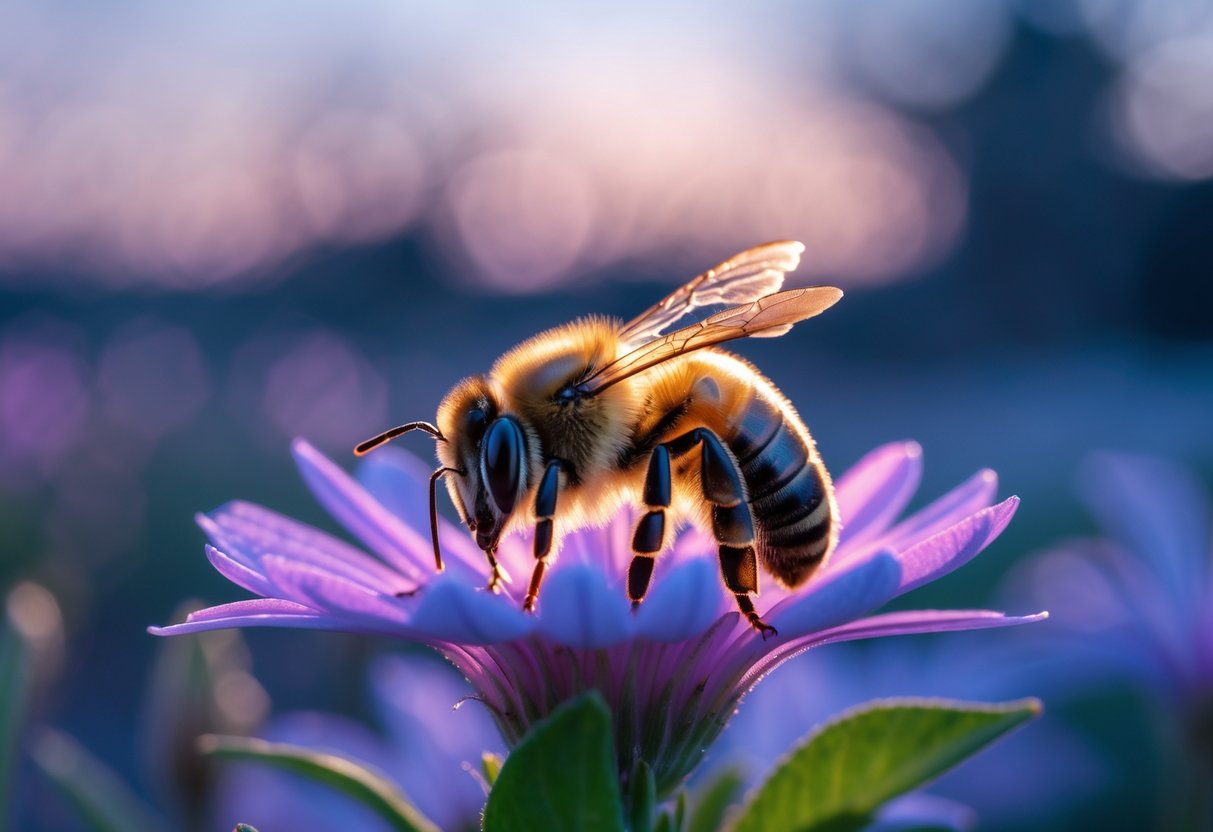
Not every bee rests the same way, though. Honey bees usually stick to a clear nighttime sleep routine.
Solitary bees? They’re a bit different, and might nap in burrows or cling to plant stems. Once you start noticing how bees rest, it’s hard not to appreciate the little details of their daily lives and their huge impact on nature.
Bee Sleep Patterns and Nighttime Rest

Bees rest for several hours, mostly at night. The amount and style of sleep depends on the type of bee and what time it is.
Their sleep keeps them healthy and ready for whatever the next day brings.
How Bees Sleep at Night
Bees usually sleep about 5 to 8 hours each night. When they settle down, their bodies relax and their temperature drops a bit.
You might spot a bee just sitting still, antennae drooping.
They don’t all sleep at once, though. Instead, bees take short naps here and there through the night.
These little naps help them stay alert and ready to get moving once the sun comes up.
Differences Between Diurnal and Nocturnal Bees
Most bees out there are diurnal; they’re up with the sun and sleep when it’s dark. They use light and temperature to figure out when to rest.
But some bees actually work at night or during dusk. Nocturnal bees flip the script—they sleep during the day and work when it’s dark.
This lets them dodge competition with daytime bees, which is honestly pretty clever.
Impact of Bee Roles on Sleep Habits
A bee’s job in the hive changes how and when it sleeps. Older forager bees, the ones flying out for nectar, usually follow that 5 to 8 hour nighttime sleep routine.
Younger bees, especially nurse bees, take lots of short naps all day and night instead of one long stretch. Their work inside the hive means they need to stay at least a little alert, pretty much all the time.
If you want to dive deeper, there’s a lot more to learn about how bee roles shape their sleep.
Factors Influencing Bee Sleep at Night
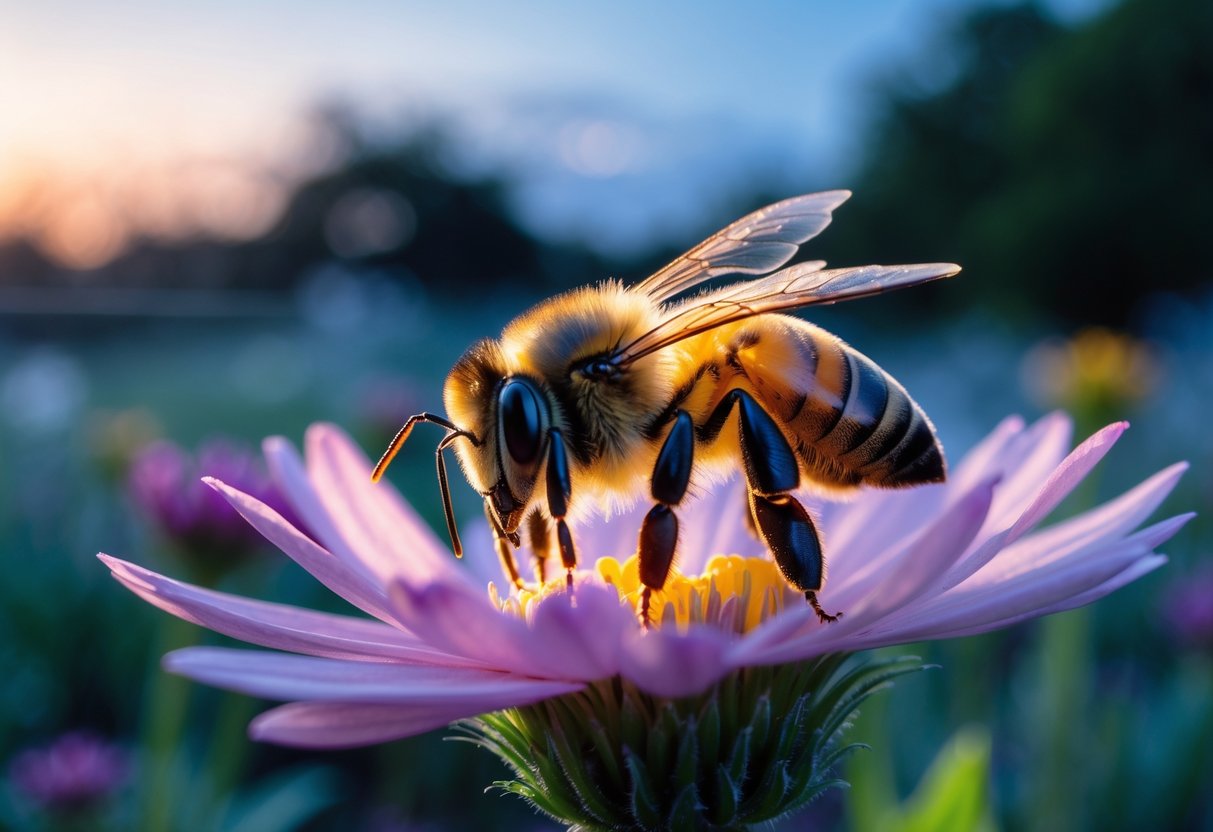
Bees can’t just sleep whenever they feel like it. Their sleep depends on what’s happening around them and what the hive needs.
Figuring out what controls their rest gives you a better picture of how bees work together.
Environmental Influences: Light, Temperature, and Season
Light is a huge deal for bees. When daylight starts to fade, especially for foragers, it’s their cue to wind down and rest.
If a bright light suddenly appears, it can actually wake a sleeping bee. They’re just that sensitive to changes.
Temperature plays its part too. Cooler nights help bees slow down and get deeper rest.
But if it gets too cold, bees change their activity since they need warmth to move and do their jobs.
Seasons shake things up as well. In colder months, bees might sleep longer or rest in different ways, especially when flowers are hard to find.
Their body clocks shift along with the environment, always adapting to what’s happening outside.
Bee Colony Needs and Sleep Distribution
A bee colony feels a bit like a well-organized team, doesn’t it? Not every bee sleeps the same way, and they definitely don’t all pick the same time to rest.
Forager bees, the ones buzzing out to gather nectar, usually catch their sleep at night. They rest for about 5 to 8 hours.
Bees that stay inside the hive—nurse bees, for example—work in “shifts.” Some of them take a break while others keep things running, so the hive never really stops.
This split sleep pattern helps the bees provide constant care for the hive and the young ones. It just keeps everything moving.
When things get hectic or the hive feels stressed, bees change up their sleep habits. They might rest less or at odd hours, just to keep the colony balanced and healthy.


