
Ever wondered if female chimpanzees eat meat? Well, they do—just not a lot of it. Female chimps eat meat, but it makes up only a small slice of their diet compared to fruits, leaves, and insects. Social rank plays a big part here; higher-ranking females usually get first dibs on this prized food.
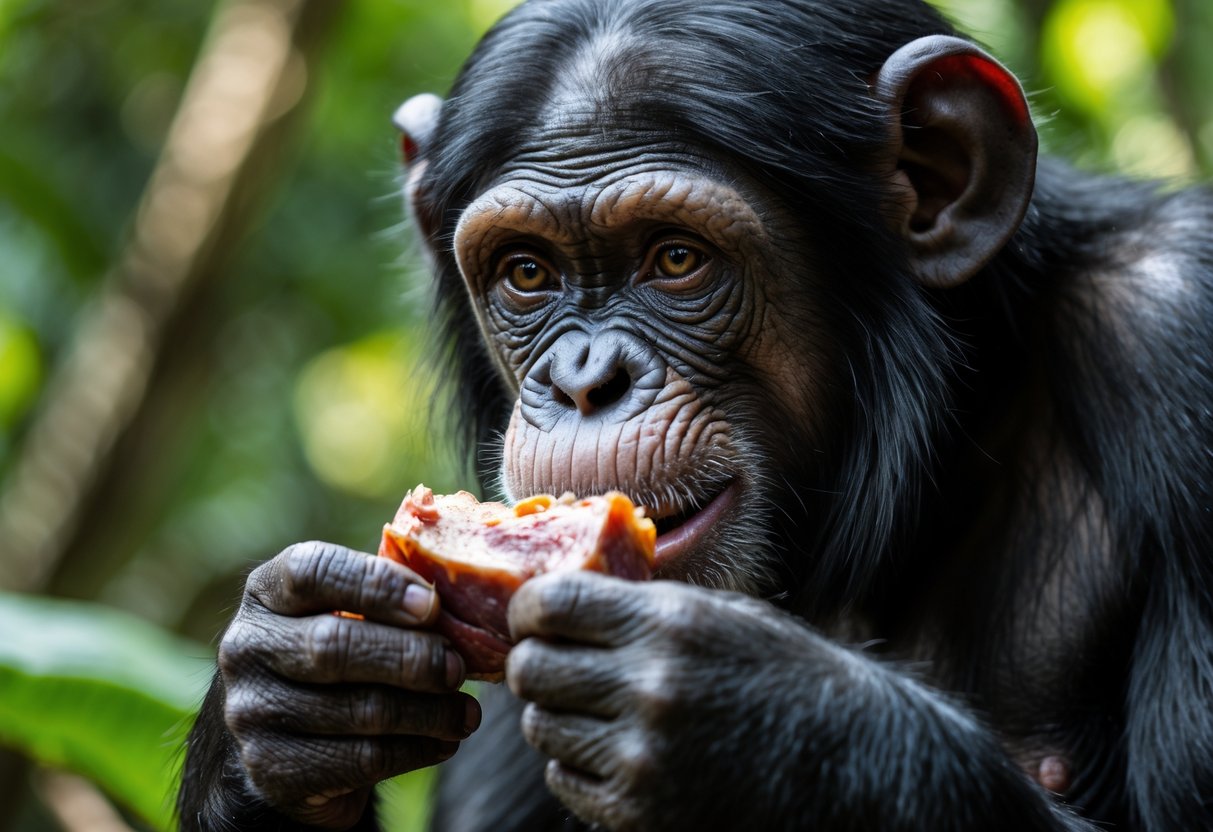
Chimpanzees mostly munch on plants, but sometimes they’ll hunt or share meat with others in their group. Males do most of the hunting, but females still get in on the action and benefit from meat, especially when they’re pregnant.
Learning what chimps eat gives us a window into how these clever animals live and get by in the wild.
Meat Consumption in Female Chimpanzees

Female chimpanzees eat meat, but how much they get depends on things like their rank or if they’re pregnant. Males tend to hunt, while females usually get their meat in other ways and end up eating less of it.
If you look at how females eat meat, you can see how it fits into their diet and social lives.
Evidence of Female Meat Eating
Female chimps do eat meat, though not as often as the males. Studies show that pregnant females eat more meat than those who aren’t pregnant or are nursing.
That probably makes sense since meat offers extra nutrients during pregnancy.
High-ranking females manage to eat more meat than lower-ranking ones. Dominance gives them better access when the group shares meat after a hunt.
Female chimps mostly eat meat from red colobus monkeys. Males usually catch these monkeys during group hunts—Jane Goodall saw this happen in East Africa.
How Female Chimps Acquire Meat
Most female chimps don’t hunt themselves. They usually get meat when others share it or when males hand it over.
Males do most of the hunting, especially for red colobus monkeys, which seem to be a favorite.
Chimps often share meat as a social gesture or reward. Females with higher rank or those who are pregnant or nursing tend to get more meat from these social exchanges.
Sometimes, females scavenge leftovers from kills too.
Differences Between Male and Female Diets
Male chimps eat more meat, mostly because they do the hunting and catch most of the prey, like red colobus monkeys. Their diet has a bigger chunk of meat than the females’ does.
Females focus on fruits, insects, nuts, and other plant foods. Meat stays a smaller part of their menu.
Insect eating doesn’t change based on rank or pregnancy, but meat-eating does.
Males hunt actively, while females grab meat when there’s an opportunity. This difference shapes how they fit into their social groups and how they eat.
If you want more details on this, you can check out studies on meat consumption in female chimpanzees and hunting in East African chimpanzees.
What Else Do Female Chimps Eat?
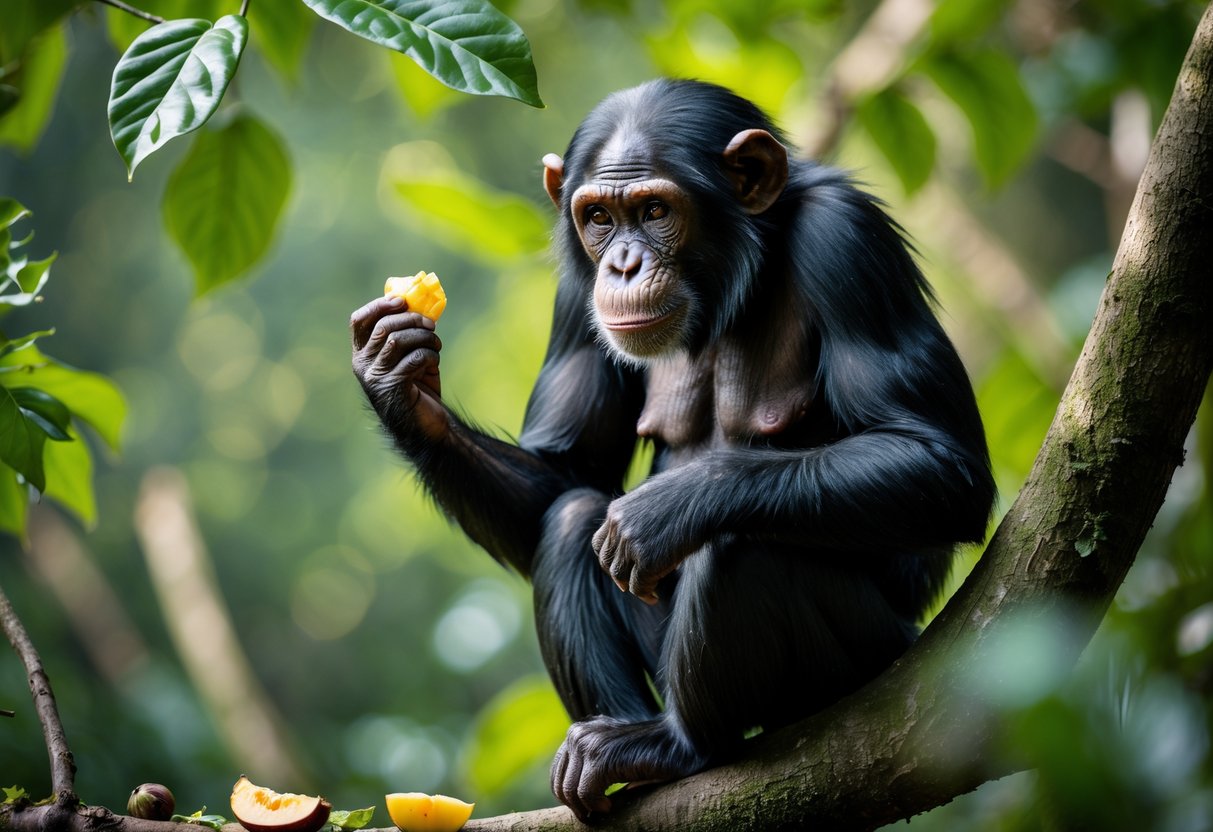
Female chimps eat way more than just meat. Their diet’s loaded with fruits, plants, insects, and sometimes small animals.
These foods give them the energy and nutrients they need to get through the day.
Fruits and Plant Foods in the Diet
Fruits make up a huge part of what female chimps eat. You’ll often spot them munching on wild figs, bananas, or berries.
These fruits bring important sugars and vitamins to keep them moving.
Leaves, seeds, and flowers fill out the rest of their plant-based diet. These foods add fiber and other nutrients that help with digestion.
Fruit comes and goes with the seasons. When it’s hard to find, female chimps switch over to eating more leaves and nuts.
That shift helps them stay healthy, no matter what time of year it is.
Importance of Insects and Small Animals
Insects are another big deal for female chimps. They use sticks and other tools to snag termites and ants.
These bugs give them extra protein and fats, especially when meat isn’t easy to come by.
Sometimes, female chimps will eat small animals like baby monkeys or birds, but that’s pretty rare. Usually, they get these through shared meat from males.
Occasionally, they might catch a tiny animal themselves.
Eating insects and small animals fills in the gaps in their diet and helps them get enough energy—even if they’re not hunting bigger prey.
Role of Frugivores and Omnivores in Nutrition
Chimpanzees eat both plants and animals, so they’re considered omnivores.
Female chimps usually go for fruit, acting mostly as frugivores. Still, they’ll eat animal foods when they need a nutrient boost.
This mix gives female chimps a pretty balanced diet. Fruits fill them up with energy. Insects and meat, on the other hand, bring in the proteins and fats that matter for growth and reproduction.
When food gets scarce or the seasons change, being an omnivore really pays off. Female chimps can switch up what they eat, which helps them get by when things get tough.
Curious to know more about how chimpanzees eat as omnivores and frugivores?


