
Ever find yourself wondering why chimps, who are basically our cousins in the animal world, just can’t talk like we do? It’s tempting to assume they just don’t feel like having a chat, but the real story is a mix of biology and brainpower.
Chimps have the physical tools to make sounds, but their brains just don’t have the kind of control needed to pull off the complex speech humans use every day.
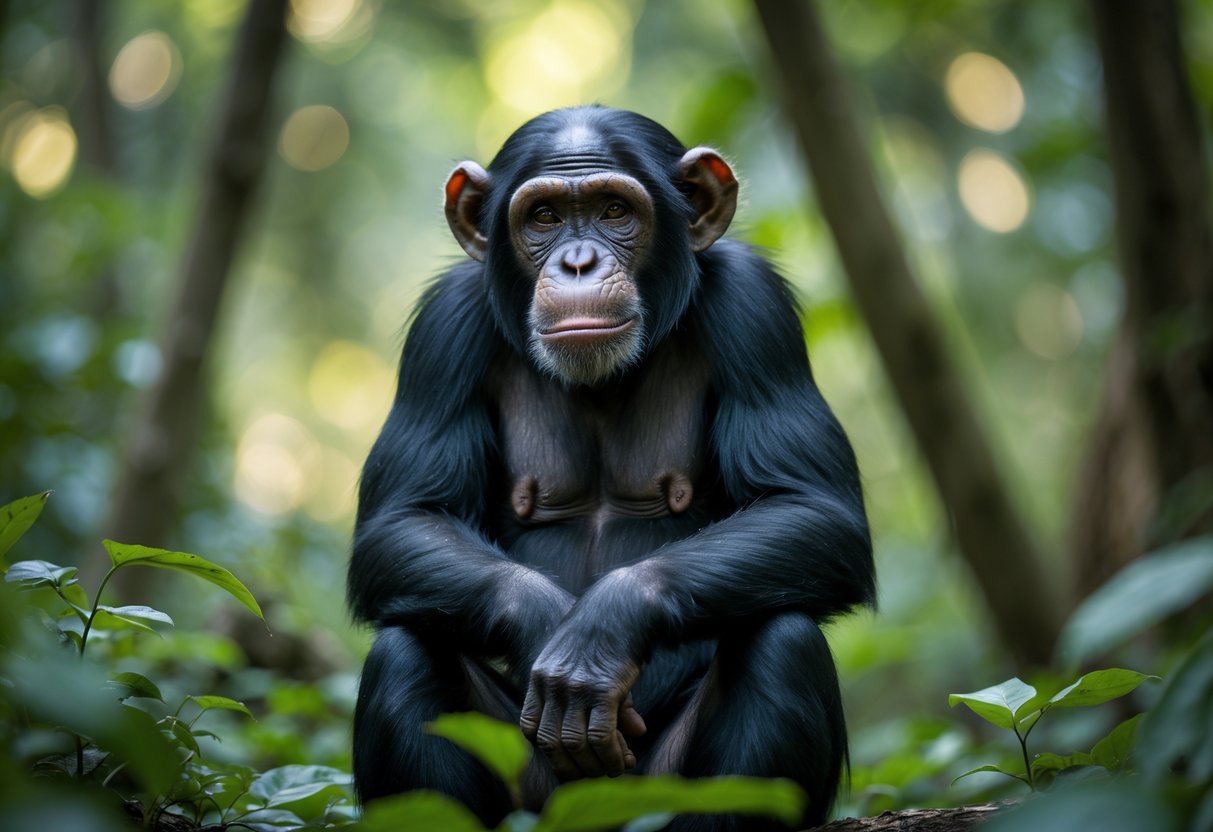
Their mouths and throats can handle making noises, but their brains simply don’t let them coordinate those parts for speech. You might be surprised—chimps actually communicate in all sorts of ways, from sounds to gestures.
But words? That’s where they hit a wall. Figuring out why gives us a peek not just into their limits, but also into what makes human speech so unique.
If you’re curious about what’s really going on—from their vocal organs to the way their brains work—stick around. Science keeps digging up clues about speech, showing why animals like chimps get close, but never quite cross the line into talking.
For a deeper dive into their vocal skills and brain wiring, check out this article about why chimps can’t talk.
Key Differences Between Chimps and Humans in Speech and Language
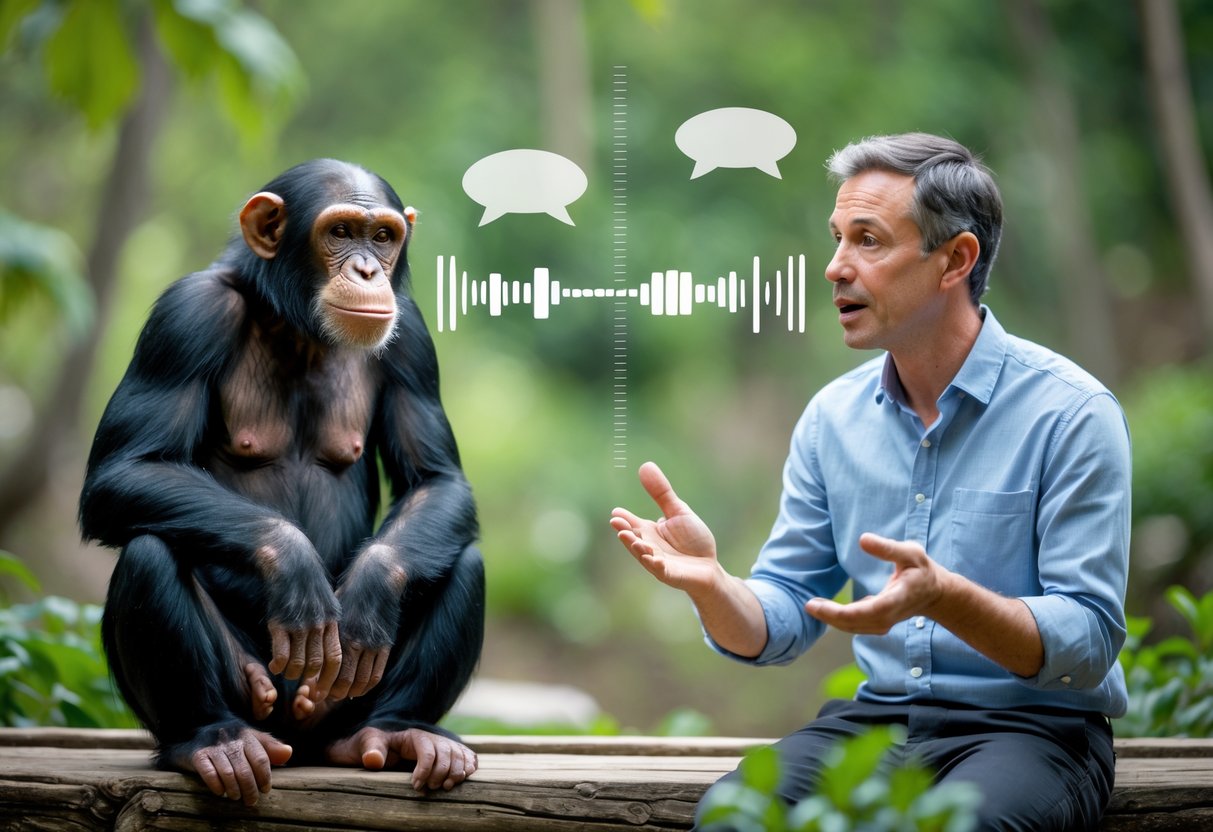
So, what actually keeps chimps from speaking like us? It’s not just one thing—it’s a whole mix of how their bodies and brains are set up.
These differences shape the sounds they can make and how they process language. That’s what sets us apart.
Vocal Anatomy and Capabilities
Your vocal tract—larynx, tongue, lips, and palate—lets you make all sorts of sounds. Humans have a larynx that sits lower in the throat, which opens up a wider range of vowel sounds.
Chimps have a higher larynx and their tongues just aren’t as flexible. That really limits the sounds they can make.
They also don’t control their airflow well enough to manage tricky consonants. So, their anatomy just doesn’t cut it for forming words.
Brain Wiring for Language Processing
Your brain runs the show when it comes to talking and understanding language. Broca’s area helps you plan out what to say, while Wernicke’s area handles the meaning of words you hear or read.
Chimps do have these brain areas, but they’re not wired up the same way. Their connections for language just haven’t developed like ours.
So, they can’t really plan speech sounds or grasp complicated language. That’s a big roadblock.
Human Brain Specialization
Special parts of your brain work together to make speech happen. The motor cortex controls all the muscles you need to talk, from your lips to your vocal cords.
It sends out super precise commands, so your speech sounds clear. Chimps don’t have that same fine-tuned muscle control.
Their brains focus more on survival skills than on talking. Even though they use sounds and gestures to get messages across, speech-level muscle control just isn’t in their toolkit.
The Role of the FOXP2 Gene
Genes play a part, too. The FOXP2 gene is a big deal for controlling muscles and brain areas tied to speech.
Humans have a special version of FOXP2 that helps us form words and pick up language. Chimps have a different version, and that changes how their brains and muscles work for speech.
When humans have issues with FOXP2, speech and language get tricky. That really shows how much this gene matters.
It’s one more reason why our speech abilities leave chimps in the dust.
For more on speech anatomy, see How Humans Speak—and Why Chimps Don’t.
You can also check out Why can’t chimps speak? Study links evolution of single gene to human capacity for language for more on FOXP2.
Evolutionary and Biological Factors Limiting Chimp Communication

Your ability to speak comes from some pretty unique changes in your brain and body. Chimps just never got those changes.
These differences let you control your voice and build complex sentences. Chimps’ brains and vocal parts? They’re just shaped differently, and that really limits how they communicate.
Development of Broca’s Area in Humans
Broca’s area in your brain helps you put speech together and organize what you want to say. Humans have a bigger, more developed Broca’s area than chimps.
It links up with other language areas, making it easier to control words quickly and precisely. Chimps do have a similar spot in their brains, but it’s smaller and not as specialized.
They just can’t organize sounds into sentences like we can. The growth of Broca’s area in humans shows off stronger brain wiring that connects your thoughts to your mouth’s movements.
That’s a huge step in making clear speech possible.
Neural Control Over Vocal Tract Muscles
When you talk, your brain sends signals to muscles in your throat, tongue, and lips. You’ve got some seriously fine control over these muscles, which lets you make tons of different sounds in rapid-fire succession.
Chimps just don’t have that level of control. Their brains send weaker, slower signals to their vocal muscles.
So, they stick to simple sounds like grunts or screams, not speech. This gap in neural control really highlights why, even if chimps wanted to talk, their bodies just wouldn’t let them.
Your smooth muscle control is a big reason human speech works at all.
Comparative Insights from Other Species
If you look at other animals, it starts making sense why chimps can’t talk like we do.
Take some monkeys, for example. Their vocal tracts could probably make human-like sounds, but their brains just don’t control those muscles well enough.
Chimpanzees use all sorts of complex calls and rhythms when they communicate. Still, it’s nowhere near what we’d call human speech.
These calls might hint at the early stages of language, but chimps just don’t have the brain wiring or muscle control that people do.
When you compare different species, you start to see how evolutionary changes in the brain and vocal system gave humans the ability to speak. Chimps, on the other hand, stay pretty limited in what they can do with their voices.
If you’re curious, there’s more about brain wiring and vocal anatomy here: Why Can’t Chimps Talk? Exploring the Science of Speech


