
You might assume only male chimpanzees eat meat because they’re usually the ones out hunting. But actually, female chimps eat meat too, especially when they’re pregnant and need extra nutrients. Meat isn’t a huge part of their diet, but female chimps do eat it—higher-ranking females often get more of it, since they’ve got better access to this valuable food.
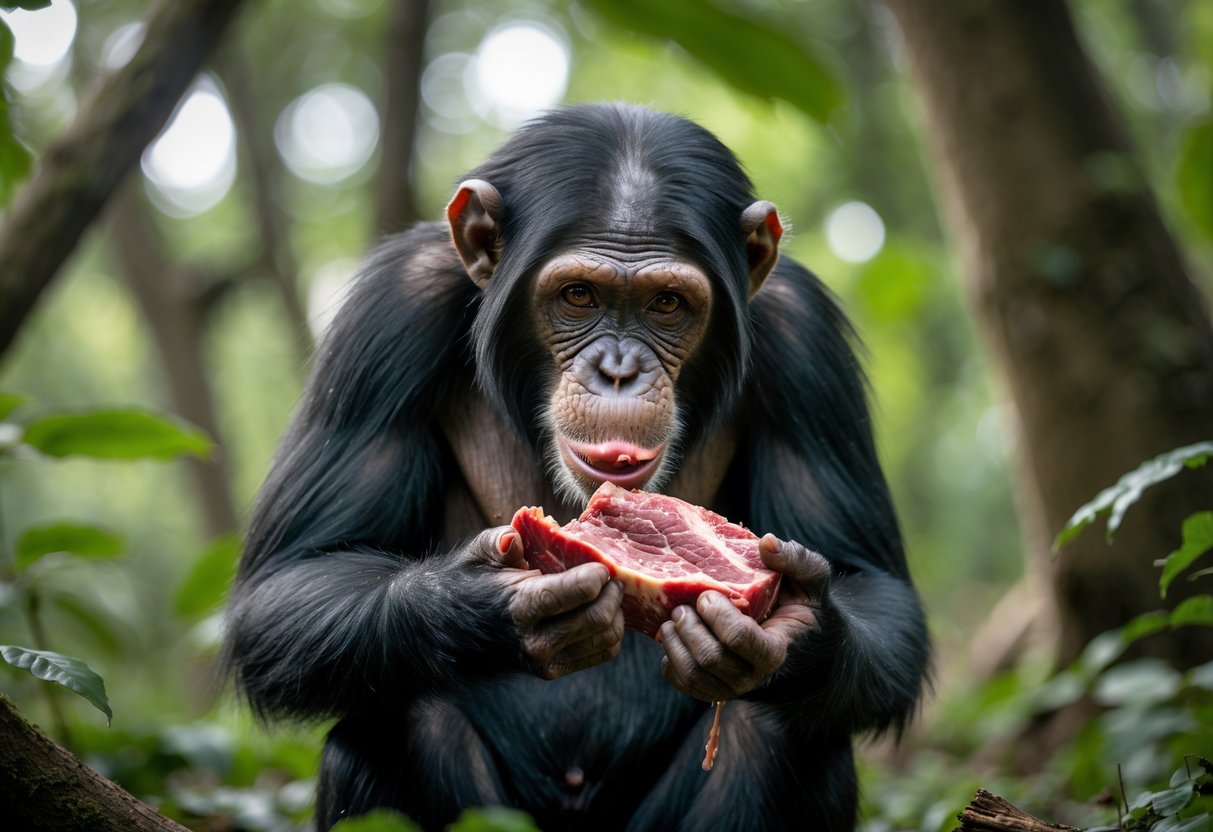
Chimps mostly munch on fruits, leaves, and insects, so meat isn’t their main food. Still, it gives important nutrients, especially for females during pregnancy or when they’re breastfeeding. Female chimps tweak their diet to fit their needs, so meat ends up playing a real, if subtle, role.
If you’re curious about how female chimps get meat and why it matters, keep reading. There are some surprising details about how social rank and reproduction shape their access to meat and what that says about chimp behavior.
Meat-Eating in Female Chimpanzees

People often think female chimps rarely eat meat, but their meat-eating depends on things like social rank and whether they’re pregnant. How often they eat meat, how they get it, and who they share it with all show some interesting differences from the guys.
Frequency of Meat Consumption by Females
Female chimps eat meat less often than males. Pregnant females usually eat more meat than when they’re not pregnant or just nursing.
High-ranking females get more meat than those lower down the ladder. Meat is a small part of their diet—fruit and insects fill most of their meals.
During pregnancy, though, eating meat helps females get the extra nutrients they need for themselves and their babies. Lower-ranking females seem to work harder for meat during pregnancy, maybe because their bodies really need it.
How Female Chimps Obtain Meat
Adult males usually do most of the hunting in wild chimp groups. They go after small mammals like monkeys or antelopes.
Females typically get meat by sharing, not by hunting themselves. Sometimes, females catch insects or tiny animals on their own.
But for bigger prey, females rely on males to share the meat. This sharing gives them access to protein-rich food without burning too much energy hunting—super helpful if they’re pregnant or looking after young ones.
Gender Differences in Meat Consumption
Males eat meat more often, and it’s a bigger part of their diet. Adult males take the lead in hunting, while females mostly stick to fruit and insects.
Males spend more time hunting and competing for meat. Females focus on gathering easier foods.
When females do eat meat, it usually supports their nutritional needs during pregnancy.
Social Dynamics of Meat Sharing
Meat sharing among chimps follows some pretty clear social rules. Males often share meat with females, especially if the female is high-ranking or has a strong bond with the male.
Sharing helps females get enough protein and nutrients without having to hunt. High-ranking females seem to get more shared meat, maybe explaining why their meat intake doesn’t change as much during pregnancy.
Sharing meat also strengthens social bonds and encourages cooperation in the group.
You can dive deeper into this topic by checking out this detailed study on female chimpanzee meat consumption.
Chimpanzee Diet in Context

Chimps mostly eat plants, but they mix in some animal foods too. Their menu changes depending on where they live and the season.
Fruit, insects, and a bit of meat make up their meals, with certain prey standing out in some groups.
Typical Foods Eaten by Chimps
Chimps love fruit—they’re mostly frugivores. You’ll spot them eating bananas, figs, and wild fruits when they can find them.
They also eat leaves, seeds, nuts, and flowers to round things out. Insects matter too.
Termites and ants are favorite snacks, and chimps often use twigs to catch them. This mix of plants and insects makes chimps omnivores.
Meat isn’t a big part of their diet, but it still gives them essential nutrients. How much meat they eat depends on the individual and the group.
Role of Red Colobus Monkeys and Other Prey
For some chimps, red colobus monkeys are a key meat source. Adult males in places like Taï National Park hunt these monkeys.
Hunting red colobus monkeys takes teamwork—chimps work together to catch them. After the hunt, they share the meat, which helps build social bonds.
Chimps also eat small mammals, birds, eggs, and insects. Meat might be more important for some adult males than for others.
Influence of Geography and Season
Where chimps live shapes what they eat. In East Africa, fruit comes and goes with the seasons, so chimps switch to leaves, nuts, or insects when fruit is scarce.
In forests with lots of red colobus monkeys, like some parts of West Africa, chimps hunt and eat meat more often. Other places? Not so much.
Seasons matter too. You’ll see more fruit in the wet season, and more leaves or insects in the dry season. This flexibility helps chimps handle whatever their environment throws at them.
Research by Dr. Jane Goodall
Dr. Jane Goodall made a groundbreaking discovery—she was the first to notice that chimps actually eat meat. While she spent time in East Africa, she watched chimps grab sticks to fish for termites and even hunt small mammals, like monkeys.
Her observations revealed that chimps aren’t just plant eaters after all. They’re clever omnivores with surprisingly flexible diets.
Because of Goodall’s work, we now understand chimps eat a mix of fruits, insects, leaves, and sometimes meat. Their menu really depends on their environment and what’s going on in their social groups.


