
Ever wondered if you could outrun a chimpanzee? Well, it really depends on how far you’re planning to run.
In a short sprint, chimpanzees are definitely faster and will leave you in the dust. They can hit speeds of 25 to 30 miles per hour, which most of us just can’t match.

But if the race goes on for a while, humans start to shine. We’re built for endurance and can keep jogging for quite a while, while chimps tend to tire out pretty fast.
The type of ground matters a lot too. Flat, open spaces or rough, wild terrain? Each gives a different runner the edge.
Thinking about these differences is kind of wild. Your body is made for distance, while chimps are all about those explosive sprints.
If you’re curious about how this matchup really plays out, let’s dig in.
Can You Outrun a Chimpanzee? Direct Speed Comparison

Chimpanzees outpace humans in short sprints, but their speed drops off quickly if they have to keep going. Humans might not be sprinters, but we can hold a steady pace for miles.
If you’re wondering when you could outrun a chimp and when you’d lose, it comes down to distance.
Top Sprinting Speeds of Chimpanzees and Humans
Chimpanzees can sprint up to 25 miles per hour by running on all fours. That’s faster than just about any human.
The fastest humans—think Usain Bolt—reach about 27 to 28 miles per hour, but only for a few seconds. Most of us top out around 15 miles per hour in a full-on sprint.
Chimps can hit their top speed almost instantly, but it doesn’t last. Their sprints are over in just a few seconds.
Humans might be slower, but we can keep running at a decent pace much longer.
Why Chimpanzees Excel at Short Bursts
Chimpanzees have bodies built for power. Strong arms and legs let them launch forward on all fours.
Running with all four limbs gives them crazy acceleration and balance. They’re made to move quickly through trees or make a fast dash on the ground.
Their muscles pack a punch, so they reach top speed right away. But that power drains fast, and they get tired quickly.
Endurance vs Sprinting: The Human Advantage
Humans can’t match chimps’ sprint speed, but we’re made for the long haul.
Sweating cools us down while we run, so we don’t overheat. Our upright posture and long legs help us save energy.
While chimps fizzle out after a short sprint, we can keep running mile after mile. That’s a big reason why our ancestors could hunt by simply wearing animals out.
Agility and Direction Changes in Chimpanzees
Chimpanzees are incredibly agile. They can change direction in a flash, using their arms and legs to balance.
On wide, flat ground, a human might have a shot at outrunning a chimp. But throw in trees or obstacles, and their agility wins out.
They twist, turn, and climb with ease, dodging dangers or chasing prey faster than most of us could react.
If you want more details, check out Can a Human Outrun a Chimpanzee? Speed, Endurance, and Survival.
What Makes Us Different: Anatomy and Physical Strength
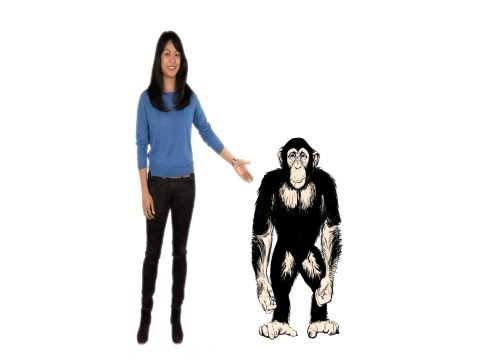
Humans and chimps have bodies built for different things. We’re designed for endurance, while chimps rely on strength and speed.
These differences show up in our muscles, how we cool down, and even when you compare us to other apes like gorillas.
Anatomical Differences Between Apes and People
Chimpanzees run on all fours, using both arms and legs. Their arms are longer and stronger, perfect for climbing and swinging.
We walk upright on two legs. That upright posture lets us take longer steps and move with less effort.
Our legs are longer than a chimp’s, and our spines support standing tall. Chimps have shorter legs and a curved spine, which helps with climbing but not so much with running far.
That’s why chimps win short sprints, but humans can keep going much longer.
Muscle Power: Strength and Flexibility
Chimpanzees have muscles that generate about 1.35 times more force than ours, especially in their arms. They’ve got more fast-twitch muscle fibers, which help them explode into sprints or powerful moves—like climbing or even throwing a punch.
We have fewer fast-twitch fibers but more slow-twitch ones. That means we’re built for steady movement over hours, not quick power.
Our legs and hips are more flexible, letting us run long distances at a steady pace. We might not win a sprint, but give us a marathon and we’ll outlast most apes.
Endurance, Sweating, and Cooling Abilities
Sweating is our secret weapon for endurance. Chimps barely sweat, so when they run, they heat up fast.
That quick heat build-up wears them out, so they can’t keep going for long.
We sweat a lot, which cools us down and keeps us from overheating. Even in hot weather, we can keep up a steady pace.
Our hearts and lungs work hard to get oxygen to our muscles for long runs. All these features let us outlast a chimp over distance, hands down.
How Other Apes Measure Up: Gorillas and More
Gorillas pack even more strength than chimps. Their arms and upper bodies are just massive, honestly. If you’ve ever seen one, their power is hard to miss.
They can throw a punch with insane force. Still, just like chimps, gorillas focus on short bursts of strength, not long-lasting stamina.
You, on the other hand, don’t have anywhere near that upper body muscle. But you can run for miles and handle heat way better.
Orangutans are a different story. They move slower and hang out in the trees most of the time.
Sure, orangutans are strong, but they’re not built to keep up with you over distance. None of these apes can really match your endurance.
So, when it comes to a quick sprint, a chimp or gorilla might leave you in the dust. But if you keep going, you’ll outlast them every time.


