
Bees who make milk are really producing royal jelly, a nutrient-rich brood food that young worker bees synthesize inside the hive. It is not mammal milk, yet it fills a similar role, feeding larvae and shaping whether a developing bee becomes a worker or a queen. If you want the short answer, bees do not make milk in the mammal sense, they make royal jelly, and that substance drives much of hive development.

Royal jelly is closely tied to what is royal jelly, bee milk, and royal jelly proteins. Inside a healthy colony, it is the food that nurse bees give to bee larvae and the queen bee, and it is one of the clearest examples of how honeybees use chemistry and behavior to shape the hive.
Who Produces The Milky Secretion In A Hive

The milky secretion comes from a specific stage of worker bees, especially young worker bees that are acting as nurse bees. Your best clue is age and role, since hive tasks change fast as Apis mellifera matures and its bee behavior shifts from brood care to foraging.
Nurse Bees And Young Worker Bees
Young workers usually handle brood care before they move on to other jobs. When you inspect a hive, you often see them clustered around open brood, their heads down and bodies moving in a steady feeding rhythm.
How Hypopharyngeal And Mandibular Glands Make Brood Food
The hypopharyngeal gland and hypopharyngeal glands produce a protein-rich secretion, while the mandibular glands add a lipid-rich component. Together, they form brood food, the substance you know as royal jelly.
Why Worker Bees Feed Bee Larvae And The Queen Bee
Bee larvae get this food because they need rapid growth and protection in the first days of life. The queen bee gets it in far greater quantity, which supports fertility, long life, and the queen’s distinctive development path.
Why Royal Jelly Changes Larval Development
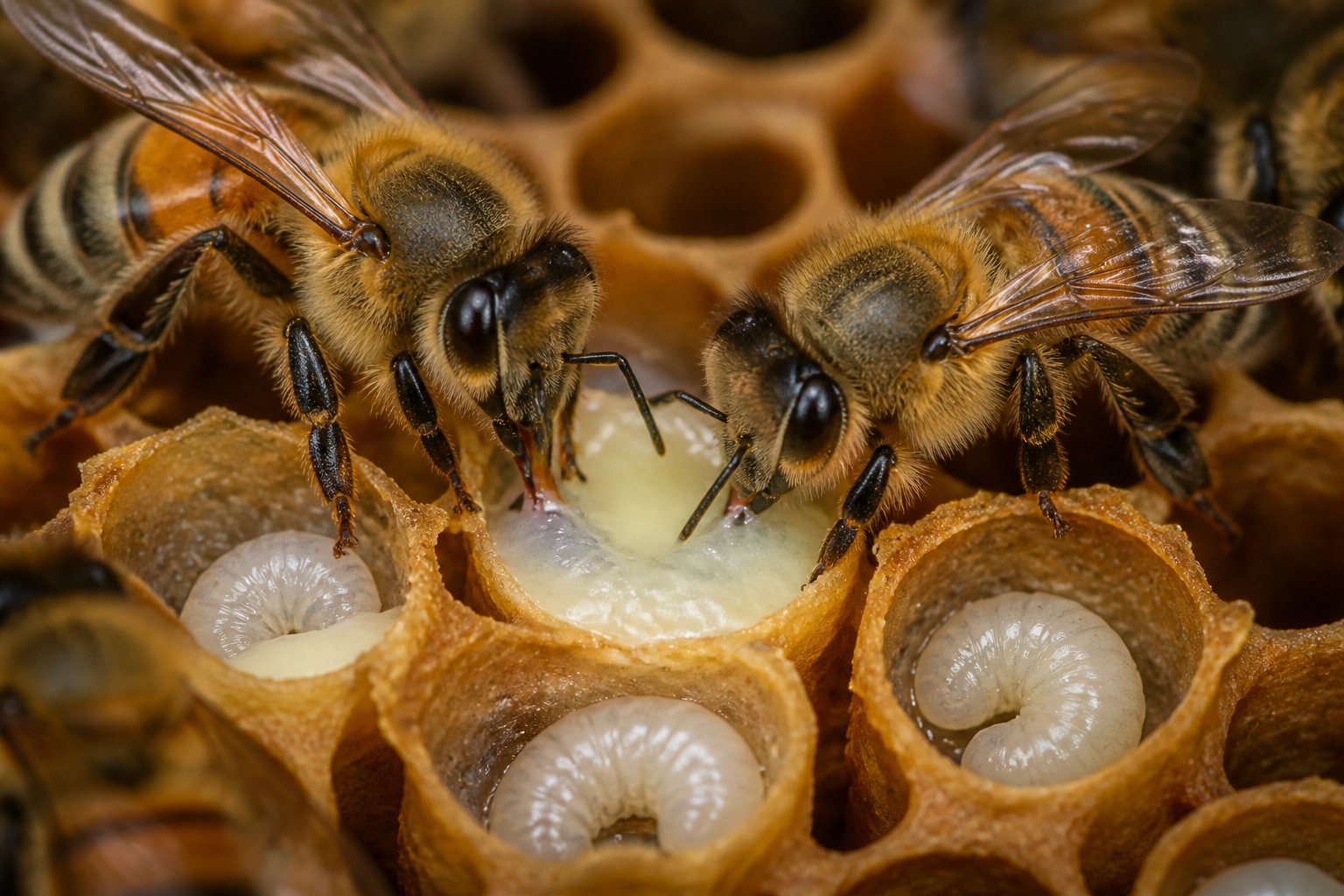
Royal jelly is not just food, it is a developmental signal. The mix of diet, timing, and cell type influences larval development and pushes a larva toward a worker or queen fate.
How Queen Cells And Queen Diet Differ From Worker Diet
Queen cells are larger, vertical, and designed for a larva that will receive royal jelly continuously. A worker diet is different, since worker larvae later move to a less rich food mix and grow into non-reproductive adults.
Bee Bread, Royal Jelly, And Caste Determination
Bee bread is the pollen-and-honey food given after the first larval stage in worker development. That shift is central to caste determination, because the larva’s future depends as much on nutrition as on genetics.
Royalactin, MRJP, And Major Royal Jelly Proteins
Researchers have focused on royalactin, mrjp, major royal jelly protein, major royal jelly proteins, and royal jelly proteins because they appear tied to queen development. The protein mix is one reason royal jelly stands out from ordinary brood food.
Which Bee Species Make Comparable Larval Food

Bee species vary widely in how they feed their young, and not every species makes a royal-jelly-like secretion. Honey bees are the clearest example, while other social bees use different larval diets and feeding systems.
Honey Bees As The Main Source Of Royal Jelly
Honey bees are the main insects associated with royal jelly, especially managed colonies of Apis mellifera. Their nurse bees produce the secretion in a predictable way that beekeepers can observe during brood rearing.
What To Know About Stingless Bees And Trigona
Some stingless bees, including Trigona, make their own larval foods, yet those foods are not the same as honey bee royal jelly. If you keep tropical or subtropical bees, you may notice similar brood care, though the chemistry and hive structure differ.
Why Bumblebees And Vulture Bees Are Different Cases
Bumblebees rear larvae in a different social setup, and vulture bees are even more unusual because their food habits do not resemble honey bee brood feeding. Those differences make “bee milk” a useful nickname, not a universal bee trait.
What Bee Milk Means For Beekeepers And Consumers
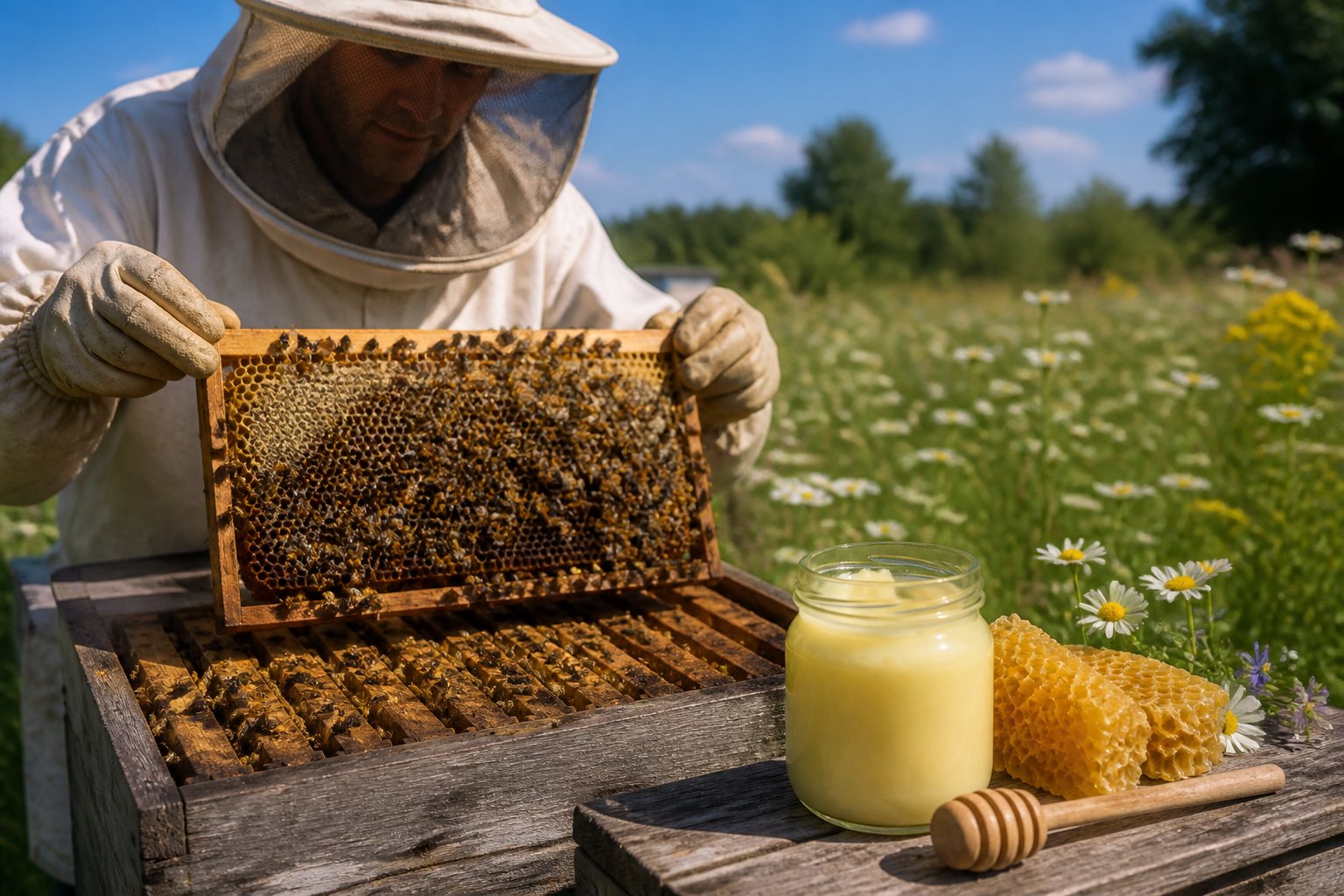
For beekeepers, royal jelly is a sign of strong nurse-bee activity and healthy queen-rearing conditions. For consumers, it is a niche hive product that gets compared with propolis and bee venom, though each one comes from a different part of the colony’s biology.
How Royal Jelly Is Harvested From Queen Rearing
Royal jelly is usually collected during queen-rearing, when larvae are grafted into queen cups and removed before they develop further. That timing matters, since the jelly has to be harvested while it is still fresh and before the cell is capped.
How It Differs From Honey, Propolis, And Bee Venom
Honey comes from nectar, propolis is a resin-based hive sealant, and bee venom is used for defense. Royal jelly is different because it is a glandular food made for larvae and queens, not a stored sweetener or a defensive chemical.
What Science Says About Human Use
Human interest in royal jelly is real, yet the evidence for health benefits is still limited and mixed. A practical approach is to treat it as a specialized food product, not a cure-all, and to pay attention to allergies and product quality before use.


