
When considering adding a Boxer dog to your family, you might wonder about their behavior. Boxer dogs are not inherently aggressive. They are known for being loyal and affectionate companions. While they can exhibit aggressive behavior under certain circumstances, such as feeling threatened, this is not their general temperament.

Boxers are protective by nature. This means they might show aggression if they perceive a threat to you or your home. However, with proper socialization and training, you can ensure they grow into well-mannered and friendly pets. Understanding the nuances of a Boxer’s character can help you appreciate their playful and loving side while managing any potential for aggression.
Understanding Boxer Temperament

Boxers are known for their playful and energetic nature. You will find them to be loyal and affectionate companions that thrive in a family environment. Understanding their temperament helps ensure a rewarding relationship with your Boxer.
The Nature of Boxer Dogs
Boxers are friendly and social dogs. They love being around people and often bond closely with their families. Their playful nature can make them great companions for children.
Boxers are intelligent and eager to please, which makes training enjoyable. Consistent training early on helps shape their behavior. They may sometimes exhibit stubbornness, but positive reinforcement works well with them.
These dogs are also known for their loyalty. They will protect their family and home when needed, making them excellent watchdogs. Your Boxer’s affectionate nature means they want to be included in family activities.
Energy Levels and Exercise Needs
Boxers are energetic dogs that require regular exercise. They thrive on playtime and daily walks to burn off their extra energy. Engaging activities like fetch or agility training keep them happy and healthy.
Daily exercise helps to prevent boredom, which can lead to undesirable behaviors. A well-exercised Boxer is a well-behaved Boxer. So, aim for at least an hour of physical activity each day to meet their needs.
In addition to physical activity, mental stimulation is essential. Puzzle toys and interactive games can keep your Boxer mentally sharp. Providing diverse activities helps to ensure your dog remains happy and fulfilled.
Boxer’s Protective Instinct
Boxers have a natural protective instinct. While they are not aggressive by nature, they may become territorial. They can be cautious around strangers, which makes them good watchdogs.
Their loyalty drives them to protect their families. Proper training and socialization help balance this protective trait. Early exposure to various people and situations encourages your Boxer to feel comfortable in different environments.
Being aware of this instinct helps you manage situations appropriately. This makes your Boxer a loving and safe family member. When raised in a supportive home, they can be gentle and affectionate while still being vigilant when necessary.
Socialization and Training

Socialization and training are crucial for your Boxer to grow into a well-mannered and friendly companion. Proper socialization helps reduce the risk of aggressive behavior, while effective training techniques ensure your dog learns important commands and behaviors.
The Importance of Early Socialization
Starting socialization early is essential for Boxer puppies. They are naturally playful and curious, making them open to new experiences.
Introduce your puppy to different people, pets, and environments. This exposure helps them become confident and less fearful in new situations.
Consider enrolling your Boxer in puppy classes. These classes provide a controlled setting for socialization. They also offer an opportunity for you to learn effective strategies for interacting with your dog.
Remember, a well-socialized Boxer is more likely to be friendly and less prone to aggression.
Training Techniques for Boxers
Using positive reinforcement is one of the best techniques for training Boxers. This means rewarding your dog for good behavior, which encourages them to repeat those actions. Rewards can include treats, praise, or playtime.
Basic commands like “sit,” “stay,” and “come” are vital. Start with short training sessions, aiming for about 5 to 10 minutes each.
Boxers have high energy levels, so regular daily exercise before training can help them focus better.
Keep training fun and engaging. Use a mix of commands and tricks to maintain their interest. Remember to be patient. Boxers are intelligent but can sometimes be stubborn. Consistency is key to effective training.
Addressing Boxer Aggression Through Training
If your Boxer shows signs of aggression, early intervention is crucial. Address aggressive behavior with positive reinforcement methods. Redirect their focus on appropriate behavior and reward them for it.
Regular exercise is important. A tired Boxer is a well-behaved Boxer. So, make sure to provide daily walks, playtime, and mental stimulation through puzzle toys.
If you notice serious aggression issues, consider working with a professional trainer. They can provide tailored strategies specifically for your Boxer’s needs. With the right approach, you can help your Boxer become a well-adjusted and happy member of your family.
Behavioral Signs and Prevention
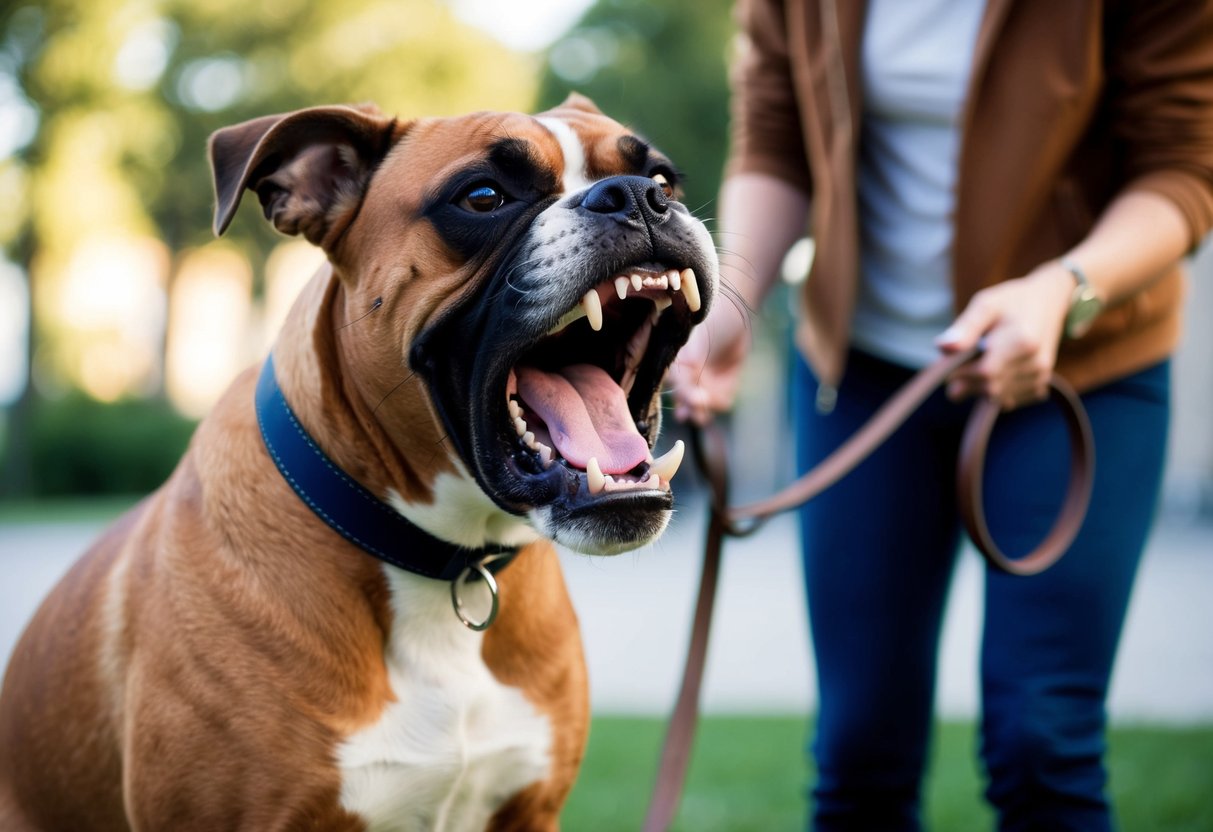
Recognizing the signs of aggression and knowing how to prevent it is essential for any Boxer owner. Boxers can show aggressive tendencies due to various factors, including lack of socialization and poor breeding. Understanding these behaviors will help create a safe and happy environment for both you and your dog.
Identifying Aggression in Boxers
Boxers may display several signs of aggression. Common indicators include:
- Growling: A growl can signal discomfort or warning.
- Barking: Excessive barking can indicate anxiety or territorial behavior.
- Baring Teeth: This is a clear sign of aggression and should never be ignored.
- Stiff Body Language: A tense posture can reflect fear or aggression.
It’s important to monitor situations where these signs occur. Aggressive behavior often emerges from fear, confusion, or stress. If your Boxer shows these signs, take time to assess the situation. Identifying the triggers can help in addressing the behavior effectively.
Proactive Preventive Strategies
Preventing aggression in Boxers starts with early socialization. Expose your dog to different people, pets, and environments at a young age. This helps reduce anxiety and encourages calm behavior.
Another important strategy is consistent training. Establish basic commands like “sit” and “stay.” Positive reinforcement can reinforce good behavior and build trust.
Ensuring your Boxer receives regular exercise is also key. A well-exercised dog is less likely to develop aggressive tendencies.
Creating a secure environment can significantly impact your dog’s feelings of safety. Make sure they have a comfortable space where they feel protected. Use toys and activities to keep your Boxer mentally stimulated.
When to Seek Professional Help
If you notice persistent aggressive behavior, it may be time to seek professional help. Professional trainers or behaviorists can develop a behavior modification plan tailored to your Boxer’s needs.
Signs that you should consult a professional include:
- Continuous aggression towards people or other animals.
- Fear-based aggression that worsens over time.
- Difficulty in managing your dog’s behavior on your own.
Addressing these behaviors promptly can prevent escalation. Professionals can provide you with effective techniques and strategies specific to your dog’s situation. Don’t hesitate to seek help when needed. Your Boxer deserves a loving, safe environment.
Health and Management Factors

Maintaining your Boxer’s health and managing their behavior are key to fostering a happy, well-adjusted dog. Pay attention to their exercise needs and health checks to reduce any aggressive tendencies linked to health issues or lack of stimulation.
The Role of Health in Behavior
Your Boxer’s physical well-being directly affects their behavior. Unaddressed health issues can lead to aggression. Regular veterinary check-ups help catch problems early.
For example, conditions that cause pain can trigger aggression, especially in older Boxers with a shorter lifespan.
If your Boxer has a high prey drive or dominance issues, it may be due to their natural instincts mixed with health discomfort. Be mindful of any changes in behavior and consult your vet. This can help in understanding if a specific health concern is behind any aggression.
Exercise and Mental Stimulation
Daily exercise is crucial for your Boxer. Without enough physical activity, they may become bored or restless, leading to aggressive behavior. Aim for at least 60-90 minutes of exercise each day. Include walks, playtime, and training sessions.
Mental stimulation is just as important. Use puzzle toys or teach new tricks to keep their minds sharp. Engaging activities can help reduce their high energy levels.
Remember, regular exercise not only keeps them healthy but also strengthens your bond, fostering companionship.
Managing Territorial and Dominance Aggression
Boxers can display territorial aggression. This is especially true if they feel their space is threatened.
Training should start early to teach boundaries. Socialization is key; expose your Boxer to different environments, people, and other animals.
When dealing with dominance issues, consistent training is essential. You should establish yourself as a confident leader while being gentle and firm.
Using positive reinforcement will improve behavior and encourage a friendly demeanor. Your male or female Boxer will thrive in a structured, loving environment where they understand their role in your family.


