
Owls definitely use nest boxes, especially when tree cavities or other natural spots disappear. You’ll often see species like screech owls and barn owls moving right in if you set up the box just right.
When you offer a nest box, you give owls a safe, cozy place to raise their chicks. That’s a great way to encourage them to visit your yard.
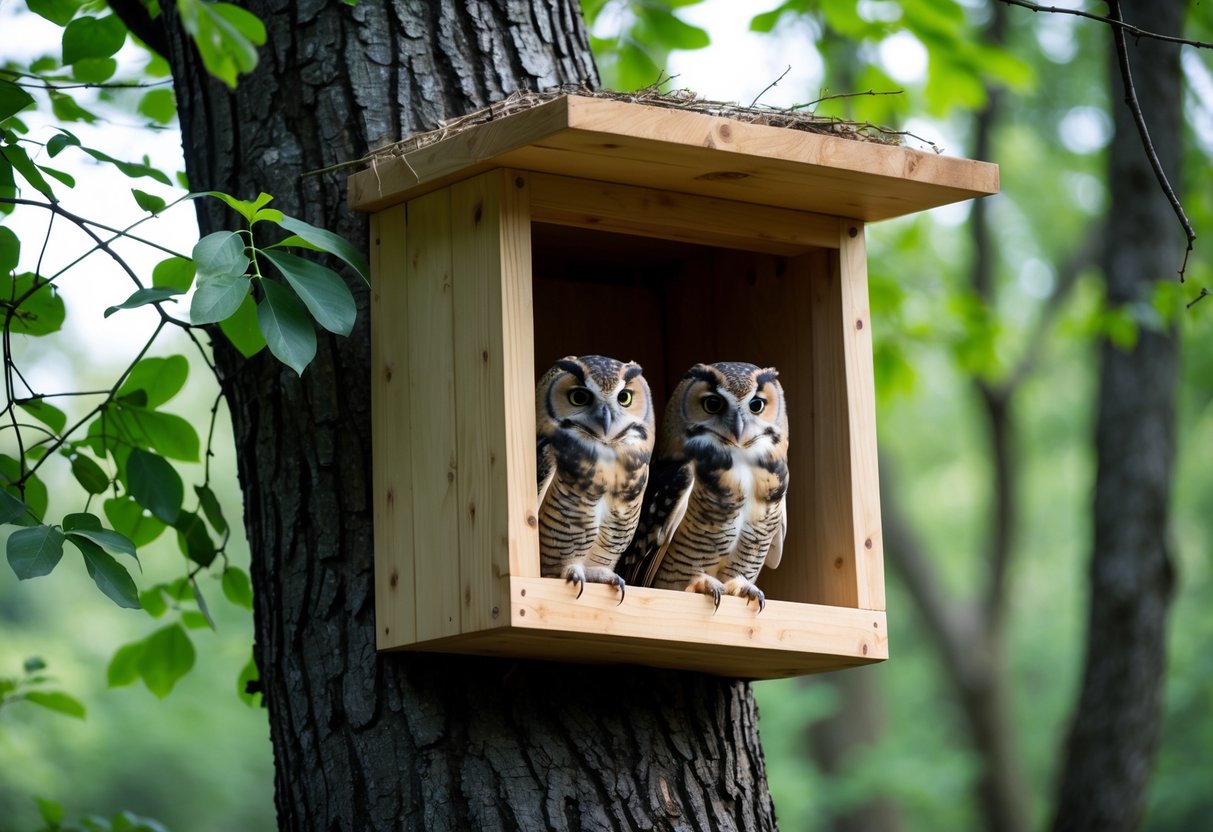
If you’re hoping to attract owls, you’ll want to pick a box that matches the owl’s size and habits. A little screech owl won’t fit in a barn owl box, and vice versa.
Set the box up in the right spot, and you might get lucky—owls could make your backyard their home.
Building or installing a nest box helps owls find shelter, especially where old trees are gone. It’s pretty rewarding to spot these quiet hunters up close, and they’ll help keep rodents in check too.
If you’re curious about which owls use nest boxes near you, or want more details, check out how to attract owls with a nest box.
Will Owls Use a Nest Box?
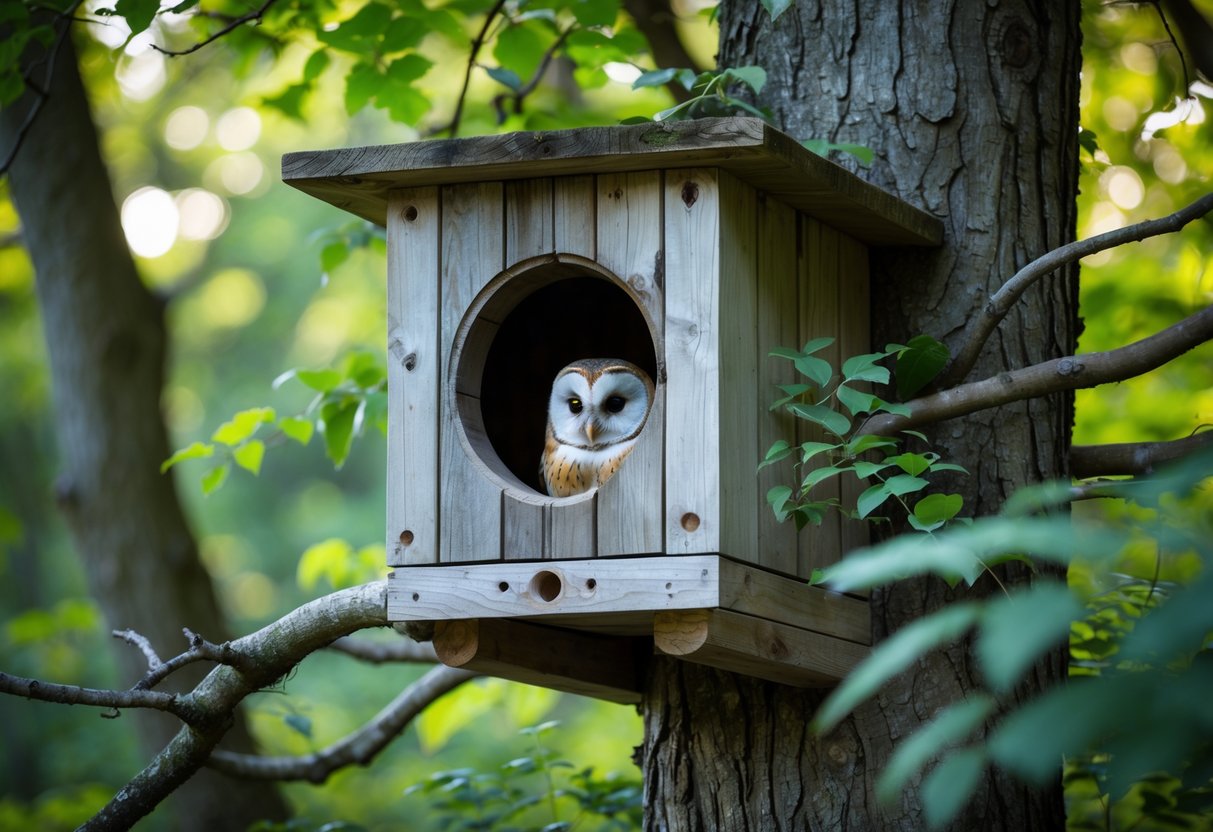
Owls will use nest boxes, but only if the box fits their needs and the spot feels safe. Some species are pickier than others, and each one looks for certain features before moving in.
You might spot a few signs if owls decide to settle in your box.
How Owls Choose Nesting Sites
Owls usually look for sheltered places—think tree hollows or old logs. They want somewhere quiet and hidden, far from predators and loud noises.
The size of the box matters a lot. Screech owls, for example, need an entrance hole at least 3 inches wide. Barn owls need something bigger.
You’ll want to install the box high up, somewhere between 10 and 20 feet off the ground. Facing it away from strong winds or harsh sunlight really helps.
Pick a spot with some branches nearby for cover, but make sure the owl has a clear flight path.
Common Owl Species That Use Nest Boxes
Several kinds of owls will use nest boxes if you set things up right:
-
Screech Owls: They prefer smaller boxes and adapt well to boxes built for kestrels or wood ducks.
-
Barred Owls: They need bigger, roomier boxes.
-
Barn Owls: These guys want large, spacious boxes. Sometimes the size makes them a bit pricey to build.
-
Pygmy Owls: They like small boxes tucked away in forests.
If you want to see owls in your yard, pick a box made for the species you’re most likely to see.
Signs an Owl Has Moved In
You’ll know an owl’s using your box if you notice a few things:
-
Sounds: Listen for hoots or screeches, especially early or late in the day.
-
Pellets: Check for owl pellets (those little bundles of fur and bones) under or near the box.
-
Feathers: You might spot some feathers around the entrance or inside.
-
Visible Nesting Material: Owls don’t build fancy nests, but sometimes they push a bit of debris inside.
Spot any of these? Looks like your box is working!
If you want more tips, check out expert advice on how to install an owl box.
Best Practices for Installing an Owl Nest Box

Installing an owl nest box takes a bit of planning. You’ll need to think about the best location, the right design for your local owls, and what to avoid so owls actually use it.
Ideal Nest Box Placement
Pick a quiet, sheltered spot, away from busy areas. Mount the box 10 to 20 feet up, either on a sturdy tree or a pole.
Try to face the entrance away from strong winds so the box stays dry and protected. Don’t let the hole get blasted by sun all day—owls like cool, shaded spots.
Keep each box at least 100 feet from another. Owls aren’t big on sharing territory.
Before you get started, check your local laws. Some places have specific rules about owl boxes.
Recommended Nest Box Designs
Make sure your nest box matches the owl’s size. Smaller owls like screech owls need small boxes, while barn owls need much more space.
Use smooth wood inside so the birds don’t get hurt. A sloped roof helps rain run off.
Add a few ventilation holes up top for airflow, and drill some drainage holes in the bottom to keep things dry.
If you want detailed plans, Cornell University’s Nest Watch program has some great resources.
Mistakes to Avoid When Setting Up a Nest Box
Try not to put your nest box too close to the ground or in spots where people and pets pass by all the time. If you set it too low, you’re just inviting trouble from predators and curious humans.
If you’re adding more than one box, make sure you don’t crowd them together. Owls really don’t appreciate the extra competition.
Skip the toxic paints and chemicals—those can actually harm the owls you’re hoping to attract.
Watch out for nest boxes that let water pool on the floor or have sharp edges. Those little details can end up hurting the birds.
If the interior is too smooth or the entrance hole is the wrong size, most owls just won’t bother with it.


