
Ever wondered if sticking a fake owl in your garden actually keeps birds away? You’re definitely not alone. Lots of people try out garden owls, hoping those pesky birds will finally leave their plants alone.
Fake owls usually scare birds off for a little while, but most birds catch on pretty quickly and return.
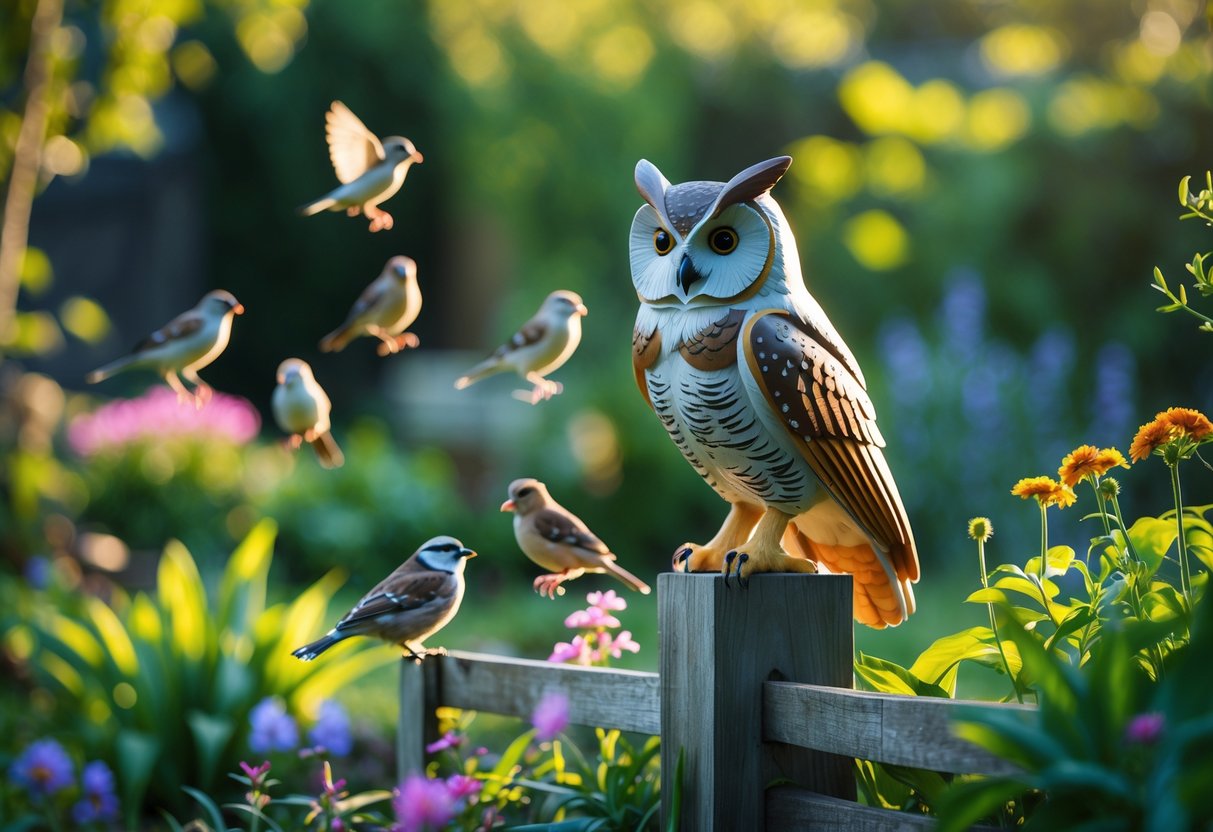
Your garden owl works best if you move it around now and then. When it just sits in the same spot, birds figure out it’s harmless and start ignoring it.
Learning a few tricks for using your garden owl can buy your plants a bit more protection.
Other stuff like shiny ribbons or noise makers can help too. If you’re trying to really keep birds away, you might want to mix and match a few methods.
How Garden Owls Help With Bird Problems

A garden owl can help cut down on the number of birds hanging around your plants. Its shape and coloring look enough like a real predator to make some birds hesitate.
Not every bird reacts the same way, though. The effect usually fades unless you keep moving the owl.
Why Birds Are Afraid of Owls
Birds naturally see owls as predators. Owls hunt lots of smaller birds, so when birds spot an owl—or even a good fake—they just want to stay safe and clear out.
Your fake owl works best if it looks pretty realistic and sits somewhere easy to spot, like up on a post or fence. Birds keep an eye out for danger in open spaces, so a visible owl can seem extra threatening.
But birds aren’t dumb. If the owl never moves or does anything, they’ll realize it’s fake. That’s why moving it around every so often keeps them guessing.
Types of Birds Most Affected
Some birds get spooked by garden owls more than others. Pigeons, sparrows, and blackbirds usually react strongly, since owls hunt them in the wild.
Other species, like bluebirds or certain natives, might not care much. Crows can be weirdly bold—they might even come closer out of curiosity or to challenge the owl.
If you’re dealing with bigger or gutsier birds, a garden owl might help for a bit, but it probably won’t keep every bird away.
Typical Results: What to Expect
When you first set up a scarecrow owl, you’ll probably see fewer birds around. They’ll steer clear at first, thinking a predator’s on watch.
But after a while—maybe days, maybe weeks—they’ll catch on and start coming back. So, the owl works best as part of a bigger bird control plan.
Try moving the owl every few days. Mixing up its spot keeps birds more wary.
A garden owl won’t solve all your bird problems, but it can help protect your plants for a while if you use it right. For longer-lasting results, pair it with other bird deterrents.
You can read more about how well garden owls work in discussions like this one on fake owl bird deterrents.
Making Scarecrow Owls Work for You

If you want your scarecrow owl to actually do its job, you’ll need to think about where you put it and how to keep it convincing. Even little tweaks can make a big difference.
Placing and Positioning for Best Results
Set your scarecrow owl near spots where birds like to gather or nibble—fruit trees, garden beds, rooftops, you name it. Make sure it faces open areas where birds usually fly in.
Keep it away from walls or thick bushes where birds can hide. Mount the owl about 5 to 7 feet up so it stands out.
Try using a perch that can turn or sway a little in the wind. A moving owl looks way more realistic.
Don’t let clutter block the owl from view. If birds can’t see it, they won’t care.
Switch up the owl’s location every few days. That way, birds can’t just get used to it.
Tips on Moving and Maintaining Your Owl
Birds catch on fast if the owl never changes. Move your scarecrow owl every 3 to 5 days to keep them guessing.
Check on your owl now and then for dirt or damage. A clean, bright owl just looks more convincing.
If you can, add some shiny tape or little reflective bits nearby to help it stand out.
Bring the owl inside during storms or heavy wind so it doesn’t get wrecked. Hanging it on a swivel or rotor can add a bit of motion, which makes it even more believable.
Comparing Scarecrow Owls to Other Deterrents
Scarecrow owls take a different approach than noise makers or chemical repellents. They tap into birds’ natural fear of predators, not just irritation or strange smells.
That means your garden and pets usually stay safer. I mean, who really wants to spray weird chemicals around their tomatoes?
A lot of folks like to mix owls with other tricks, like hanging shiny things, using sound gadgets, or tossing up some netting. Honestly, owls can help as part of a bigger plan, but birds catch on pretty fast if you only use the owl.
Chemical sprays run out and need replacing, but you can use a fake owl over and over. Plus, they’re a bit kinder to the environment.
Still, birds get wise to a plastic owl that never moves. If you want to keep it working, you’ll need to move it around now and then.
If you’re curious about how well fake owls really work for birds and rodents, here’s a guide to fake owl effectiveness.


