
Coyotes usually want nothing to do with people and will bolt if they spot you. Most coyotes see humans as a threat, so they’d rather stay hidden than risk getting close. Still, their reactions can shift depending on their environment and how familiar they’ve gotten with humans.
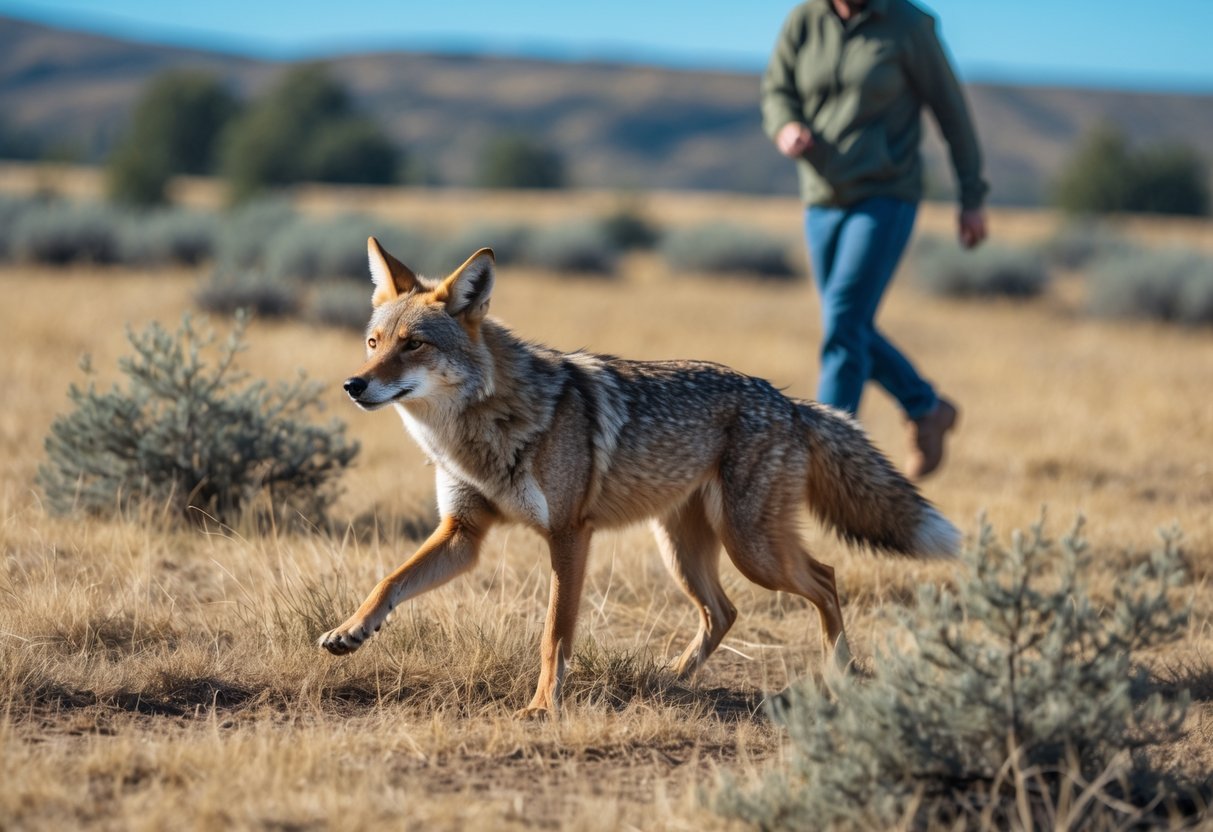
In cities and suburbs, you’ll sometimes notice coyotes that don’t dash off right away. They might get a bit too comfortable around people, especially if they’ve found food near homes or have been fed before.
If you know what makes a coyote stick around or flee, you can handle run-ins a lot better. Understanding their behavior keeps you and the animal safer. For more tips, check out how coyotes react to humans.
Do Coyotes Run From Humans?

Coyotes generally try to avoid people and will usually run if they feel threatened. But how quickly they leave, or whether they keep their distance, depends on where they live and how used to humans they’ve become.
Typical Flight Response in Coyotes
Most coyotes spot a person and dash off right away. They want to stay safe, so they keep their distance.
If you surprise a coyote, it’ll almost always run off fast to avoid any trouble. Coyotes use their sharp eyes and ears to decide when it’s time to leave.
They’re most active at night and usually steer clear of people during the day. This habit helps them avoid run-ins with humans.
Differences Between Urban and Rural Coyotes
Urban coyotes don’t always act like their country cousins. City coyotes might not run off immediately because they’re used to people and constant noise.
You could see them wandering around neighborhoods or parks during the day. Rural coyotes, on the other hand, usually keep far away and take off quickly if they spot you.
They mostly hunt wild prey and have little reason to hang around humans. Urban coyotes get bolder sometimes, especially when easy food is nearby.
| Location | Coyote Behavior |
|---|---|
| Urban | Less fearful, may not run immediately |
| Rural | More cautious, runs quickly |
Role of Habituation in Coyote Encounters
When a coyote doesn’t run from people, it might be habituated. This happens when it gets used to humans, often because of food left outside or people feeding them.
Habituated coyotes can come closer or even follow someone, hoping for a handout. Feeding them or leaving trash out just makes this worse, and they start losing their fear.
To keep coyotes wary, don’t feed them and lock up your garbage. Coyotes that get too bold can cause problems, so it’s better for everyone if they stay cautious. You can learn more about bold coyote behavior and what to do about it here.
Factors That Affect Coyote Reactions to People
Lots of things shape how coyotes act around people: food sources, past experiences, and even how you behave. Their comfort level decides if they’ll run or stick around.
How Human Actions Influence Coyote Boldness
If you or your neighbors leave food outside, coyotes catch on and start coming closer. Stuff like pet food, garbage, or even fallen fruit draws them in.
When they find easy food, they start losing their natural fear of people. Feeding them, even by accident, makes them bolder.
They might hang around your yard or even follow you. To cut down on this, feed pets indoors and make sure your trash cans are sealed tight.
Avoid leaving food scraps out. This helps keep coyotes skittish and more likely to run if they see you.
Coyote Attacks: Frequency and Triggers
Coyote attacks on people almost never happen, but they’re not impossible. Most attacks happen after coyotes start connecting people with food.
During breeding season, mothers can get aggressive to protect their pups. They might bark, growl, or even charge if you get too close to a den.
Small pets are at a bigger risk. Coyotes sometimes see cats or little dogs as prey.
Even large dogs can get targeted if a coyote feels trapped or threatened. Knowing these triggers helps you steer clear of risky situations.
Keeping Yourself and Pets Safe Around Coyotes
To stay safe, always keep pets on a leash when you’re near coyote territory. Don’t let small animals wander outside alone, especially at dawn or dusk when coyotes are out hunting.
Feed pets indoors so you don’t attract unwanted visitors. Fences can help, but coyotes are great jumpers, so they need to be tall and sturdy.
If you see a coyote, try to stay calm and make yourself look bigger. Don’t run or turn your back. This shows you’re not prey and helps prevent any trouble.
Hazing Coyotes: Deterrence Methods
Hazing basically means scaring coyotes off so they stay wary of people. You might shout, wave your arms around, clap, or even blow a whistle—whatever makes you seem big and loud.
Try spraying them with a hose or tossing small objects near them (never at them, of course). The idea is to convince coyotes that humans aren’t worth messing with.
Whenever coyotes come close, haze them every single time so they don’t start feeling comfortable around you. Skip the dangerous stuff like snares—those can hurt animals and, honestly, they’re usually illegal.
If you stick with it, coyotes will learn to keep away from people and property.


