
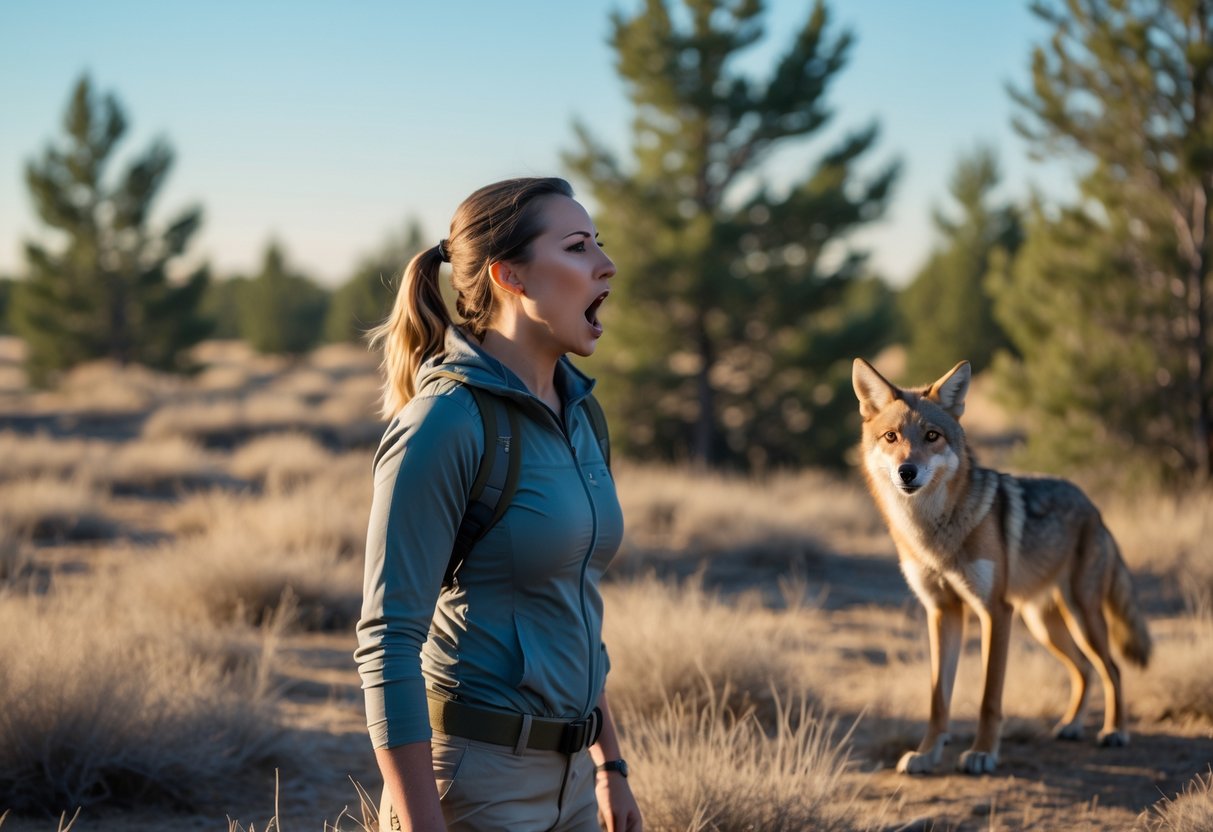
So, you spot a coyote. Should you scream, or is that just going to make things worse? Honestly, yelling or making loud noises usually works to scare the coyote away. Screaming or shouting tells the coyote you’re not prey and encourages it to leave you alone.
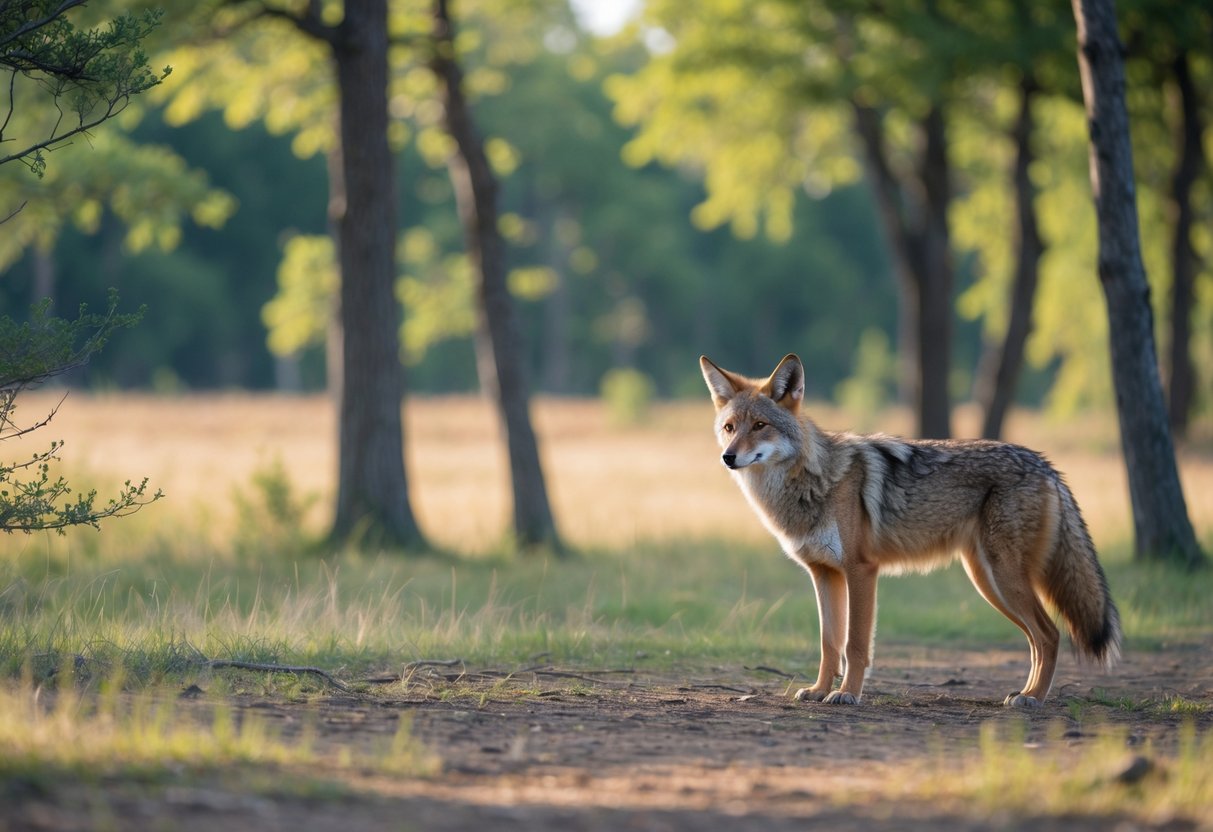
Coyotes tend to avoid people, but sometimes one will get a little too close for comfort. If that happens, make yourself look big and loud.
Use your voice, wave your arms, or stomp your feet. These actions can really help keep a coyote at a safe distance.
If you know how to react calmly and confidently, you’ll feel a lot more prepared when you run into one of these wild animals.
Let’s talk about what to do if you meet a coyote—and how to protect your pets too.
What to Do If You See a Coyote

If you spot a coyote, focus on keeping yourself safe while getting it to leave. Take clear actions to show you’re not prey.
Stay calm and confident. That helps you handle the situation better and makes the coyote less comfortable hanging around.
Should You Scream or Make Noise?
Yes, making noise matters. Yell or shout loudly to scare the coyote.
Clap your hands, stomp your feet, or use a whistle if you’ve got one handy. The goal is to look and sound big and threatening so the coyote feels unsafe.
If the coyote sticks around after your first shout, wave your arms overhead. Toss a small stick near it (not at it!) to encourage it to move.
Never turn your back or run. Coyotes might chase you if you run, since that signals prey behavior.
Safe Distancing and Body Language
Keep at least 20 to 30 feet between you and the coyote if you can. Stand tall and face the animal.
Raise your arms or open your jacket to look bigger. Don’t crouch or bend down—coyotes might see that as weakness.
Never approach a coyote, especially if it doesn’t seem afraid. Maintain eye contact, but don’t stare aggressively.
If the coyote gets too close or acts bold, slowly back away.
Best Practices for Staying Calm
Even if you’re scared, staying calm is key. Take deep breaths and move steadily.
Panic can make your reactions jerky and confuse the coyote. Talk loudly and firmly to reinforce that you’re not scared.
Avoid sudden moves or turning your back. Keeping your cool helps you think about your next steps, like moving somewhere safer or calling for help.
When to Seek Help
If a coyote acts bold or aggressive—like following you, refusing to leave when you make noise, or stalking pets—call local animal control or wildlife officials.
If you or someone else gets bitten or scratched, get medical attention right away. Report the incident so authorities can check the coyote for diseases like rabies.
Keep pets indoors or closely supervised at night to lower the risk. Let professionals handle any coyote that acts dangerous or loses its fear of people.
For more details, check out what to do when you encounter a coyote.
Key Tips for Preventing Coyote Encounters
If you want to avoid coyotes near your home, start by managing what attracts them. Take steps to keep you and your pets safe.
You’ll also want to avoid common mistakes that might invite coyotes closer. There are some easy tools and habits that can help protect your space.
Protecting Pets and Property
Coyotes get most active at dawn and dusk. Keep pets indoors during these times if you can.
When outside, supervise small pets and keep dogs on a short leash. Secure your yard with fences at least six feet tall.
Check for gaps or weak spots where coyotes might squeeze through or dig under. Remove things that attract coyotes, like pet food left outside, bird feeders with spilled seeds, and garbage bins without tight lids.
Trim bushes and clear dense vegetation near your home. That way, coyotes have fewer places to hide.
Common Mistakes to Avoid
Never feed coyotes. Giving them food makes them lose their natural fear of people and act bolder.
Don’t run away if you see a coyote. Running can trigger a chase instinct.
Stand your ground calmly and face the animal. Don’t leave small pets or young children unsupervised outside, since coyotes might see them as prey.
Don’t let pets roam freely, especially without a fence. Avoid leaving food scraps or fallen fruit in your yard—any accessible food can bring coyotes back.
Deterrents and Tools for Safety
Try putting up motion-activated lights around your property. Coyotes hate sudden bright lights, so this usually keeps them from hanging around.
If you spot a coyote nearby, make some noise. Bang pots, blow a whistle, or just shout—anything loud and firm will remind them they’re not welcome.
You might want to try commercial coyote repellents or even simple sprays made from water and vinegar. Remember to reapply them after it rains, otherwise, they don’t work as well.
When you walk your pets, bring along deterrents like air horns or spray bottles. That way, if a coyote comes too close, you can react fast and scare it off.


