
Ever wondered if coyotes eat mice? Well, the answer’s pretty straightforward: yes, coyotes eat mice, and they actually depend on them quite a bit. These clever creatures know how to hunt, and they’ll go after small mammals like mice whenever the opportunity pops up.
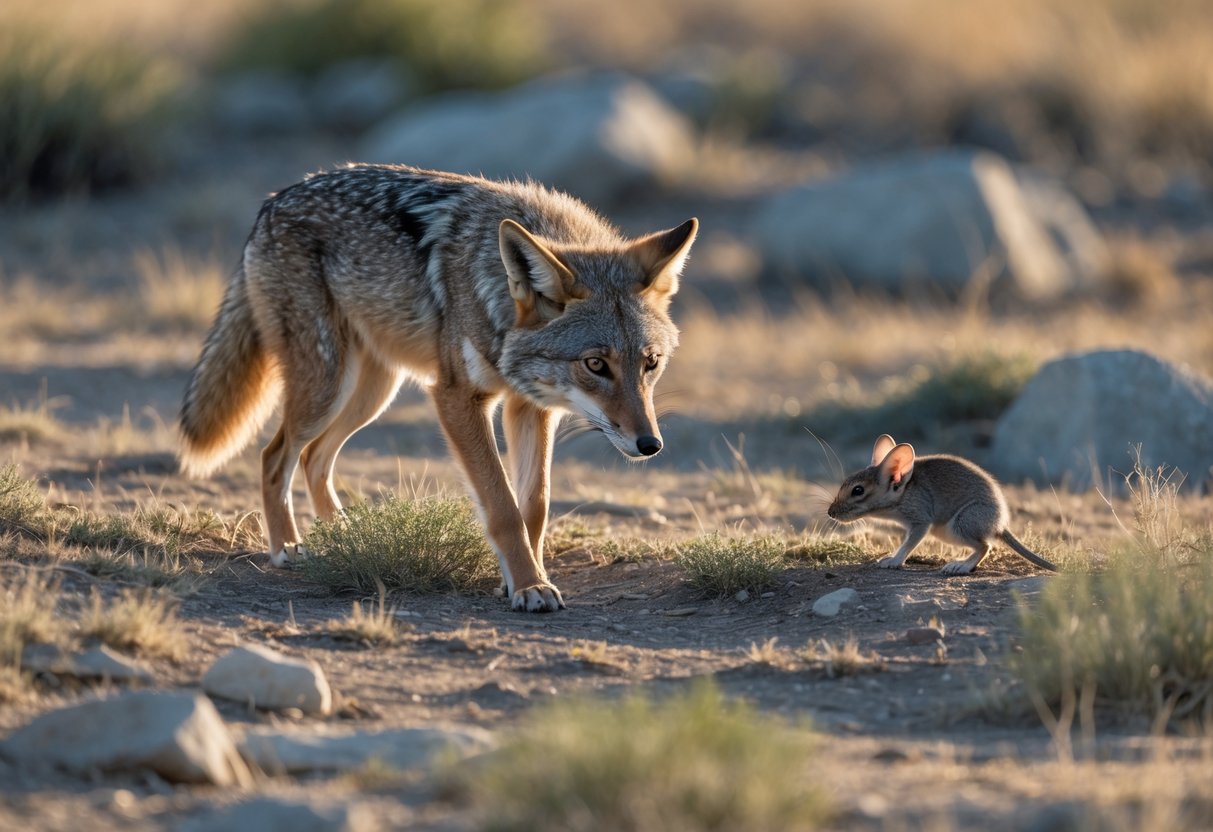
Coyotes can eat almost anything, which is probably why you’ll find them everywhere—from forests to city streets. Mice are easy pickings and stick around all year, making them a go-to snack when other prey gets scarce.
If you know that coyotes hunt mice, you start to see how they help keep small animal numbers in check. It’s kind of fascinating how they switch up their diet depending on what’s around. Want to know how they pull it off? Let’s dig in.
Coyotes Eating Mice: How, Why, and When

Coyotes take whatever food they can get, and mice are an easy score when pickings are slim. They use sharp senses and a lot of patience to hunt mice, especially when the seasons change and food runs low.
Why Mice Are Important in a Coyote’s Diet
Mice make up a big chunk of a coyote’s meals, especially when bigger animals are harder to find. Since mice are everywhere and don’t take much effort to catch, coyotes can rely on them for a steady meal.
Young coyote pups get their first taste of solid food from mice after they stop nursing. Coyotes help keep mouse numbers down, which means fewer problems like ruined crops or diseases that spread when mice take over.
How Coyotes Hunt and Catch Mice
Coyotes use sharp ears and a strong nose to track down mice, even when they’re hiding underground. Sometimes they sneak up slowly, or they’ll just wait by a burrow until a mouse makes a move.
When they spot movement, coyotes leap in with a quick burst of speed and snap their jaws shut. Their claws help them dig out mice from hiding. Since mice are small, a coyote might catch several in one night.
Coyotes really know how to adapt, switching up their hunting style depending on what’s around.
Seasonal Patterns in Mouse Consumption
Coyotes eat more mice in winter and early spring. That’s when other food like rabbits or fruit gets hard to find. Because mice stay active all year, they’re a reliable meal during cold months.
When it warms up, coyotes add more plants, insects, and bigger animals to their menu. But if food gets scarce, they go back to hunting mice and other rodents. Honestly, it’s impressive how coyotes manage to make the most out of whatever’s easiest to catch.
For more info on coyotes and their diet, check out would a coyote eat a mouse.
What Else Do Coyotes Eat Beyond Mice?

Coyotes don’t just stick to mice. Their meals include all sorts of things—other small mammals, fruit, veggies, and sometimes leftovers from animals that are already dead.
This variety lets them survive just about anywhere, from deep woods to city neighborhoods.
Other Common Mammal Prey
Besides mice, coyotes go after rabbits, squirrels, and ground squirrels. These animals are easier to catch and give them a good protein boost.
Coyotes also eat birds, snakes, and lizards. In some places, they might even snag a young deer or elk, but that’s not super common.
They sometimes compete with foxes and other canids for food. If they need to, coyotes will team up in pairs or small groups to bring down something bigger.
Fruits, Vegetables, and Non-Meat Foods
Coyotes aren’t picky—they’ll eat fruit like blackberries and blueberries when they’re in season. You might spot them munching on grass, nuts, or even carrots.
Eating plants gives them extra energy and nutrients, which helps them get by when meat is tough to find. Sometimes, you’ll catch them raiding gardens or eating fruit that’s fallen from trees.
Coyotes are nothing if not resourceful.
Scavenging and Urban Foraging
Coyotes get pretty creative when it comes to finding food in cities. They’ll grab pet food that people leave outside, and sometimes they dig through garbage looking for scraps.
When winter hits and hunting gets tough, they scavenge dead animals—carrion, if you want the technical term.
In urban areas, coyotes might live close to raccoons or other scavengers. They just eat whatever’s easiest to find, whether that’s leftover meat from foxes or something another animal dropped.
Honestly, it’s impressive how well they adapt when wild prey isn’t around.


