
Coyotes can freak people out, especially if you’re hiking or letting your pets roam outside. Attacks don’t happen often, but you still want to know how to keep your family safe.
Honestly, the best defense against a coyote is to stay calm, make yourself look big and noisy, and never run away.
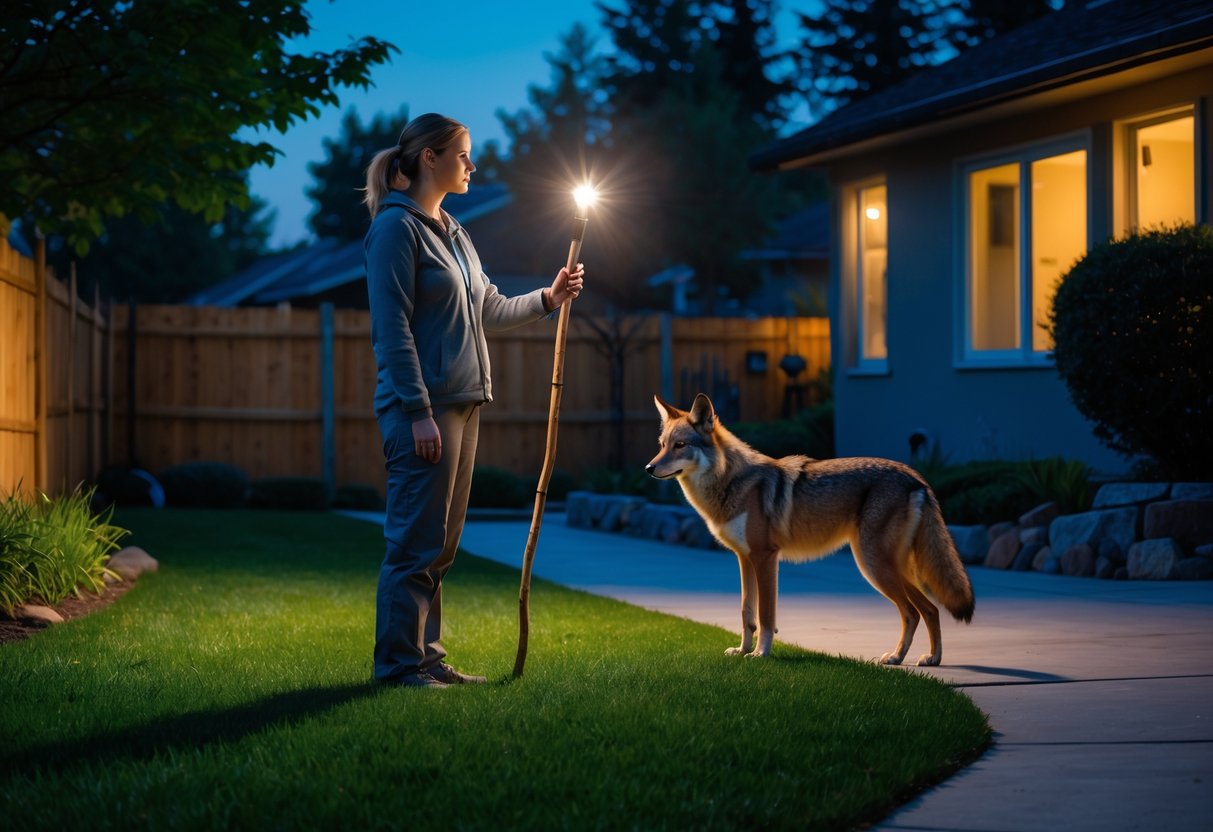
Try using noise, wave your arms, and carry stuff you can use to scare the coyote off. If it gets close, protect your face and neck, and be ready to defend yourself.
These steps might not feel complicated, but they really can keep you safer if you cross paths with a coyote in your yard or on a trail.
Immediate Actions During a Coyote Encounter

When you spot a coyote, how you react matters. Staying calm and confident tells the animal you’re not easy prey.
You want to protect yourself, but there’s no need to go overboard and make things worse.
Stay Calm and Assess the Situation
First, take a breath and try not to panic. Coyotes pick up on sudden movements, and that can make them more interested.
Watch the coyote’s body language. If it just looks curious, you might have a moment to think.
Don’t turn your back or run. Running just makes most wild animals want to chase you.
Keep facing the coyote and slowly start making yourself look bigger.
Make Yourself Look Larger and More Threatening
Stand up straight and stretch your arms high. If you’ve got a jacket, open it wide to bulk up your silhouette.
Hold up your backpack if you’re carrying one. Anything that makes you look tougher helps.
If you’re with someone, stand close together. Coyotes don’t love facing big groups.
Use confident, steady movements. Coyotes usually avoid things that seem like a challenge.
Use Loud Noises and Objects to Deter Coyotes
As soon as you can, make a lot of noise. Yell in a strong voice, blow a whistle, or bang sticks together.
If you have a walking stick, wave it around. You can throw small objects near (not at) the coyote to make it back off.
The idea is to make the coyote uncomfortable enough to leave, not to get close and risk a bite.
Physical Defense and Last Resort Techniques
If the coyote actually attacks, fight back with whatever you’ve got. Aim for its face, nose, or eyes with sticks or anything you can grab.
Try to stay on your feet. Cover your head and neck as best you can.
If you’re forced to fight, make the coyote want to run away fast.
But honestly, fighting should be your last option. Using your voice, size, and deterrents first usually works better.
For more details on handling an attack, check out this guide on coyote attacks.
Effective Prevention and Long-Term Defense Strategies

If you want coyotes to stay away, you’ve got to make your place less appealing. That means cutting off food, shelter, and easy ways in.
Smart fences, tidy yards, and good lighting go a long way.
Securing Food Sources and Garbage
Food is the big draw for coyotes. Keep garbage cans tightly closed so coyotes can’t get in.
Bring pet food inside, especially at night. It’s just not worth the risk.
If you feed birds, pick feeders that don’t spill much. Clean up fallen fruit from trees as soon as you can.
Don’t leave garbage outside for ages. Heavy-duty lockable bins help too.
The less food around, the less likely coyotes will bother you.
Yard Maintenance and Reducing Hiding Spots
Coyotes love hiding places. Keep your yard open and easy to see across.
Cut tall grass, clear out thick bushes, and get rid of wood piles or junk where coyotes might nap.
A tidy yard also means fewer rodents or rabbits for coyotes to hunt. Less prey means fewer visits.
If you’ve got dense shrubs, trim the lower branches. That way, you or animal control can spot coyotes sooner.
Fencing Solutions and Barriers
A solid fence can really help. Coyotes jump, so the fence should be at least 6 feet tall.
Adding an angled top that leans outward makes it harder for them to climb over.
Bury the bottom of the fence about a foot underground to stop digging. Wire mesh with small holes keeps smaller critters out too.
Want even more protection? Motion-activated sprinklers along the fence can scare off coyotes and teach them to steer clear.
Lighting and Motion Detector Devices
Coyotes really don’t like bright, sudden lights. If you put up motion detector lights around your yard, you’ll probably scare them off before they get too close.
The sudden flash can catch them off guard, and most of the time, they’ll just turn around and leave.
Try putting these lights near spots like pet doors, garbage bins, or along your fence. If you use several lights in different places, you’ll cover more ground and make it harder for coyotes to sneak in.
You might also want to check out devices that use both sound and light. Animal control teams often rely on these to keep coyotes away without hurting them.
When you combine lights and noise, your yard just doesn’t seem worth the trouble to a coyote.


