
So, do dogs and coyotes get along? Honestly, it’s complicated. Coyotes act on wild instincts and usually see dogs as competition or even prey. Sometimes, you’ll see a coyote act playful toward a dog, but these moments can turn risky fast.
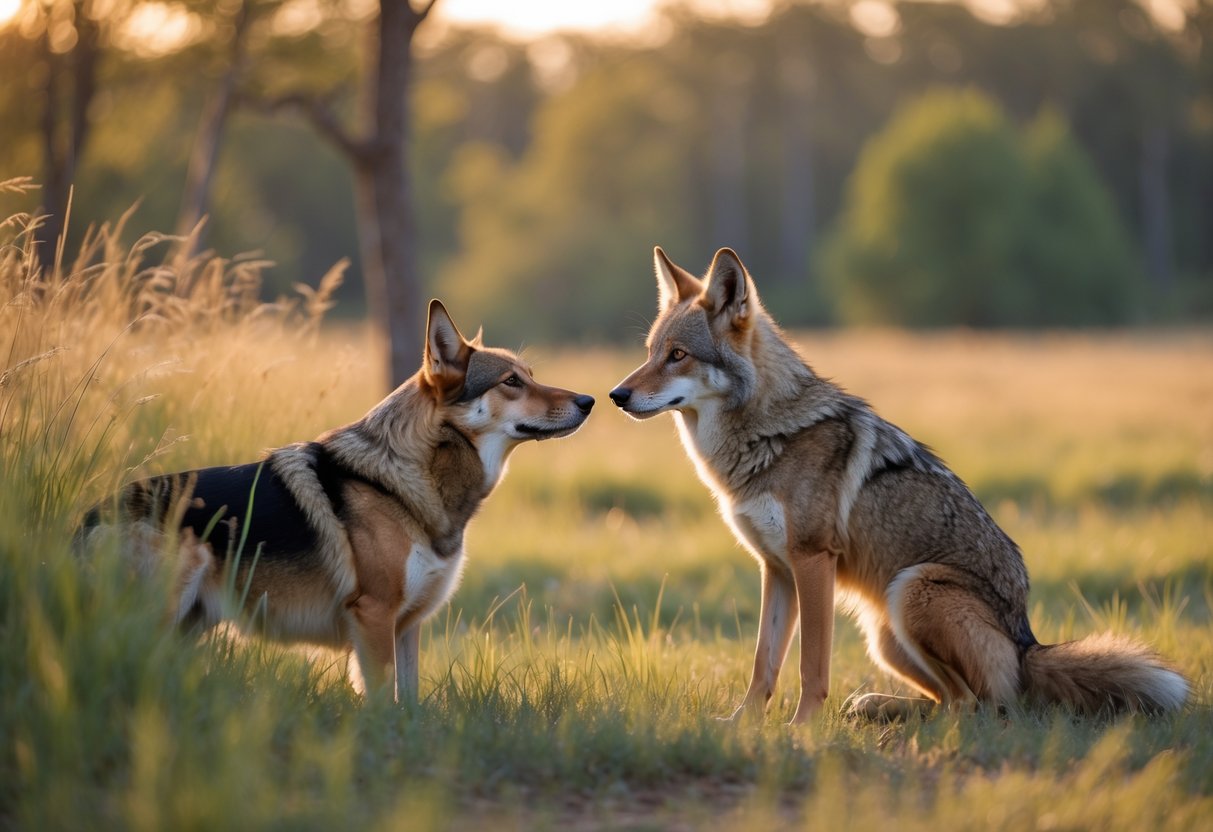
You might spot a coyote near your neighborhood and wonder if your dog could actually be friends with one. But coyotes aren’t pets—they prefer to keep their distance.
Knowing how coyotes behave around dogs helps you keep your pup safe and avoid unwanted drama.
Understanding what happens when dogs meet coyotes can give you a bit more confidence outdoors. Here’s what usually goes down during these encounters and what you can do to keep your dog out of trouble in coyote territory.
How Dogs and Coyotes Interact

When dogs and coyotes cross paths, things can go from cautious standoffs to play or even conflict. Their reactions depend on their instincts, how they see each other, and where they meet.
Natural Behavior Between Dogs and Coyotes
Coyotes rely on sharp instincts. Most of the time, they see domestic dogs as rivals or threats.
Small dogs, especially, look like prey to a coyote. Bigger dogs seem more like competitors.
Coyotes usually avoid people but sometimes get curious about dogs nearby. When a coyote comes close, it checks out your dog’s body language first.
Playful moments are rare, mostly with younger animals, but they do happen. For the most part, coyotes stick to warning signals like growling or bluff charges instead of fighting.
Both dogs and coyotes use tail-wagging, barking, or growling to show what they’re feeling. You might pick up on excitement or tension in these signals if you see an encounter.
Knowing these cues helps you step in before things get out of hand.
Reasons for Aggression or Playful Behavior
Coyotes get aggressive if they feel their territory, food, pups, or safety are threatened. They’re pretty protective parents.
If your dog wanders too close to a den, a coyote might try to scare it off. That’s just what they do.
Playful behavior is pretty rare but can happen when young coyotes or dogs are curious. Sometimes they chase or mimic each other with no harm done.
Still, things can turn risky fast if you’re not paying attention, since wild animals can get defensive or scared in a flash.
If your dog is off-leash at dawn or dusk, coyotes may see it as easy prey. They’re more likely to act aggressively when your pet is alone.
Sticking close and keeping your dog leashed lowers the risk.
Influence of Environment on Encounters
Coyotes show up more in green spaces, woods, or suburbs that border wild areas. Where humans and wild places mix, these encounters happen more.
If you live near a coyote den or food source, you might notice coyotes trying to distract or push your dog away. They’ll use bluff charges or hunch their backs to look scary, hoping to avoid a fight.
Night and early morning are prime time for coyotes, so try not to walk your dog alone then. Motion-sensor lights or solid fences can help keep them out of your yard.
Things like neighborhood size, thick bushes, and whether people feed wildlife all affect how often dogs and coyotes meet. Paying attention to your local habits helps you keep your pets safer.
Want more details? Check out the dynamics between coyotes and dogs and tips for protecting your pets.
Risks, Hybrids, and Related Canids

Coyotes and dogs don’t usually make good friends. It’s important to know about the risks of coyote attacks, the chance of hybrid animals, and how closely they’re related in the Canidae family.
Potential for Coyote Attacks on Dogs
Coyotes can be dangerous for your dog, especially if your pet is small or left alone. They might see dogs as prey or as competition.
Most coyote attacks happen when food is scarce, during breeding season, or if a coyote is protecting its space.
Don’t let your dog roam free in areas with lots of coyotes. Keep your pet on a leash, especially at dawn or dusk when coyotes are out and about.
If you spot a coyote, make noise or wave your arms to scare it off. It’s a simple move, but it works to protect your dog.
Hybrid Animals: Coydogs and Dogote
Coyotes and dogs can breed, but it doesn’t happen often. Their mating seasons and social habits don’t really line up.
When they do mate, the pups are called “coydogs” if the dad is a coyote and the mom is a dog. If the mom is a coyote and the dad is a dog, people call the hybrid a “dogote.”
These hybrids pick up traits from both parents. You never really know what you’ll get—sometimes they’re shy, territorial, or even aggressive.
They’re not easy pets and need someone who really understands their wild side.
If you’re curious about how coyotes and dogs can mix, you can read more about coyote-dog breeding.
Relationship Within the Canidae Family
Domestic dogs and coyotes both belong to the Canidae family. Wolves, foxes, and jackals also fall under this group.
They share some physical traits—think long muzzles, bushy tails, and those upright ears. Still, when you look at how they act, the differences really stand out.
Dogs stick close to people and thrive on social bonds. Coyotes, on the other hand, live wild and handle change pretty well.
This family link means they can interbreed. But honestly, their lifestyles just don’t line up, so it’s rare unless humans get involved.
If you’re curious, you can dig deeper into their connection within the Canidae family.


