
If you have a small dog, you’ve probably wondered if coyotes would see them as food. Yep, coyotes can and sometimes do eat small dogs, especially if food is hard to find or if your pet’s left outside alone.
Coyotes hunt wild animals like rabbits and rodents, so honestly, small dogs are just the right size for them.
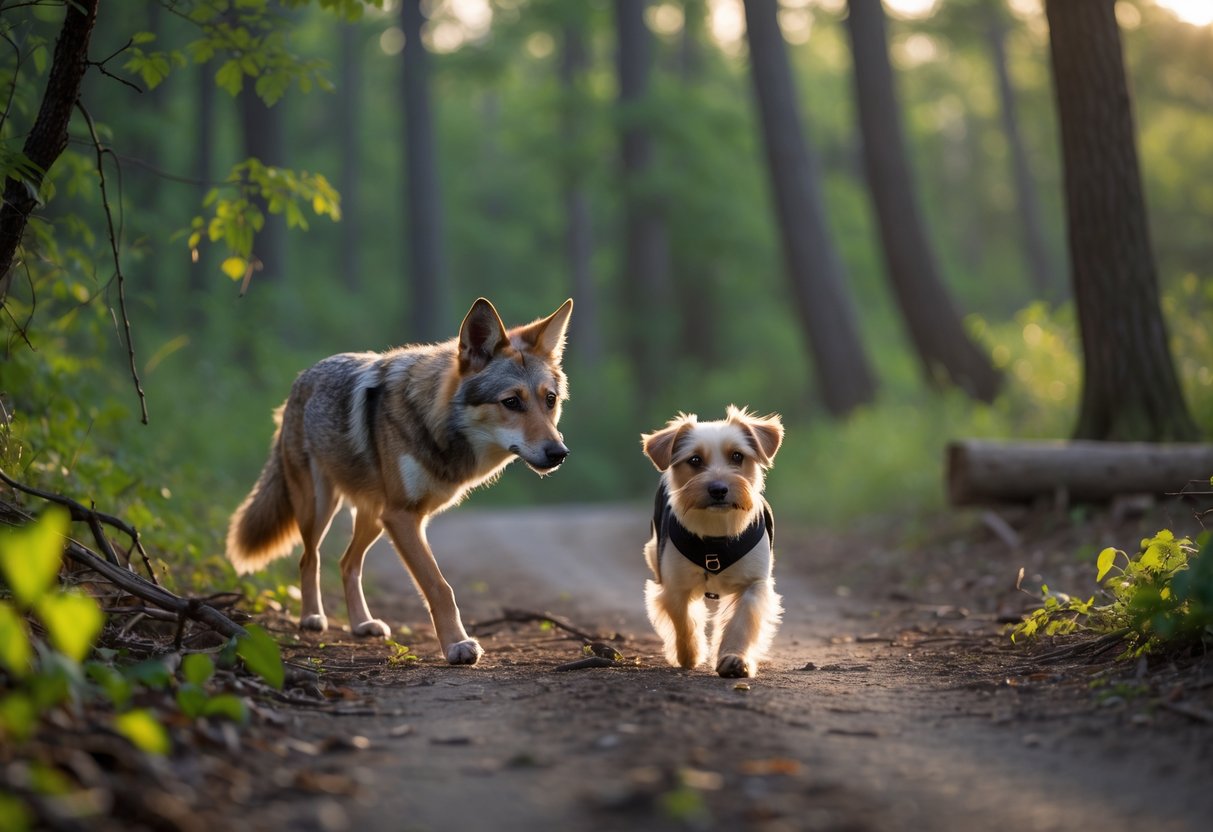
Most of the time, coyotes avoid people. But when their usual food runs out or cities push into their territory, they get bolder.
It’s worth knowing when and why coyotes might go after your little dog. That way, you can actually do something about it.
If you understand how coyotes act and what makes them a risk, you’ll feel more relaxed when you’re outside with your dog.
Staying informed gives you a real shot at keeping your pet safe. For more details, check out how to protect your dog from coyotes.
Understanding Coyote Threats to Small Dogs
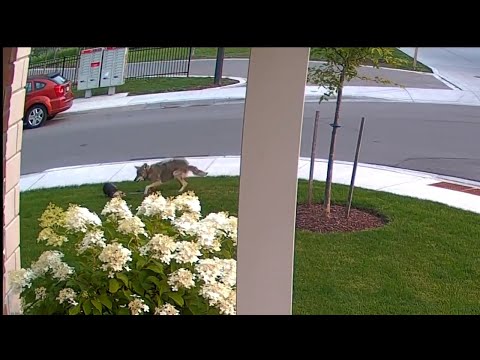
Coyotes size up small dogs differently depending on size, behavior, and what’s going on around them.
They usually steer clear of big dogs, but smaller ones? If a coyote sees an easy chance, it might take it.
Your pet’s safety really depends on how well you know these risks.
Why Coyotes Target Small Dogs
Coyotes often see small dogs as prey. Their size is a lot like the animals coyotes usually hunt, like rabbits or squirrels.
If your small dog is outside alone, especially at dawn or dusk, it’s way more vulnerable. Coyotes are always looking for easy meals, so if food is scarce or a small dog is nearby, they’ll take the opportunity.
Dogs under 50 pounds face the most danger. Coyotes almost never go after large dogs unless they feel threatened.
If your small dog moves quietly or darts around, that can also catch a coyote’s attention. Those actions look like natural prey to them.
Coyote Attacks on Pets: What the Data Shows
Most attacks happen to small breeds that get left outside without supervision.
Neighborhoods close to wild areas see the most incidents, since coyotes roam around there a lot. Smaller dogs like Chihuahuas and Dachshunds are at higher risk than big breeds like Rottweilers or Great Danes.
Attacks spike during certain times of year, especially when coyotes are raising pups and act more aggressive. If a big dog is alone or looks weak, it could also be at risk.
The way you watch over your dog and where you live both matter a lot in keeping your pet safe.
Coyote Behavior During Encounters
Coyotes usually avoid people and big, confident dogs. If they feel threatened, they run off.
During a run-in, a coyote might circle or stare if it feels cornered or is protecting its young. If your small dog is alone, the coyote may see it as easy prey.
Coyotes hunt mostly at dawn, dusk, and nighttime, when fewer people are around. They rely on stealth and quick attacks.
Making loud noises or acting confident can scare them away. It’s smart to keep your dog close and stay alert during these hours.
Risk Factors: Size, Breed, and Environment
Your dog’s size is a big deal here. Small dogs are easier for coyotes to catch, so they’re at more risk.
Certain breeds that act skittish or move quickly might attract coyotes even more.
Where you live matters too. If you’re near parks, wild spaces, or heavy brush, coyotes are more likely to show up.
Leaving pet food outside, having open trash cans, or letting pets wander alone can all draw coyotes in.
Secure fencing and keeping an eye on your dog during walks go a long way.
Coyote breeding season is another time to be extra careful, since coyotes get more aggressive about their territory.
How you act really can protect your small dog.
For more info on coyote attacks and keeping dogs safe, check out coyote threats to small dogs.
Protecting Your Dog From Coyotes
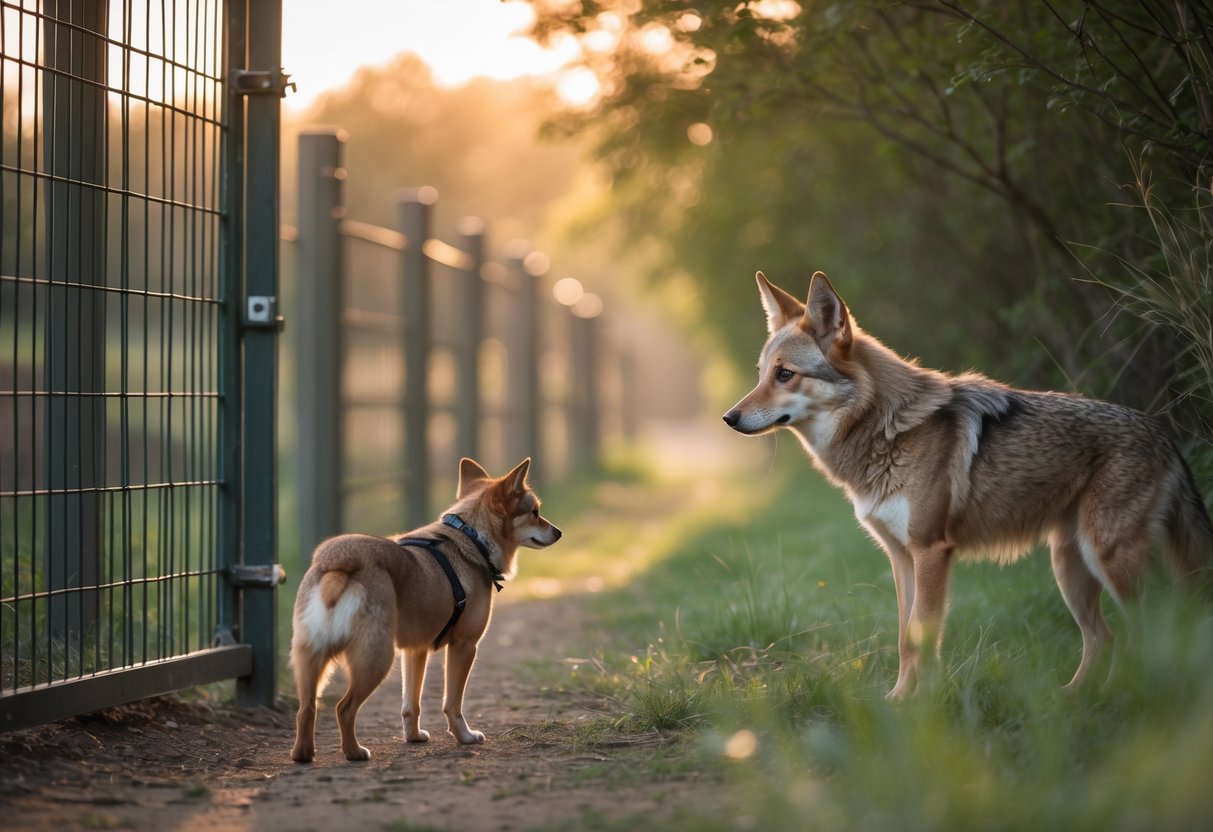
Keeping your dog safe from coyotes takes some effort and planning. You can lower the risk by knowing when coyotes are out, using protective gear, and sticking to good safety habits at home and on walks.
Preventative Measures for Dog Owners
Always keep your dog on a leash during walks, especially early in the morning or at night. Those are prime coyote hours.
Don’t let your dog roam alone in unfenced yards or near wild areas.
Pick up pet food bowls, fallen fruit, and trash from your yard. Coyotes come looking for anything that smells like food.
Watch small dogs, puppies, and older dogs closely—they’re easier targets. Training your dog to come when called can help you get them out of trouble fast if a coyote appears.
Coyote Activity and Population Trends
Coyotes have started showing up in neighborhoods and cities more often. Sightings near homes and parks are way more common now.
They usually keep their distance, but if food is hard to find or they spot an easy meal like a small dog, they’ll take more risks.
Coyote numbers go up and down depending on food and breeding cycles. You’ll probably notice more coyote activity from late winter to spring, which is their breeding season.
If you pay attention to these trends, you can plan walks or outdoor time when coyotes are less likely to be around.
Checking local coyote reports or neighborhood alerts is also a good idea.
Utilizing Safety Tools Like Coyote Vests
A coyote vest on your small dog adds a solid layer of protection. Designers put Kevlar collars and spiked backs on these vests, so coyotes struggle to bite or grab your dog.
If you live somewhere with lots of coyote sightings, these vests become even more helpful. You might also want to pair the vest with things like whistles or air horns—honestly, anything loud that can scare coyotes off before they get too close.
Try putting up a solid, tall fence with coyote rollers to keep your yard safer. Coyotes have a tough time climbing over those.
Motion-sensor lights can help startle coyotes and send them running. Sometimes, just a sudden burst of light is enough to make them think twice.
If you want more ideas, check out how to protect your dog from coyotes.


