
Ever wondered who’d actually win in a race—a cat or a coyote? The answer might not be what you expect. Coyotes usually outrun cats, hitting speeds up to 40 miles per hour, while cats top out closer to 30 miles per hour. In a straight sprint, coyotes definitely take the lead.
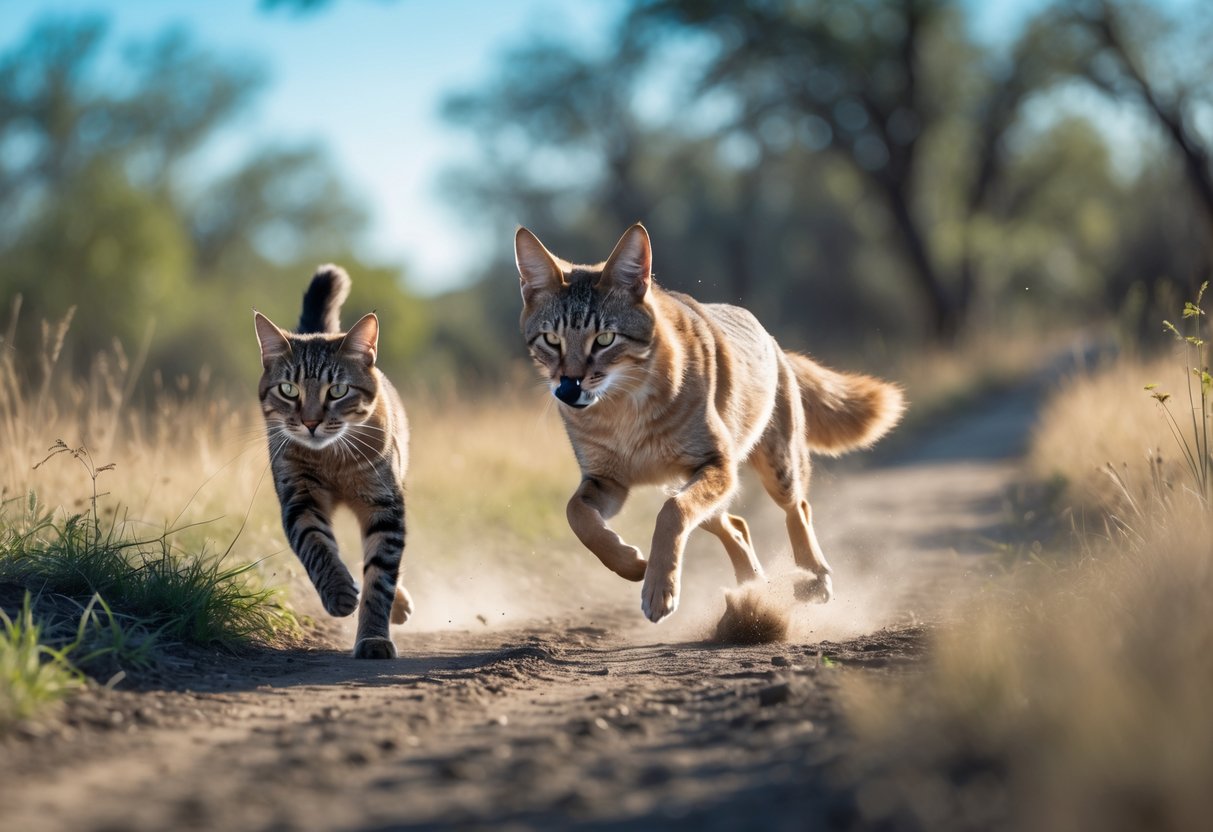
But, honestly, speed isn’t the whole story here. Cats are super agile and can explode into motion for quick getaways, especially in tight spots. Coyotes, though, have the kind of endurance that lets them keep up a fast pace for longer stretches.
When you look at how these animals move in the wild, you start to see why both make such clever hunters.
Who Runs Faster: Cat or Coyote?

Let’s compare. When it comes to speed, coyotes have the edge overall. Cats, though, can launch into fast sprints for short distances. That difference totally changes how each animal hunts and survives.
Coyote Speed Compared to Cat Speed
Coyotes hit 40 to 45 miles per hour but only in short bursts. That’s how they catch prey or dodge threats. Over longer chases, they slow down but still jog along at 20 to 30 mph.
Domestic cats usually max out at 30 miles per hour. They’re quick, but their sprints don’t last long. Cats depend on sudden, explosive moves, not marathon runs.
Key Differences in Running Ability
Coyotes have bodies built for endurance and speed over distance. Their long legs and lean frames help them run fast for longer than you’d think.
Cats, on the other hand, have powerful muscles for short, sharp bursts and crazy-fast turns. Their style is all about escaping predators or pouncing on prey nearby. They just can’t keep up with coyotes if the chase goes on and on.
Coyotes keep their speed up, but cats win on agility and those lightning-quick dashes.
Domestic Cats Versus Coyotes
Most house cats don’t come close to wild coyote speeds. Domestic cats usually run around 20 to 30 mph, depending on things like breed or age.
Coyotes need speed to survive in the wild. They often sprint faster than any pet cat, so cats have to get creative—climbing, hiding, or squeezing into tight spots to stay safe.
Honestly, the biggest thing cats have going for them is their knack for using their surroundings—trees, fences, even your couch—to get away from anything faster.
Factors That Affect Speed in Cats and Coyotes
Terrain makes a huge difference. Coyotes can really fly in open areas, but thick brush or rocky spots slow them down.
Health and age matter, too. Young, healthy animals run faster than older or injured ones.
Weather plays a part. Cool days give both animals a boost, but heat wears them out quickly.
Motivation changes everything. If a coyote or cat is desperate—hunting or scared—they’ll push themselves to run faster than usual.
If you’re curious, you can check out more details on coyote running speed.
Speed in Context: Hunting, Survival, and Environment

Speed isn’t just about numbers for coyotes and cats. It ties into how they hunt, dodge danger, and move through their world. Their strengths really depend on what they need to survive.
How Coyotes Use Speed in Hunting
Coyotes chase prey over long distances, using their speed to wear down animals like rabbits. They can hit 40 miles per hour and keep up a solid pace to tire out whatever they’re chasing.
Their long legs and strong muscles let them cover a lot of ground, especially in open spaces. Coyotes don’t just rely on sprinting—they use strategy, chasing until their prey gives up. When you think about their speed, you have to include that stamina.
Cats: Agility and Escape Tactics
Cats count on quick bursts and sharp turns to grab prey or dodge predators. Sure, they can hit 30 miles per hour, but what really makes them stand out is how they dart into tight spaces and change direction in a split second.
Their smaller size means they use stealth and reflexes, not just speed. If you watch a cat, you’ll notice those short sprints, sudden stops, or leaps—perfect for surprise attacks or quick getaways.
Endurance and Running Styles
Coyotes are made for distance running. They pace themselves and can chase prey over fields or through forests for quite a while.
Cats, though, are sprinters. They burn out fast and need to rest after a chase.
Coyotes can keep going for miles if they have to. If you’re wondering which animal lasts longer on the run, coyotes definitely have the advantage—their muscles and lungs are just built for endurance.
Influence of Dogs and Other Animals on Speed
Coyotes share some traits with dogs, like pack hunting and endurance running. They run with a style that feels almost dog-like—lots of teamwork and a focus on stamina.
Dogs really show us how muscle makeup can affect speed and endurance. That’s probably why coyotes can cover so much ground so efficiently.
Cats, on the other hand, don’t play by those rules. They hunt alone and rely more on stealth and bursts of speed.
If you think about how these animals live, it makes their speeds make more sense. Coyotes need to run farther and faster for survival, while cats use quick, sharp moves to stay safe or catch smaller prey.


