
Ever wondered just how fast a coyote can run? You’re definitely not alone. These clever animals—some folks call them Canis latrans or prairie wolves—really are built for speed and agility. Coyotes can hit up to 40 to 45 miles per hour in short bursts, which makes them one of the fastest mammals you’ll ever spot in the wild.
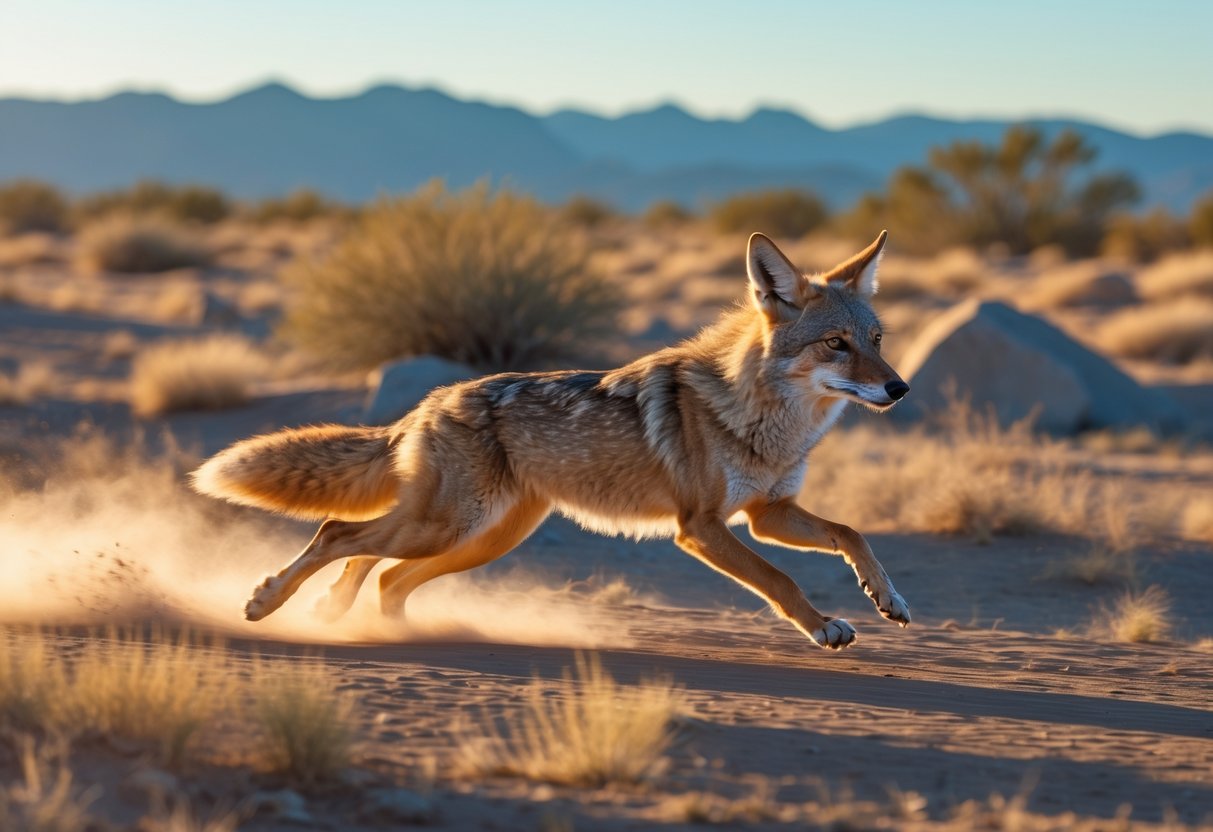
When you understand a coyote’s speed, you start to see how they survive and hunt. Their speed isn’t just about pure straight-line running—it’s also about how quickly they can turn and dart through rough terrain.
Whether you’re into wildlife watching or just curious about these fascinating creatures, you’re about to pick up some cool facts about how prairie wolves run.
Coyote Running Speed: Key Facts and Top Speeds

Coyotes, or Canis latrans, really can move fast—sometimes faster than you’d expect. Their top speed, stamina, and what affects how quickly they run can shift a lot depending on the situation.
They live all over the United States, Canada, Mexico, and Central America. Their running skills help them survive in all kinds of environments.
Maximum Speed of a Coyote
Coyotes can reach 40 to 45 miles per hour (64 to 72 kilometers per hour), but only in short sprints. This burst lets them catch prey or escape danger in a hurry.
If a coyote gets injured or just gets old, it’ll slow down to about 30 to 32 miles per hour (48 to 52 kilometers per hour). Even then, they’re still among the fastest animals in their world.
Their slim bodies and long legs really give them an edge when they need to sprint across open areas like prairies or deserts.
Sustained Running Speeds and Endurance
Coyotes don’t sprint for long. They hit top speed for just a little while, then settle into a steadier pace for longer chases.
Over distance, their running speed drops closer to 20 to 30 miles per hour (32 to 48 kilometers per hour). That’s still pretty impressive.
This mix of short bursts and steady running helps them keep up with prey that might dash off but can’t last as long. Coyotes mix speed with quick turns to stay on the trail.
When they hunt in packs, they balance speed and stamina to boost their odds.
What Affects How Fast a Coyote Can Run?
A few things play into how fast you’ll see a coyote run.
- Terrain: Coyotes fly across open, flat land. Thick brush or rocky ground slows them down.
- Weather: Cool days help coyotes run longer and harder. Hot weather wears them out fast.
- Age and Health: Young, healthy coyotes run faster. Older or hurt ones just can’t keep up.
- Motivation: If they’re hungry or scared, they’ll push themselves to the limit.
All of these factors explain why some coyotes seem faster than others, depending on where they are and what’s going on.
Regional Differences Across North and Central America
Coyotes live from Canada’s forests to Mexico’s deserts and into Central America’s varied landscapes. Their speed can change depending on the region.
On open plains in the US or Mexico, coyotes run closer to their top speed because there’s nothing in their way. In thick forests or mountains, like in Canada or Central America, they slow down and depend more on weaving and dodging.
Coyotes adapt their speed and hunting style to wherever they live. That’s a big reason they thrive in so many places.
For more on coyote speeds, check out how fast can coyotes run.
Comparing Coyote Speed: Predators, Prey, and People

Coyotes are fast, but so are many of the animals they live near. When you compare their speed to other predators, prey, or even people, you start to see why they act the way they do.
This can matter, especially if you live in the United States, Canada, or Mexico and wonder about coyote encounters.
Coyote Speed Versus Other Wild Predators
Coyotes can sprint about 40 to 43 miles per hour for a short time. But some other predators are right up there, too.
- Mountain lions can match that speed, but only for a minute or so.
- Wolves usually run a bit slower but can keep going longer.
- Gray wolves top out around 35 mph, so they’re a little slower but better at long runs.
Coyotes rely on quick, sharp bursts to grab prey or get out of trouble. They usually avoid stronger predators by using speed and quick turns.
Outrunning a Coyote: Is It Possible?
Ever thought about whether you could outrun a coyote? Honestly, it’s not likely.
- Coyotes run faster than almost any human.
- Top human sprinters hit about 27 mph, which is way below a coyote’s best.
- Coyotes can only keep that top speed for less than a minute, then they need to rest.
If you see a coyote, don’t try to run away. Instead, stand tall, make some noise, and back away slowly. That usually convinces the coyote to leave you alone.
Coyotes in Urban and Rural Environments
Coyotes show up all over the United States, Canada, and even parts of Central America. They rely on their speed to get around these different places.
In open rural areas like wide fields or deserts, coyotes can really hit their top speed. They seem to thrive in those big, open landscapes.
But in urban settings, things get trickier. Speed still matters, sure, but stealth and agility matter even more with all those fences, cars, and people in the way.
Urban coyotes usually go after small animals—think rodents or rabbits. They use quick bursts of speed when they need to catch something fast.
If you know how coyotes move, you’ve got a better shot at keeping your pets safe. Setting up barriers and cleaning up food sources can make your yard a lot less interesting to a curious coyote.


