
Ever had a coyote quietly trailing you on a walk? It’s unsettling, right? Coyotes usually follow people to nudge them away from their territory or to keep their pups safe—not because they’re looking for trouble. Most of the time, they’re just wary and a bit nosy, sizing you up to see if you’re a threat.
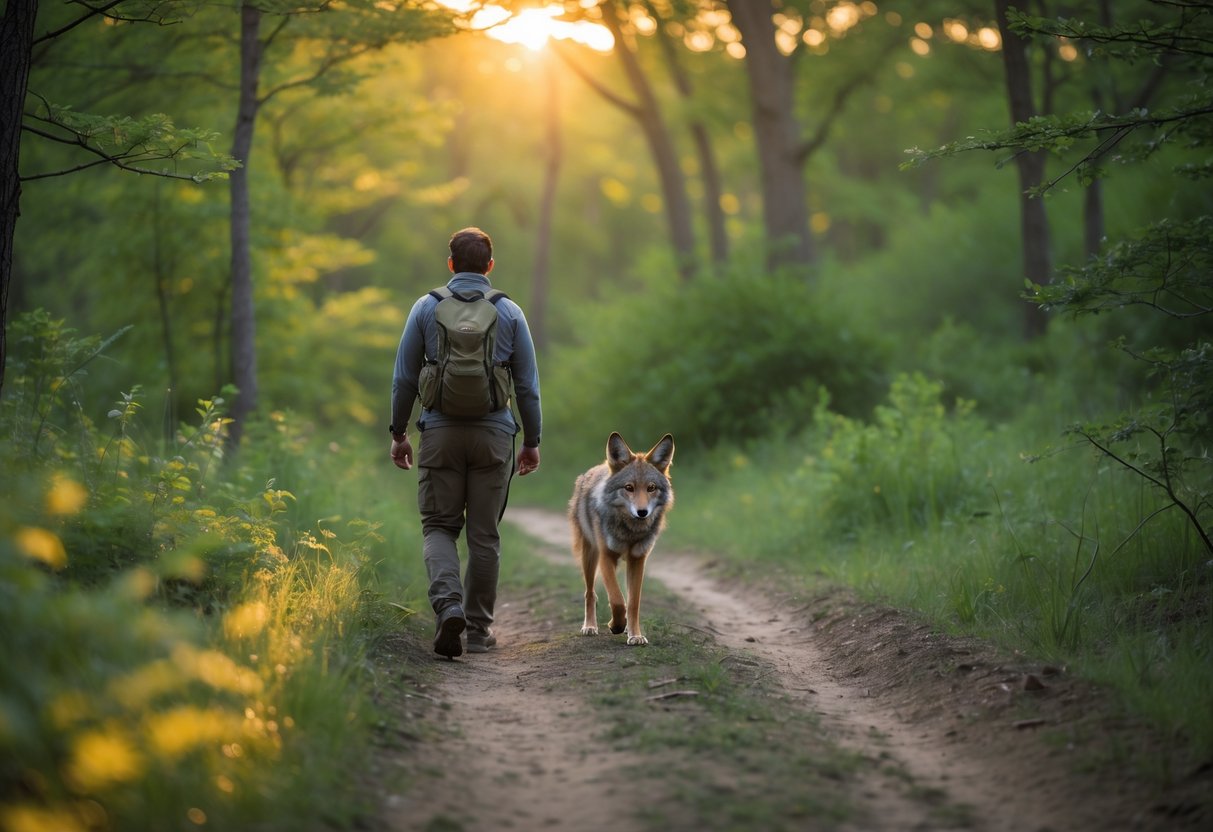
Sometimes, coyotes get a little too comfortable around people—especially when they find food near homes or start losing their natural fear of us. That’s when you might notice one being a bit bolder, particularly if you’ve got a dog along.
Knowing why coyotes do this can actually help you keep your cool and figure out what to do if it happens.
If you walk in areas where coyotes live, you’ll probably see them more often. Learning about their behavior makes it easier to stay safe and give them space.
You’ll pick up on what to watch for and how to keep both yourself and wildlife out of trouble. If you’re curious, check out what it really means when a coyote follows you.
Top Reasons Coyotes Follow People

Coyotes follow people for a few different reasons, all tied to their instincts and the world they live in. If you get what’s behind their actions, it’s easier to stay calm and safe.
They act this way because of natural instincts or habits they’ve picked up around people.
Curiosity and Investigative Behavior
Coyotes? They’re just naturally curious. When one follows you, it might only want to figure out what you’re up to.
Canis latrans often approach slowly, watching you to decide if you’re a problem or if something about you catches their eye.
This nosy behavior helps them get by in both the wild and the city. Coyotes might trail you quietly, hanging back 10 or 30 feet, just staring and taking it all in.
They usually aren’t trying to start anything—they just want to know what you’re doing.
Even if it feels weird or a bit creepy, their curiosity is usually harmless. If you pay attention and avoid sudden moves, you’ll handle it just fine.
Territorial Defense and Escorting
Coyotes get super protective of their turf. If you wander near their den or a pup, they’ll sometimes follow you to warn you off.
That’s their way of saying, “Hey, this is my spot,”—no need for a fight.
When a coyote is close behind, it’s probably trying to guide you out of its area. This happens more in the suburbs, where coyotes live near people.
It’s just their way of drawing a line.
If this happens, stay calm and walk away with confidence. Don’t run, or they might think you’re prey or up to something.
Food Conditioning and Human Habituation
Coyotes that get food from people may start following you, hoping for a snack. If you leave pet food outside, let garbage pile up, or feed them on purpose, you’re making things worse.
They start to link humans with easy meals.
We call this food conditioning. Coyotes get less scared of us and start hanging around more, which isn’t good for anybody.
It leads to more bold, risky behavior.
Never feed coyotes or leave food where they can grab it. Lock up your food and trash, and you’ll help keep coyotes wild (and yourself safe).
You can read more about how food changes coyote behavior at Coyotes on patrol: What it really means when you’re ‘followed’.
When Encounters Happen: Urban Coyotes and Potential Risks
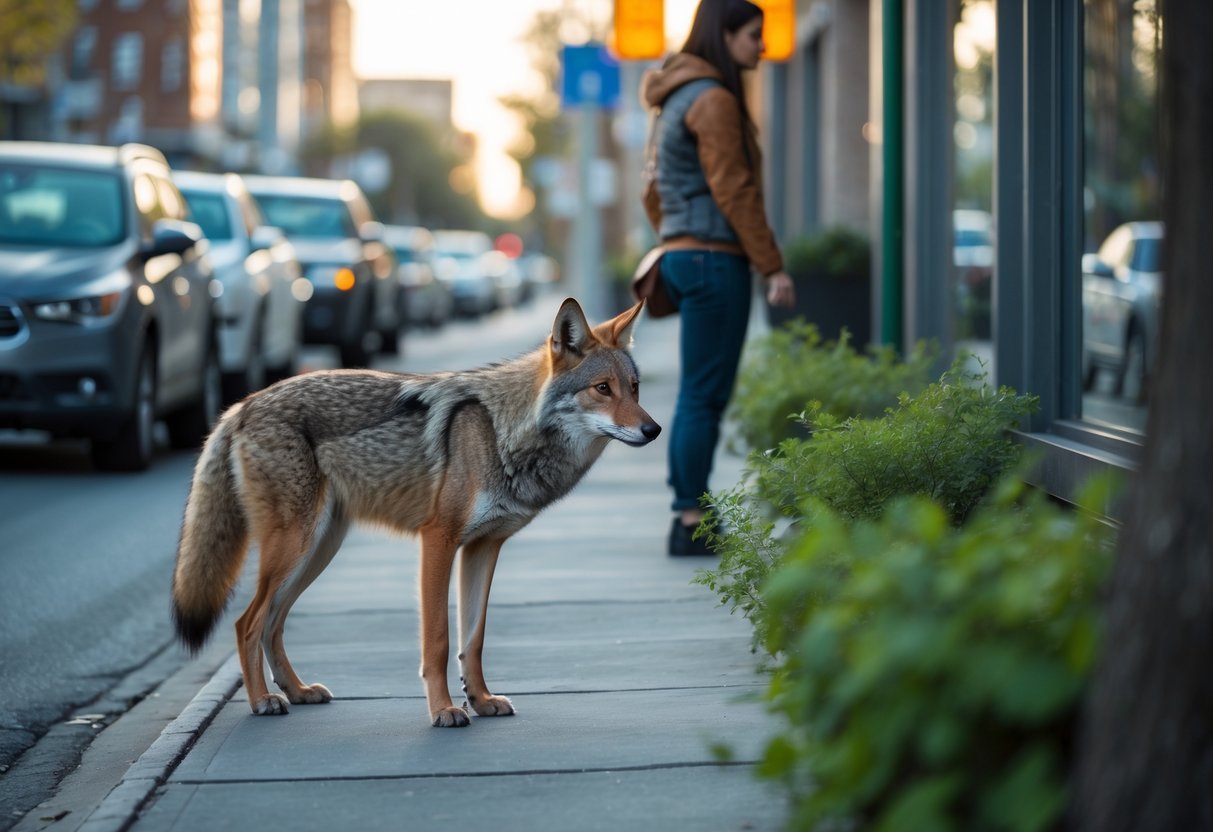
Urban coyotes often end up near people and pets, especially at certain times of year. If you know why they follow or approach, you can keep yourself and your animals safer.
It helps to know what they’re up to during these encounters.
Pet Protection and Stalking Incidents
During breeding season, urban coyotes get extra protective of their pups. That’s when they’ll follow or watch people and pets more closely.
Sometimes, they stalk small dogs or cats because they see them as a threat—or maybe as prey.
Keep your pets on short leashes, especially near thick bushes or places coyotes might hide. Try to avoid walking pets at dawn or late at night, when coyotes are most active.
If a coyote seems interested in you or your pet, make noise and try to scare it off.
Rare Occurrences of Coyote Attacks
Coyote attacks on people (Canis latrans) are rare, but they do happen now and then. Most attacks happen during the months when they’re raising pups, from May to August.
Healthy coyotes, not sick or rabid ones, are usually responsible.
If you stay alert, you’re unlikely to get hurt. Pets get attacked more often than people do, so keep a close eye on them and avoid spots where you see a lot of coyote activity.
Human Activity and Coyote Adaptation
Urban coyotes really know how to make city life work for them. They find food and shelter all over the place.
Sometimes, you might notice a coyote following you. Usually, they’re just looking for an easy meal, maybe some pet food left outside or a bit of trash someone forgot to put away.
If people feed coyotes, those animals start to lose their natural fear of humans. That’s when things can get risky.
So, how do you keep things safe? Try removing food sources from your yard. Lock up your trash bins, and definitely don’t feed wildlife.
A few small changes in your routine can help keep coyotes wild. You’ll also cut down on those surprise run-ins in your neighborhood.
For more about how coyotes behave in cities, check out Urban Human-Coyote Conflicts.


