
If your cat spends time outside, you might wonder if coyotes actually pose a threat. Coyotes do eat cats, especially in cities and suburbs where their usual food is harder to find. Cats aren’t their go-to meal, but if a coyote gets hungry enough, it’ll take the opportunity.
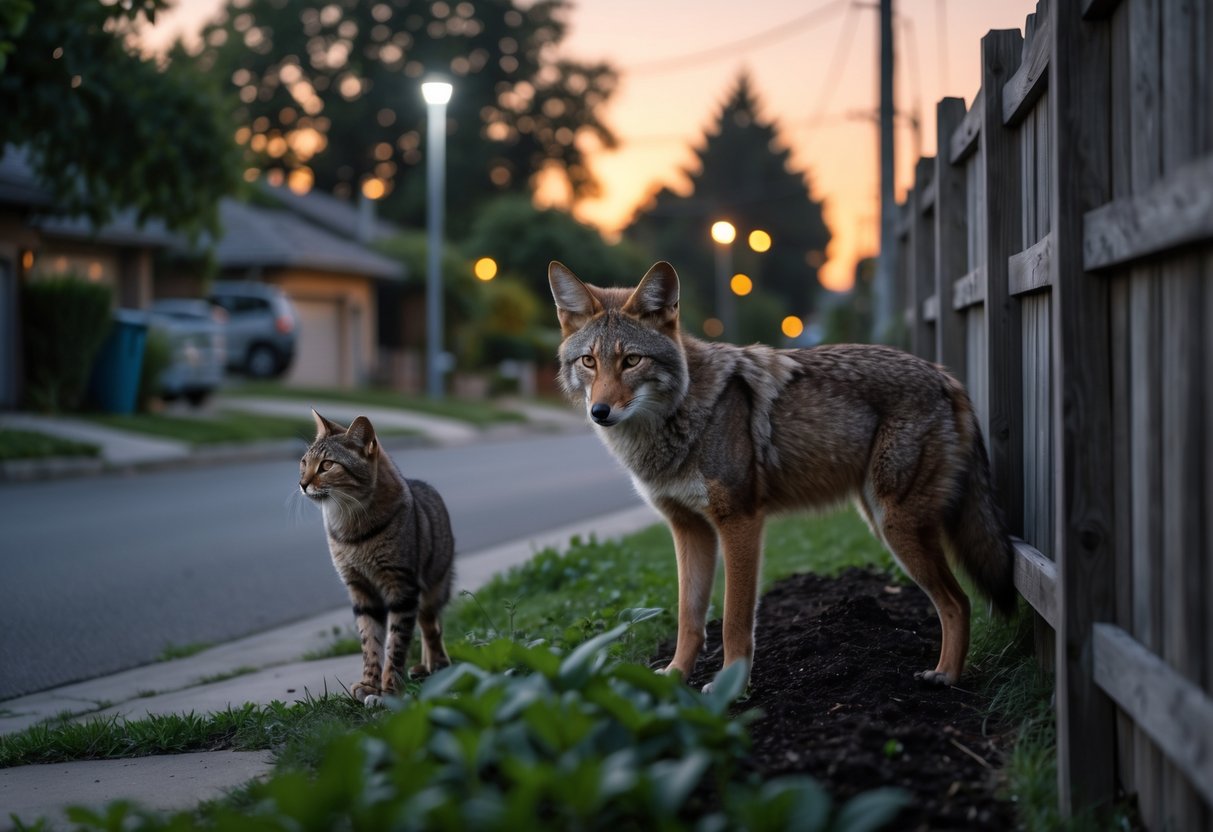
Knowing this helps you figure out how to keep your furry friend safer. If you understand how coyotes hunt and when they’re most likely to show up, you’ve got a better shot at protecting your cat.
Do Coyotes Eat Cats? Facts, Risks, and Behaviors

Coyotes are pretty clever and can adapt to almost any environment. They’ll eat a wide variety of foods, just depending on what’s around.
You should know how they act around cats and what kind of risks your pet might face.
Why Coyotes Hunt Cats
Coyotes hunt whatever food is easiest to get. They’re what you’d call opportunistic predators.
Cats aren’t their favorite, but if rabbits or rodents are scarce, coyotes will go after cats. This happens more in places where their usual prey has become rare.
You should be cautious because coyotes mostly hunt at night or early morning. During these hours, outdoor cats are much easier targets.
Older or weaker cats have a tougher time escaping or defending themselves, so they’re at higher risk.
Coyote Diet: What They Really Eat
Coyotes have pretty mixed eating habits. Most days, they go after small animals like rodents, rabbits, and squirrels.
They’ll also eat fruits, vegetables, and sometimes even garbage if they find it.
Here’s a quick list of what coyotes usually eat:
- Rabbits and rodents
- Birds and insects
- Fruits, veggies, and seeds
- Carrion or dead animals
Cats are only a small part of their diet, and mostly in urban areas where coyotes live close to people. Pet food left outside can attract coyotes right up to your door.
Coyote Attacks on Domestic and Feral Cats
Coyotes attack and often kill both domestic and feral cats. Cats just don’t have the tools to fight off wild predators, so they usually lose.
Even if a cat climbs a tree, coyotes can jump up to six feet, which is higher than you might expect.
Feral cat colonies are easy targets since those cats stay outdoors and often don’t have safe places to hide.
If your cat goes outside, especially at night, you should supervise them. Bring their food indoors to avoid drawing coyotes in.
If you want more tips on keeping your cat safe, check out this guide on coyote attacks and cats.
How to Keep Your Cat Safe During Coyote Encounters

You can keep your cat safer by knowing when and where coyotes are most active. Try to make your yard and home less interesting to them.
With a few simple changes, you can lower the odds of your cat bumping into a coyote.
Protect Cats from Coyotes
Honestly, the safest bet is keeping cats inside as much as possible. Coyotes are fast and know how to hunt, so an unsupervised cat outside is at risk.
If your cat wants fresh air, build a secure outdoor area like a catio or use a fenced enclosure. Make sure fences and gates are strong enough to keep coyotes out.
Remove anything that might attract coyotes. Don’t leave pet food outside, and keep trash bins closed tight.
Motion-activated lights or noise makers can also help scare coyotes away from your yard.
Best Times to Keep Cats Indoors
Coyotes come out mostly at dawn and dusk. These windows are when your cat faces the most danger.
Keep your cat inside during those hours. Night and early morning are risky, too.
If you want to let your cat out, try doing it in the middle of the day when coyotes are less active. Still, it’s best to keep an eye on them.
If you can’t watch your cat during those times, it’s just safer to keep them indoors.
Tips for Minimizing Coyote Encounters
Try these straightforward tips to keep coyotes away from your home:
-
Lock up all garbage and bring in any leftover pet food.
-
Trim back bushes and tall grass near your yard so coyotes have fewer places to hide.
-
Set up motion-sensor lights by entrances and any outdoor cat hangouts.
-
Make some noise if you spot a coyote—clap your hands or blow a whistle.
Let your neighbors know about these steps. Working together makes it a lot harder for coyotes to get comfortable around your homes.


