
Ever wondered if a coyote can outrun a dog? Yeah, you’re definitely not the only one. At first glance, these animals look alike, but their abilities are a bit different—especially when it comes to speed.
Coyotes usually outrun most dogs, hitting speeds up to 40 or even 45 miles per hour in short bursts. That’s fast enough to make them tough to catch and pretty impressive hunters out in the wild.
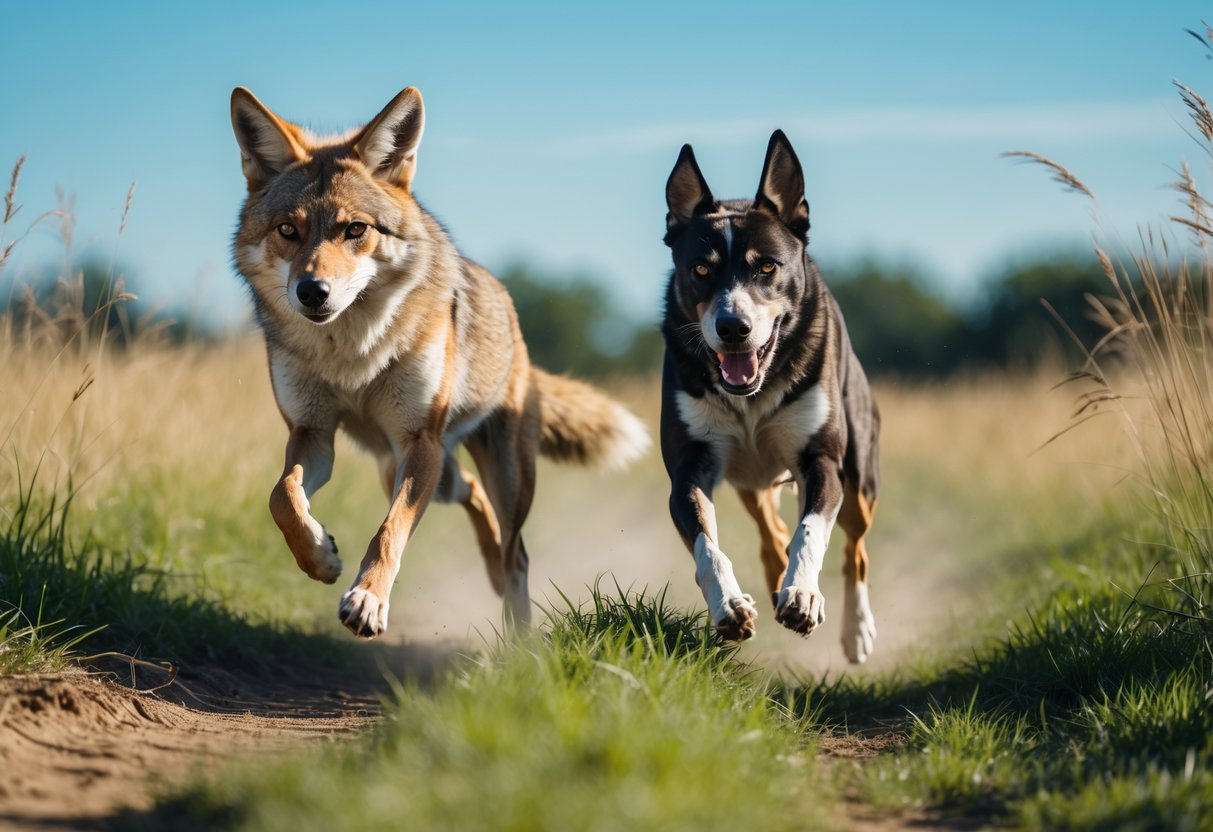
Your dog probably can’t keep up with a coyote unless you’ve got a super-fast breed like a Greyhound. Greyhounds can actually match a coyote’s top speed. Coyotes have bodies built for agility and endurance, so they run fast and jump high when they need to catch dinner or get away from trouble.
If you live where coyotes hang around, knowing how quick they move can help you understand them a bit better.
Coyote vs Dog: Which Is Faster?

When you compare coyotes and dogs, speed really depends on things like their build, breed, and what kind of running you’re talking about. Coyotes, being wild, are built for quick sprints, while dogs come in so many shapes and sizes that it changes everything.
Top Speeds of Coyotes and Dogs
Coyotes usually run faster than most dogs. They hit about 64 km/h (40 mph) at top speed. Their long legs and lean bodies give them an edge when they need to sprint for prey or to get away.
Most dogs top out around 50 km/h (31 mph). Of course, there’s a lot of variety since dogs come in all sorts of breeds with different body types.
Coyotes don’t vary much in speed, but dogs? It’s all over the place.
Speed comparison:
| Animal | Top Speed |
|---|---|
| Coyote | 64 km/h (40 mph) |
| Dog (avg) | 50 km/h (31 mph) |
How Speed Varies by Dog Breed
Your dog’s speed really comes down to its breed. Greyhounds, for example, can reach up to 72 km/h (45 mph)—even beating out coyotes. Other athletic breeds like Border Collies or Dobermans are quick, but they don’t usually catch up to a Greyhound.
Small breeds or those bred for strength, like Bulldogs or Basset Hounds, are much slower and might not even hit 30 km/h (19 mph).
So, if you have a speedy breed, your dog could outrun a coyote. Most everyday dogs though? Not so much.
Sprint vs Endurance: Speed Over Distance
Coyotes use their speed mostly in short bursts—think chasing dinner or dodging danger. They can sprint, but they also have pretty good endurance for longer chases.
Dogs are a mixed bag here. Some, like Greyhounds, are all about short, intense sprints. Others, like Huskies, keep a steady pace for miles but don’t hit crazy top speeds.
If you care about speed over distance, wild coyotes usually balance sprinting and endurance better than most dogs. Domestic dogs tend to be good at one or the other, depending on their breed and how much you exercise them.
You can check out more details in this coyote vs dog comparison.
Why Coyotes and Dogs Differ in Speed

Coyotes and dogs don’t run the same way, and that comes from their bodies, their lives, and even where they live. These details explain why your pet probably can’t keep up with a coyote.
Body Structure and Physical Adaptations
Coyotes have slim, lightweight bodies with long legs. These features help them speed up quickly and keep that pace over long distances. Nature designed them for life in the wild, where running is a must.
Dogs look and move differently because of all the different breeds out there. Greyhounds, for instance, can run up to 45 mph—faster than a coyote’s top speed of about 43 mph. Many breeds, like German Shepherds or Border Collies, don’t run that fast and usually max out around 30 mph.
Their body type, muscles, and size all play a role in how fast they can go.
Key Differences:
- Coyotes have leaner frames and longer legs for better endurance.
- Dog speeds really depend on breed and how fit they are.
- Coyotes evolved to be fast for survival; people bred dogs for all sorts of reasons.
Wild vs Domesticated Lifestyles
Coyotes live out in the wild, running every day to hunt or stay safe. That lifestyle keeps them fit and ready to sprint at any moment.
Most dogs, on the other hand, don’t run as much unless you make sure they get exercise. Some breeds are born runners, but others were bred for strength, size, or just being good companions.
If you don’t keep your dog active, it’ll never reach its full speed. Wild coyotes don’t have a choice—they need their speed just to survive.
How Environment Shapes Running Ability
Coyotes roam forests, fields, and deserts. They have to run fast over rough or open ground.
Their environment shapes their muscles and builds endurance. Nighttime hunting pushes them to use both speed and stealth.
Dogs usually live with humans, hanging out in homes, parks, or yards. These places don’t really require them to be fast.
People bred some dog breeds for speed on flat ground, like racing Greyhounds. Others, like herding dogs, use quick bursts of speed for work.
Environment really matters here. Coyotes deal with real dangers and challenges that push their running skills.
Dogs, on the other hand, rely more on humans. They just don’t face the same pressure to stay fast.
This probably explains why speed varies so much between dogs and coyotes. Makes you wonder, doesn’t it?
For more on how coyotes and dogs differ physically, check out this detailed coyote vs dog comparison.


