
If you spot a coyote while you’re out running, your first thought might be to dash away. But here’s the thing—running can actually make a coyote more interested in you because it triggers their chase instinct.
Coyotes tend to see running as a sign you’re prey, which means they might decide to follow you. Not exactly what you want, right?
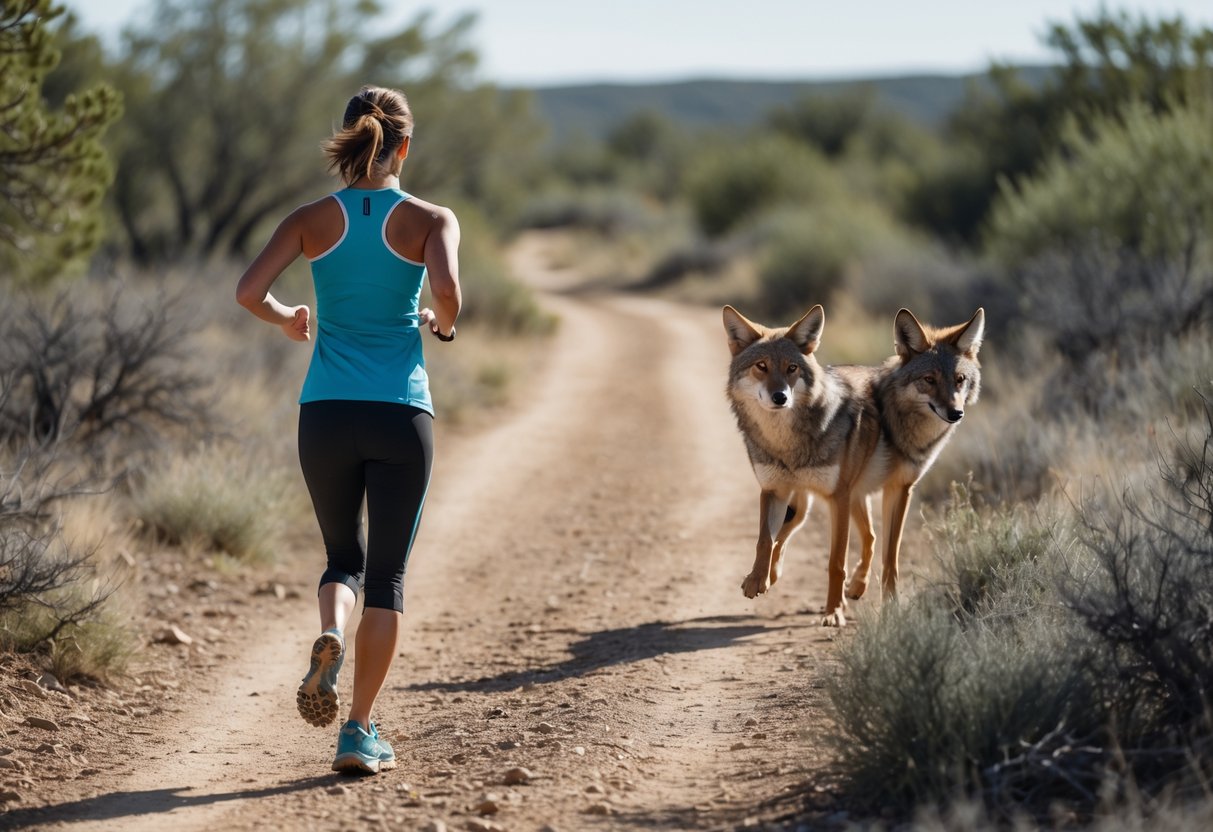
Instead of running, try to stay calm and stand your ground. Make yourself look big and use loud noises—these work better for scaring a coyote away.
Understanding how coyotes think can help you feel safer on your runs.
Reacting the right way makes all the difference. Here’s what to do if a coyote crosses your path while you’re out for a jog.
Will Running at a Coyote Scare It?

You might think running toward a coyote would scare it, but that move can actually backfire. Coyotes react to sudden movement and often see running as an invitation to chase.
If you know how they behave, you can avoid risky situations when you run into one.
Coyote Behavior When Approached by Humans
Coyotes in North America, especially the ones living in cities, usually avoid people. They keep their distance because humans aren’t part of their normal diet.
But if a coyote starts losing its fear, it might get bolder and come closer than you’d like.
When you move steadily and act confident, a coyote will usually back away. It reads your body language and energy to figure out if you’re a threat.
But if you make sudden or fast moves, like running, you might confuse or excite it. Coyotes are curious and sometimes think running means you want to play or that you’re prey.
Predatory Instincts Triggered by Running
Coyotes rely on their hunting instincts. If you run, those instincts can kick in, and the coyote might chase you.
Running makes you look vulnerable, which can trigger their chase response. That’s just how their brains work.
Most coyotes target things that move. If you bolt, you suddenly look like prey, and your risk goes up.
Honestly, you’re not going to outrun a coyote, so running just puts you at more risk.
Risks of Escalating Coyote Conflicts
If you run at or away from a coyote, you might teach it to lose its fear of people. That’s a problem.
Coyotes that get used to humans can become more aggressive or start approaching pets and children. Not good for anyone.
In neighborhoods, urban coyotes that don’t fear people can cause ongoing trouble. Feeding them or running away sends the wrong message, making things worse for everyone.
Safer Alternatives to Running Toward Coyotes
Try these safer moves instead of running:
- Stand tall and face the coyote, but don’t turn your back.
- Make loud noises—shout, clap, whatever works.
- Wave your arms to look bigger.
- Toss small things near (not at) the coyote to startle it.
- Back away slowly and keep eye contact.
These actions show the coyote you’re not prey. Carry a whistle or a noisemaker if you run where coyotes live.
Staying calm and confident is your best bet for avoiding problems.
For more tips, check out this guide on how to haze coyotes to keep them away.
Effective Ways to Scare Coyotes Away

If you want to keep coyotes off your property, you’ve got a few practical options. Teach them to avoid you, block their entry with barriers, and use smells or sounds they hate.
Hazing Tactics to Repel Coyotes
Hazing teaches coyotes to stay away. When you see one, act bold and make a lot of noise.
Yell, clap, stomp your feet, or bang pots together. If you want extra volume, use an air horn or a whistle.
Try raising your arms or waving a jacket to look bigger. Don’t run—stand your ground, and if the coyote lingers, move toward it.
Hazing works over time. It helps coyotes learn that people mean business and aren’t worth the trouble.
Using Fences and Coyote Rollers for Protection
A solid fence works wonders for keeping coyotes out. Make it at least 6 feet tall and use strong wire or metal.
Add a coyote roller on top. These spinning tubes stop coyotes from getting over the fence.
You can also use tight mesh and bury the fence a few inches deep to block digging. A sturdy coyote-proof fence helps protect your pets and yard from surprise visits.
Deterring Coyotes with Scents and Noisemakers
Coyotes really don’t like certain smells, especially ones that remind them of bigger predators. You can sprinkle wolf urine or other kinds of predator urine around your yard.
These scents fool coyotes into thinking there’s a much larger animal hanging around. That alone can convince them to steer clear.
Noisemakers help too. Try motion-activated alarms, radios, or even solar lights that flash when something moves.
Coyotes get startled by those sudden sounds and lights. They’ll start to feel uneasy near your property.
Mixing these scent and noise tricks with other coyote-deterring methods can make your home a lot less appealing to them.


